SEOUL, July 25 (AJP) - The mudflats where the world's rarest sandpiper refuels twice a year got bigger on the map that matters most. The UNESCO World Heritage Committee on Saturday approved a major expansion of Getbol, Korean Tidal Flats, adding four coastal wetlands and bringing South Korea's only natural World Heritage property on the mainland to six components stretching along the country's southwestern and southern coasts, the Ministry of Foreign Affairs said.
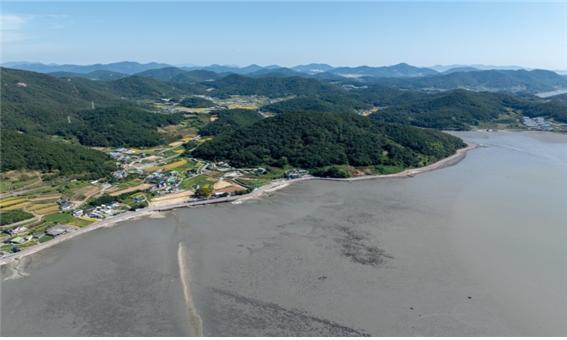
The decision, taken at the committee's 48th session in Busan, adds the tidal flats of Yeosu, Goheung and Muan in South Jeolla Province and Seosan in South Chungcheong Province to the property inscribed in 2021. It is a boundary modification rather than a new inscription, so South Korea's World Heritage count stays at 17. According to the announcement, issued jointly by the Ministry of Foreign Affairs (MOFA) and the Korea Heritage Service, the committee found that the expanded property meets criterion (x), the natural heritage standard covering the most important habitats for conserving biological diversity, and cited its value to migratory waterbirds and marine life across the Yellow Sea ecosystem.
The approval was expected. The International Union for Conservation of Nature (IUCN), the committee's advisory body on natural sites, recommended the expansion on June 5, and properties arriving with a positive recommendation are rarely turned back. The session itself is a first for South Korea, which has never hosted the committee since joining the World Heritage Convention in 1988.
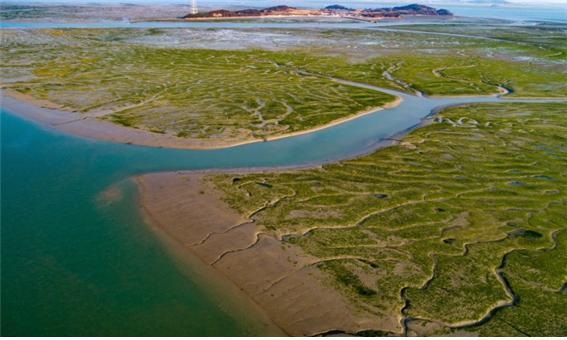
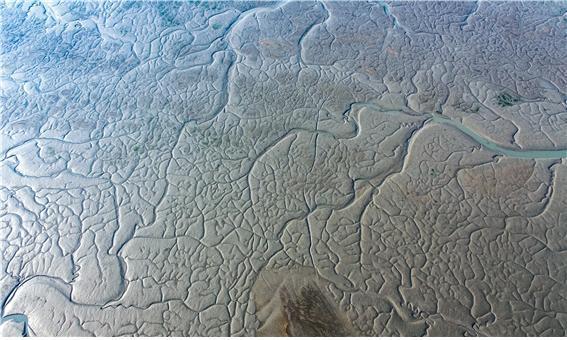
Getbol is the Korean word for tidal flats, the vast plains of mud and sand that the Yellow Sea's tides expose and drown twice daily. The sea's shallow basin and large tidal range have built some of the widest flats on Earth, fed by sediment from rivers on both the Korean and Chinese coasts. What looks like empty mud is among the most productive ecosystems known. UNESCO's records for the property count about 2,150 species, including 857 kinds of macrobenthos, the clams, crabs, worms and snails living in and on the sediment, along with mud octopuses, fiddler crabs and 47 invertebrate species found nowhere else.
That buried abundance is what makes the flats matter far beyond South Korea. They sit at the waist of the East Asian-Australasian Flyway, the migration corridor running from breeding grounds in Siberia and Alaska to wintering grounds as far south as Australia and New Zealand, used by an estimated 50 million waterbirds. For long-distance migrants, the Yellow Sea is the critical refueling stop in both directions, and the food packed into its mud is the fuel. The flyway is considered the most threatened of the world's major bird migration routes, largely because so much of the Yellow Sea coastline has been reclaimed for farmland, ports and industry over the past half century.
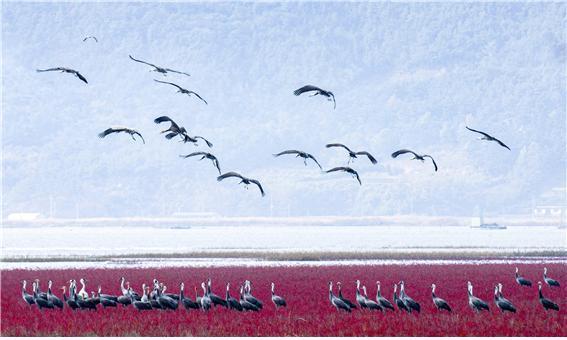
The property provides habitat for 118 migratory bird species, among them eight globally threatened species found only on this flyway. The spoon-billed sandpiper, a bird small enough to sit in a palm with a bill flattened like a spatula, is the starkest case. It is critically endangered, with the wild population estimated in the hundreds, and it cannot complete its migration without the Yellow Sea flats. The endangered black-faced spoonbill, far eastern curlew, great knot and spotted greenshank depend on the same mud, as do the hooded crane, Saunders's gull and Chinese egret.
The expansion also deepens a rare piece of cross-border conservation. China won World Heritage status for its own Yellow Sea coast in 2019, with the migratory bird sanctuaries along the Yellow Sea-Bohai Gulf, and the two listings now protect stopover habitat on both shores of the same sea, used by the same birds in the same weeks of the year.
Saturday's result closes a condition attached to the original listing, and the history behind that condition is less tidy than the celebration suggests. When Getbol first came before the committee in 2021, IUCN recommended deferral, judging that the four nominated flats at Seocheon, Gochang, Shinan and Boseong-Suncheon did not cover enough of the habitat to justify inscription. South Korea overcame the recommendation on the committee floor. An amendment tabled by Kyrgyzstan drew the co-signatures of 13 of the 21 member states, and the property was inscribed by consensus, with MOFA describing the outcome at the time as the result of active diplomatic engagement with the World Heritage Centre and committee members. The inscription came with a recommendation to expand the property in a second phase.
The government initially aimed higher than what was delivered on Saturday. When the 2021 listing was secured, the heritage authorities announced a Phase 2 plan covering nine additional sites, and the committee's own recommendation named candidates including Incheon, Hwaseong and Gunsan alongside the four that made it. The flats that dropped out along the way include some of the most ecologically prominent and the most contested. Ganghwa's flats near Incheon, a designated natural monument and the best-known breeding ground of the black-faced spoonbill, were left out of the nomination, as were the Incheon, Hwaseong and Gunsan flats, all of them under heavier reclamation and development pressure than the sites that went forward.
Environmental groups made the gap explicit while the committee was sitting. On July 20, campaigners including the Incheon and Hwaseong branches of the Korean Federation for Environmental Movement held a press conference outside BEXCO, the Busan convention center hosting the session, calling for a third phase covering Incheon, Hwaseong, Gunsan and Busan. Their argument tracks the science: a flyway is a chain of stopovers, and protecting some links while leaving others exposed protects the birds only part of the way.
IUCN's approval in June pointed in the same direction, recommending that South Korea continue analyzing additional flats with potential heritage value and keep building local community support, alongside sustaining traditional fishing and gathering practices and strengthening cooperation with other flyway countries.
The Korea Heritage Service, led by administrator Heo Min, said the expansion was the joint work of MOFA, the Ministry of Oceans and Fisheries under Minister Hwang Jong-woo, local governments and the Getbol World Heritage Promotion Team, and confirmed international recognition that the 2021 recommendations had been faithfully carried out. The service said it would continue working with the ministries, local governments and communities to preserve the property's value and build a base for sustainable use.
The committee session in Busan runs through July 29.

Copyright ⓒ Aju Press All rights reserved.