SEOUL, July 29 (AJP) - Kazakhstan's government has set a September 1 deadline to break a logjam in the industrial side of its largest infrastructure program, a 13 trillion tenge effort to rebuild the country's aging heating, power and water systems by 2029.
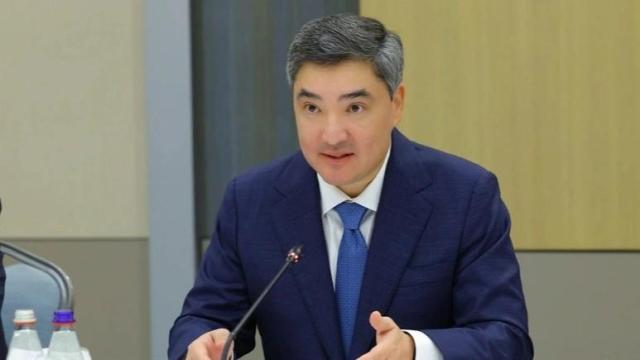
Prime Minister Olzhas Bektenov told a cabinet meeting that work to conclude potential offtake contracts for new and expanded production facilities under the national project "Modernization of Energy and Utilities Sectors" must accelerate, Kazakhstan's state-operated Qazinform News Agency reported Tuesday. Off-take contracts commit a buyer to purchase a set volume of output in advance, which is what allows a manufacturer to borrow against future revenue and build the plant in the first place. Without them, the factories the program is meant to create do not get financed.
"This issue has been repeatedly discussed but remains unresolved. The Ministry of Industry and Construction must enhance oversight and coordination," Bektenov said. He also instructed the ministry to add architectural, urban planning, and construction catalog codes to the manufacturers' register within two weeks.
The pressure is pointed because domestic production is not a side benefit of the program. It is one of its four stated directions. Officials have identified 2,786 product lines worth 2.24 trillion tenge that could be supplied from inside Kazakhstan, and assembled a pool of 220 Kazakh plants and 669 qualified companies to handle design work and equipment supply. President Kassym-Jomart Tokayev has said more than 200 new production facilities should launch within two years.
The program itself dates to December 2024, when the government approved the national project for the period through 2029. Tokayev signed the enabling law on July 17, 2025, and it took effect 12 days later. Of the 13 trillion tenge total ($27.3 billion), some 6.8 trillion tenge is directed at repairing and building 86,000 kilometers of utility networks, and roughly 6.2 trillion tenge at power generation. More than 1 trillion tenge was allocated this year alone, according to Tokayev.
The targets are specific. Wear on heating networks is to fall from 53 percent to 40 percent, on electricity networks from 62 percent to 45 percent, on water supply from 39 percent to 34 percent, and on wastewater systems from 54 percent to 40 percent. Emergency breakdowns are to drop by 20 percent. The energy ministry expects generation capacity to grow by 7.3 gigawatts, lifting total national output to 32.6 gigawatts, though official statements have counted the underlying generation projects differently, sometimes as 15 new plants plus 14 modernizations, sometimes as 29 projects in total.
What forced all of this was one winter. On November 27, 2022, a failure at the thermal power plant in Ekibastuz, a mining city in Pavlodar region, cut heat to much of the town while outside temperatures sat near minus 30 degrees Celsius. Authorities declared a state of emergency. Residents went days without heating, pipes and radiators froze and burst, and the regional governor was dismissed. Weeks earlier, more than 20,000 people in the northeastern town of Ridder had lost heating in a similar accident.
A review by the energy ministry that December put numbers to what everyone already suspected. The average thermal power plant in Kazakhstan was 61 years old. About 76 percent of them had been running for more than half a century. Average wear on core equipment stood at 66 percent.
Deputy Prime Minister Kanat Bozumbayev, who heads the project office, has said the work will concentrate on regions where network wear exceeds 65 to 70 percent. Financing comes from domestic and international financial institutions, banks, the state budget and shareholder contributions, with the government subsidizing interest rates on loans taken by utility companies to keep the repair campaign from landing directly on household tariffs. Targeted assistance for utility bills stays in place for low-income households.
Bektenov also pressed the industry and energy ministries to speed up the unified digital platform Smart Turmys. Industry and Construction Minister Yersayin Nagaspayev told the same meeting the first modules would enter pilot operation in the fourth quarter, running a single subscriber registry, digital accounting of utility payments and monitoring of electricity, gas, heat and water consumption. Kazakhstan aims for full metering of utility infrastructure in cities of republican and regional significance by 2029. 17 pilot renovation projects were funded under the national project by 2025, worth 31.7 billion tenge.
Copyright ⓒ Aju Press All rights reserved.