Today, the word is quietly disappearing — not because the objective has been achieved, but because policymakers in Washington and Seoul are increasingly planning for a future in which North Korea remains a de facto nuclear state.
The shift has unfolded almost unnoticed.
Marking the 73rd anniversary of the Korean War Armistice Agreement, U.S. President Donald Trump praised the South Korea-U.S. alliance as "a pillar of peace and stability across the Indo-Pacific" and vowed to stand with Washington's Asian allies against "the forces of evil and oppression."
The message emphasized military readiness, alliance solidarity and Indo-Pacific strategy.
Conspicuously absent were references to North Korea's denuclearization.
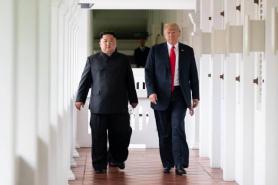
Last year's armistice statement had recalled Trump's unprecedented meeting with North Korean leader Kim Jong Un at Panmunjom and reaffirmed that his administration's "maximum pressure" campaign and sanctions were intended to bring Pyongyang back to negotiations on denuclearization.
Neither the meeting nor denuclearization appeared in this year's message.
Seoul is quietly recalibrating as well.
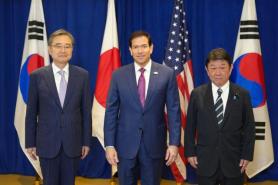
Unification Minister Chung Dong-young said last week the government is shifting from a "denuclearization first" approach toward a "peace first" policy while maintaining denuclearization as the peninsula's long-term objective.
The wording reflects more than a change in diplomatic sequencing. It acknowledges a strategic reality increasingly shaping policy in both capitals: instead of debating how to eliminate North Korea's nuclear arsenal, governments are focusing on how to deter, contain and coexist with it.
The clearest evidence of that transition is emerging beneath the sea.
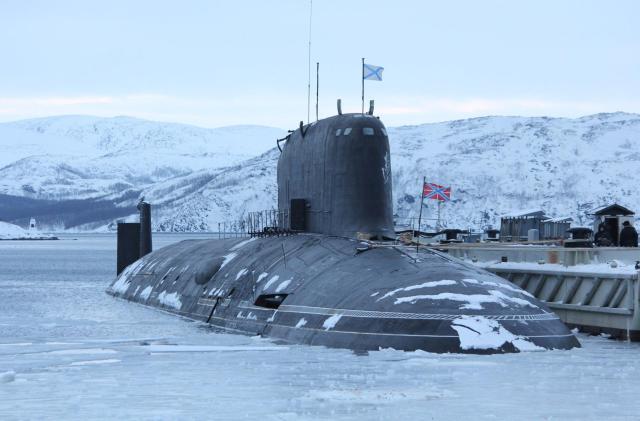
A recent Financial Times report argued that South and North Korea are entering a new phase of underwater strategic competition as both pursue nuclear-powered submarines, a development that could reshape the maritime balance in Northeast Asia and complicate the broader rivalry between the United States and China.
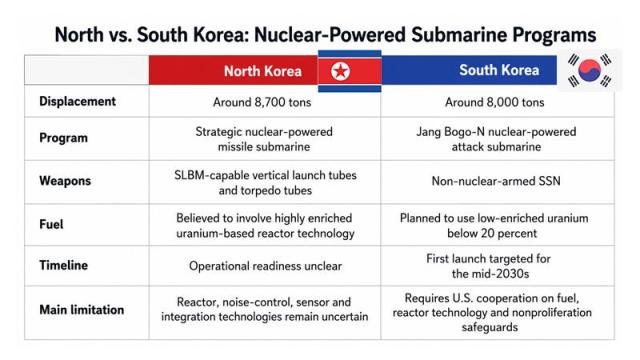
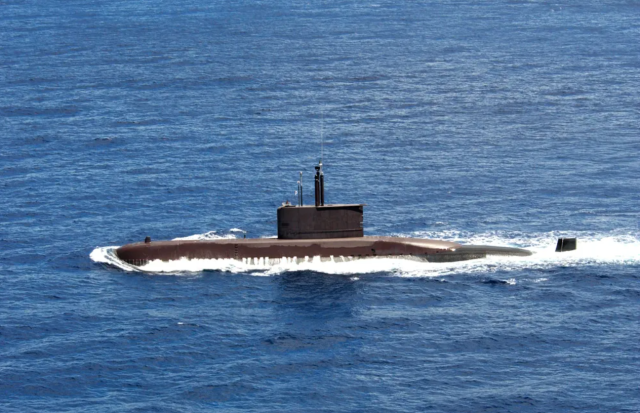
North Korea announced its own nuclear-powered submarine program in 2021 and has since unveiled what it says is the hull of its first such vessel. Analysts remain skeptical that Pyongyang has mastered the complex reactor technology needed to operate a functioning nuclear-powered submarine, although deepening military cooperation with Russia has added a new variable.
Ban Gil-joo, professor at the Korea National Diplomatic Academy, said North Korea's naval modernization should not be viewed simply as coastal defense but as part of a broader maritime strategy.
Pointing to Pyongyang's newly launched 5,000-ton destroyers and its claimed 8,700-ton strategic nuclear submarine, Ban said North Korea's declared ambition to build an "ocean-going operational fleet" suggests it aims to project power beyond the Korean Peninsula into the western Pacific and wider Indo-Pacific.
The shift reflects a broader transformation in the strategic environment.
For decades, Northeast Asia's military balance was largely measured by missiles, artillery and ground forces. Increasingly, however, deterrence is extending beneath the sea, where nuclear-powered submarines can remain submerged for months, operate across vast distances and conduct surveillance, intelligence gathering and second-strike missions with far greater survivability than conventional diesel-electric submarines.
If either Korea successfully deploys nuclear-powered submarines, the implications would extend well beyond the peninsula.
The Financial Times noted that such capabilities could alter the naval balance between the United States and China while intensifying submarine tracking and anti-submarine warfare throughout the Indo-Pacific.
For Seoul, the project also raises sensitive nonproliferation questions.
The changing strategic environment also reflects a broader reassessment of maritime security.
Recent tensions around the Strait of Hormuz demonstrated how quickly critical sea lanes can become instruments of military pressure, energy insecurity and economic disruption. In Northeast Asia, similar concerns are emerging through submarine competition, protection of undersea infrastructure, gray-zone operations and growing competition over maritime domains.
Ban argued that China's gray-zone activities around the Korean Peninsula—including challenges to South Korea's air defense identification zone—should be distinguished from North Korea's more direct military threat. Yet both, he said, point to the same conclusion: maritime security is no longer confined to naval warfare but increasingly encompasses energy security, food security, communications infrastructure and the rules governing freedom of navigation.
He called for deeper cooperation with the United States to translate gray-zone threat assessments into operational responses, while advocating broader regional partnerships through a Korea-ASEAN maritime security framework and closer international coordination to protect undersea infrastructure such as submarine communications cables.
Washington, meanwhile, continues enforcing sanctions against North Korea's weapons procurement network despite the rhetorical shift away from denuclearization. This week, the Treasury Department updated its sanctions database, removing duplicate entries—including one involving Korea Tangun Trading Corporation—while leaving the underlying sanctions fully intact.
Three decades after the Cold War, denuclearization remains the official objective of both Seoul and Washington. Yet their priorities increasingly tell a different story.
From nuclear-powered submarines and undersea deterrence to gray-zone maritime operations and Indo-Pacific strategy, planning is shifting from eliminating North Korea's nuclear capabilities to managing a security environment in which they are expected to endure.
The most consequential change may therefore be linguistic as much as military. Denuclearization has not formally disappeared. It has simply ceased to be the organizing principle of policy, while a quiet undersea competition is emerging as the peninsula's next strategic frontier.

Copyright ⓒ Aju Press All rights reserved.