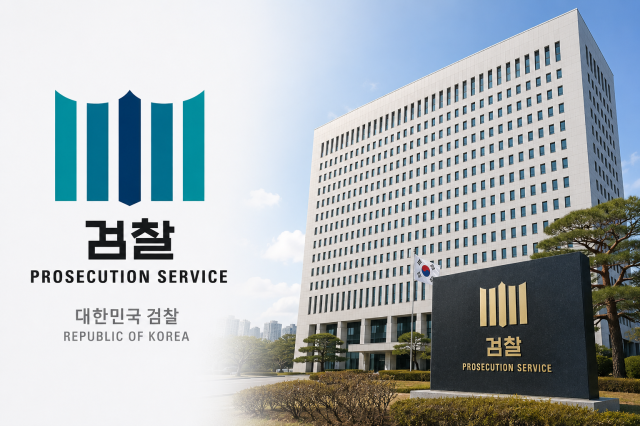
SEOUL, July 31 (AJP) -South Korea's once-powerful prosecution, long regarded as one of the country's most influential institutions, will effectively cease to exist in its current form after parliament approved legislation stripping prosecutors of all investigative authority and replacing the century-old model with separate agencies for investigation and prosecution.
The ruling-majority National Assembly on Friday passed amendments to the Criminal Procedure Act that complete the separation of investigation and prosecution — the centerpiece of President Lee Jae Myung's long-promised judicial reform agenda.
The legislation marks the most sweeping overhaul of South Korea's criminal justice system since the Criminal Procedure Act was enacted in 1954.
Once the law takes effect, prosecutors will no longer investigate crimes directly.
All criminal investigations — from crimes detected by authorities to complaints and accusations filed by citizens — will be handled exclusively by the police. Prosecutors will retain only the authority to review cases, file indictments and request supplementary investigations by judicial police.
The move ends decades in which Korean prosecutors exercised both investigative and prosecutorial powers.
Under separate legislation already approved by parliament, the Supreme Prosecutors' Office and regional prosecutors' offices will be abolished on Oct. 2, nearly 78 years after the prosecution service was established in 1948.
They will be replaced by two new agencies: the Public Prosecution Service, responsible solely for indictments and courtroom prosecutions, and the Serious Crimes Investigation Office, which will investigate six categories of major crimes, including corruption, economic offenses, defense procurement fraud, narcotics, insurrection and foreign-exchange crimes, and cybercrime.
The Criminal Procedure Act revision passed in a 175-2 vote, with one abstention, after the ruling party ended a filibuster mounted by the main opposition People Power Party.
Acting Prosecutor General Koo Ja-hyeon resigned shortly after the vote, saying he accepted responsibility for the dismantling of the prosecution's investigative authority.
"I have just submitted my resignation to take responsibility for the revision of the Criminal Procedure Act," Koo told reporters outside the Supreme Prosecutors' Office.
The opposition denounced the legislation as politically motivated, urging President Lee to veto the bill. People Power Party floor leader Jeong Jeom-sig argued that provisions easing requirements for dismissing indictments could benefit Lee, whose criminal trials remain suspended while in office.
The presidential office, however, said it respected parliament's decision and pledged to ensure the reforms are implemented smoothly.
The legislation represents the culmination of years of political conflict over prosecutorial reform. Successive progressive governments have argued that separating investigation from prosecution would strengthen checks and balances and reduce prosecutorial abuse of power.
The transition, however, remains fraught with uncertainty.
The new Serious Crimes Investigation Office has yet to finalize its organizational structure, staffing rules or operational framework before its scheduled October launch. The government plans to establish detailed regulations next month and begin recruiting investigators in September, with the agency expected to employ between 2,000 and 3,000 personnel.
Copyright ⓒ Aju Press All rights reserved.