
SEOUL, August 04 (AJP) - South Korea is within 40 days of hosting the leaders of all five Central Asian states for the first time, and the government spent Tuesday afternoon checking whether the deliverables it wants on energy and critical minerals will actually be ready.
The region matters to Seoul mostly because of what is under it. Kazakhstan produced 25,839 tonnes of uranium in 2025, roughly 40 percent of world output, and has been the largest producer since 2009, according to the World Nuclear Association. It also holds 14 percent of global uranium resources. South Korea, which runs 26 nuclear reactors, is one of the main Asian buyers alongside China and India.
The five countries also sit on oil, natural gas and rare earths. Kazakhstan ranked third among South Korea's titanium suppliers and tenth for chromium as of 2022, with smaller shares of vanadium and nickel imports.
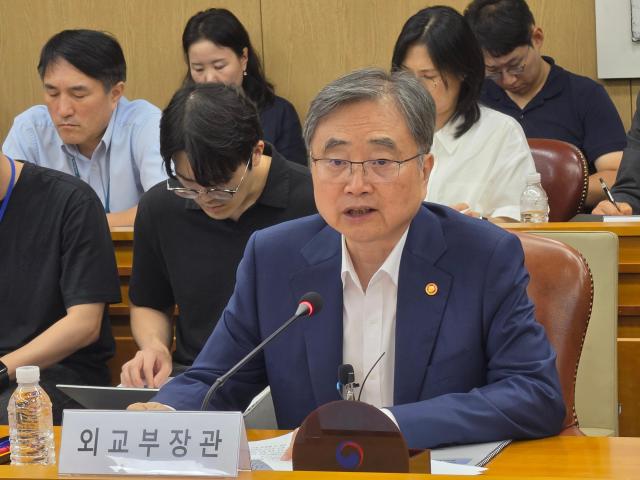
Foreign Minister Cho Hyun chaired the second meeting of the preparatory committee for the summit at the Government Complex Seoul, and framed the timing in terms of supply disruption.
"With the Russia-Ukraine war and instability in the Middle East deepening uncertainty in the international order and in energy supply chains, and with the strategic value of Central Asia growing given its abundant energy and critical minerals and its geopolitical weight, this is a very important summit for us," he said.
He listed the commercial target directly.
"We will strengthen cooperation on supply chains, customs and regulation to expand trade and investment, and promote mutually beneficial practical cooperation in energy, critical minerals and infrastructure," Cho said.
That is one of five outcomes the ministry wants from September. The others cover institutionalizing the summit itself, securing Central Asian backing on the Korean Peninsula, opening cooperation on terrorism, transnational crime, narcotics and cyber threats, and expanding into artificial intelligence, digital, intellectual property and climate response.
The fifth is people, and Cho spent more time on it than on any other single item.
"In particular, we will support the community of roughly 320,000 Koryoin in Central Asia so that they can serve as a bridge linking the two regions," he said, "and, marking the 90th anniversary in 2027 of Koryoin settlement in Central Asia, we will pursue cooperation projects that shed new light on the diaspora community's historical contribution."
Koryoin, or Koryo-saram, are the descendants of Koreans who moved into the Russian Far East from the late 19th century and were deported to Central Asia by Soviet authorities in 1937. Roughly 172,000 people were loaded onto trains and sent to Kazakhstan and Uzbekistan over several weeks, and thousands died in transit or during the first winter. The 2027 anniversary marks 90 years since that deportation.
Their descendants now form the largest Korean diaspora community in the region, and the ministry has treated them as a diplomatic asset. Cho also promised support on education, culture, Korean language teaching and exchanges of students and industrial workers.
South Korea is the last significant player to build this format. The Central Asian five began holding their own regular leaders' meetings in 2018, and have since sat down at summit level with the United States, China, Japan, Russia and the European Union.
"Central Asian countries have regularized their regional summits since 2018 and have held summits with major countries including the United States, China, Japan, Russia and the European Union," Cho said. "This time our government too, with Korea-centered pragmatic diplomacy and diversification of diplomacy as its keynote, seeks through this summit to inherit and develop the New Northern Policy and to build a new strategic partnership with Central Asia."
The New Northern Policy dates to the Moon Jae-in administration, which used it to push economic engagement with Russia, Central Asia and Mongolia. Cho's phrasing keeps the label while attaching it to the Lee Jae Myung government's stated line on diversification.
Seoul does have a track record to build on. The Korea-Central Asia Cooperation Forum has met at the foreign minister level every year since 2007.
"We must now raise this ministerial-level basis for cooperation to the leaders' level and make it regular, developing Korea-Central Asia relations into a more strategic and future-oriented cooperation framework," Cho said.
Tuesday's meeting was the last of its kind before the summit.
"Today's meeting has the character of what is effectively the final preparatory meeting for the summit that opens on Sept. 16," Cho said at the outset, adding that remaining problems would be worked out at staff level from here.
President Lee called each of the five leaders after taking office to explain the plan and issue the invitation, and all five confirmed attendance in December. About 600 delegates are expected, including ministers, business executives and press.
Since the first preparatory committee meeting in February, a senior officials' meeting at vice-minister level has convened three times, in Seoul, Uzbekistan and Kazakhstan. Joint economic committees, policy consultations and consular talks have run with each country, and a private advisory committee supplied sector expertise.
Not everything is settled. Cho told the ministries around the table that negotiations on deliverable projects remain open with barely six weeks left.
"I ask each ministry to take an interest and see it through to the end, so that the deliverable projects under negotiation are concluded quickly and the side events are prepared without disruption," he said.
Copyright ⓒ Aju Press All rights reserved.
