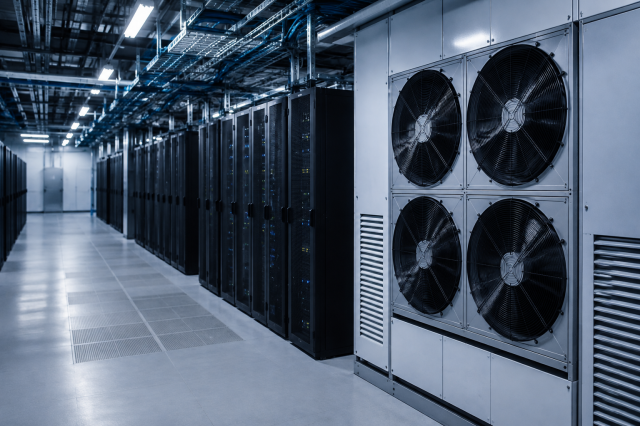
SEOUL, August 13 (AJP) - An AI agent on a laptop or smartphone may appear almost weightless. Behind every prompt, however, sit warehouses of processors and memory running around the clock — consuming enormous amounts of electricity and generating heat that must be removed before the machines can keep thinking.
For South Korea, already a powerhouse in the memory chips feeding those machines, that physical burden is becoming the next AI opportunity.
Samsung Electronics has already put money behind that opportunity, betting that cooling will become a major business alongside the chips powering AI.
The company put that strategy on display Thursday with the completion of a new production line for FläktGroup, its heating, ventilation and air-conditioning business, in Pune, India, as data-center investment accelerates across India and the wider Asia-Pacific region.
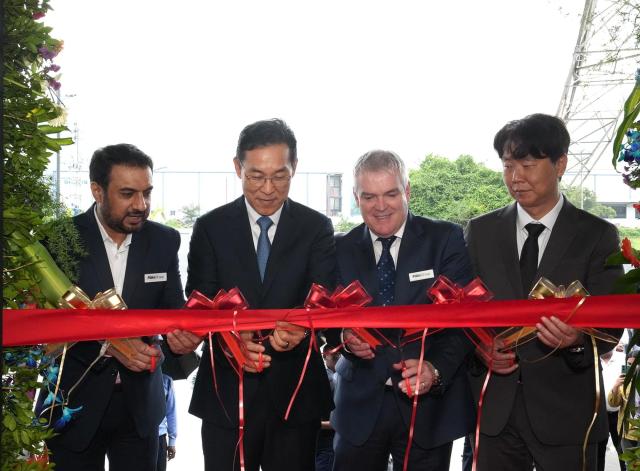
The 13,826-square-meter facility can produce as many as 6,500 HVAC units a year when fully operational, including air handling units, fan wall units and computer room air handlers used to manage temperature and airflow in data centers and large commercial buildings. The plant reached mass-production readiness about six months after equipment installation began early this year.
FläktGroup said in May it was investing 5.7 million euros ($6.7 million) in the Pune facility, with more than 12,000 square meters devoted to production. Pune was chosen partly for its location near industrial corridors and ports serving one of India's fastest-growing data-center markets.
The expansion comes nine months after Samsung completed its acquisition of FläktGroup, Europe's largest HVAC company, giving the Korean technology giant a foothold in a business becoming increasingly important to AI infrastructure. Samsung agreed in May 2025 to acquire the company for 1.5 billion euros and completed the transaction in November.
Samsung said when it announced the deal that the global data-center cooling market was projected to grow about 18 percent annually through 2030, significantly faster than the broader applied HVAC market.
The bet reflects a broader change in the economics of AI.
As more powerful graphics processors and other accelerators are packed into server racks, the infrastructure surrounding those chips — memory, storage, electricity and cooling — is becoming a constraint on how quickly additional AI computing capacity can be deployed.
Moon Song-chun, professor emeritus at the Korea Advanced Institute of Science and Technology, said the growing importance of cooling stems from the enormous increase in computing and data-processing power required by AI workloads.
"Without proper cooling, a data center simply cannot process the data," Moon told AJP. "Cooling technology is one of the most critical elements."
AI data centers are not fundamentally separate from conventional data centers, Moon said. What has changed is the intensity of computing. Vast clusters of GPUs process far larger workloads while users still expect rapid responses, putting heavier demands on electricity supply and thermal management.
The technology is already forcing a change in how servers are cooled.
TrendForce estimates that liquid-cooling penetration in AI server racks will reach 47 percent in 2026 as the thermal design power of individual AI processors rises above 1,000 watts. The research firm says next-generation AI architectures are moving liquid cooling from an optional configuration toward an essential specification.
For Korea, that creates an opportunity to stretch an existing advantage in AI memory across more of the infrastructure stack.
SK links memory with data centers
SK Group is pursuing that integration from another direction, seeking to connect memory production with the data centers that consume it.
SK Telecom last month outlined plans for as much as 15 gigawatts of AI data-center capacity in South Korea, with the goal of turning the country into an Asian AI infrastructure hub.
The company has since established SK Hyper, a dedicated data-center development subsidiary, and committed 750 billion won through 2030 for groundwork including site acquisition and substations.
The scale illustrates how capital-intensive the next stage of AI could become. SK Telecom estimates that building a typical 1-GW AI data center could require about 70 trillion won because of the computing hardware, memory and supporting infrastructure involved. The group plans to combine its own capital with strategic investors, long-term customer contracts and project financing.
SK Telecom is also working with Nvidia on a gigawatt-scale AI cloud in Korea using Nvidia's DSX architecture, with the first AI factory planned to begin operations in 2027.
That data-center push gives SK an opportunity to link computing infrastructure with another business in which the group already holds a commanding position: memory.
SK hynix's board last week approved 54.3 trillion won ($38.4 billion) of investment through 2031 in new semiconductor production facilities in Yongin and Cheongju. The dollar conversion is based on the won trading at about 1,414.4 per dollar Thursday.
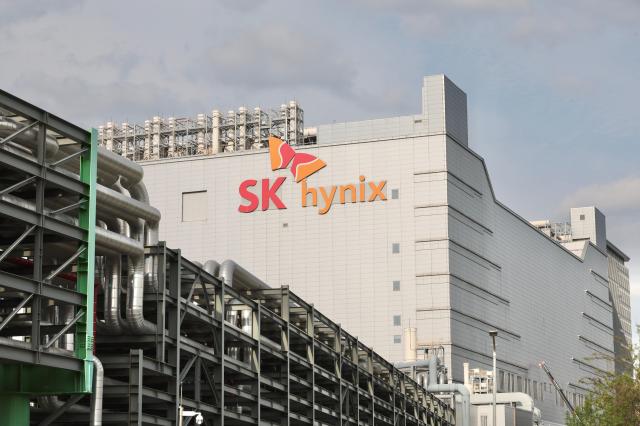
Of that, 35.2 trillion won will go toward Y2, the second of four fabs planned for SK hynix's Yongin Semiconductor Cluster. Construction is scheduled to begin in July next year, with the first cleanroom opening targeted for June 2029 to produce HBM and other advanced DRAM products.
Another 19.1 trillion won will fund the M17 fab in Cheongju, where construction is scheduled to begin in February 2027 and the first cleanroom is targeted for December 2028. M17 will produce NAND flash, including products serving the rapidly expanding enterprise solid-state-drive market for AI servers.
The investment illustrates how the AI infrastructure boom is spreading beyond processors.
AI accelerators depend on HBM to continuously feed them data. Server DRAM provides working memory, while enterprise SSDs hold the expanding volumes of information required for training and inference. Packing those components into increasingly dense server racks, in turn, creates more heat that must be removed.
SK hynix expects both DRAM and NAND demand to grow at a compound annual rate of 19 percent through 2030, citing Omdia estimates, and argues that memory is becoming part of the core infrastructure determining AI performance rather than merely another component.
NAND demand in particular is expanding as AI shifts toward inference, where storage is increasingly used for techniques such as key-value caching to avoid repeatedly calculating the same information.
Samsung and LG chase the heat
Samsung is positioning itself at two ends of that same infrastructure chain.
Its semiconductor business supplies DRAM, HBM and storage products for AI servers, while FläktGroup gives it a business supplying the systems that keep data-center equipment operating within safe temperatures.
FläktGroup operates 13 production sites globally and provides systems ranging from conventional air handling and computer-room air conditioning to liquid cooling and fan-wall solutions for hyperscale and enterprise data centers.
Samsung said last year that FläktGroup had worked on large hyperscale projects, including the Stargate AI infrastructure initiative, giving the Korean company access to customers already building some of the world's biggest computing facilities.
The new Pune line extends that manufacturing network closer to Asian customers and will operate alongside FläktGroup's existing Noida facility in India.
"The completion of this production line in Pune marks an important milestone in expanding HVAC supply beyond India to the Asia-Pacific region," said Kim Cheol-gi, executive vice president and head of Samsung Electronics' Digital Appliances business.
Kim said Samsung plans to combine its AI and platform technologies with FläktGroup's HVAC capabilities to target customers including AI data centers.
Samsung is not alone in chasing the heat.
LG Electronics has made AI data-center cooling a strategic growth business, building what it calls a "chip-to-chiller" portfolio that stretches from cold plates attached close to processors to coolant distribution units and large chillers that remove heat from the facility.
In July, LG's 600-kilowatt coolant distribution unit received Nvidia AI-infrastructure validation after meeting more than 100 technical requirements, making LG a validated supplier for Nvidia-based AI data-center infrastructure.
The unit uses direct-to-chip liquid cooling, circulating coolant close to heat-generating components including GPUs and CPUs while working alongside air-cooling systems. LG plans to extend the technology into larger systems as server-rack power density continues to increase.
The appeal of such systems is becoming clearer as processors grow hotter.
TrendForce says thermal design power has risen from about 700 watts for Nvidia's H100 and H200 processors to more than 1,000 watts for newer generations, helping drive wider adoption of liquid cooling.
The challenge is not simply preventing a server from overheating. Higher power density determines how many processors can be deployed in a rack, how closely those racks can be packed and ultimately how much computing output operators can extract from a data-center site constrained by electricity and cooling capacity.
Moon cautioned against treating the AI data center as an entirely new type of infrastructure.
Data centers have always underpinned computing, he said. What AI has changed is the scale of the workload and the concentration of processing power, placing much greater demands on the infrastructure surrounding the servers.
Korean companies have so far been measured largely by their chips in the global AI race. Samsung, SK and LG are now trying to expand that role into storing, housing and cooling the computing power those chips enable.
For Korea, the bigger opportunity may be not just to supply the memory inside the AI machine, but to capture a larger share of everything required to keep it running.
AJP Takeaways
• South Korean technology groups are moving beyond AI memory into the physical infrastructure surrounding it, targeting data centers, storage and cooling as global AI spending spreads across the supply chain.
• Samsung's FläktGroup has opened a Pune production line capable of making up to 6,500 HVAC units annually, extending Samsung's AI exposure from memory chips to the systems needed to keep data centers cool.
• SK is linking massive memory investment with plans for as much as 15 GW of AI data-center capacity, while SK hynix is spending 54.3 trillion won on new DRAM and NAND fabs in Yongin and Cheongju.

Copyright ⓒ Aju Press All rights reserved.