SEOUL, August 25 (AJP) - Korean households are facing renewed food-cost pressure across home cooking and dining out as extreme summer weather damages crops and fresh produce, adding to already elevated import costs.
Korea Consumer Agency data released Tuesday showed ingredients for one home-cooked samgyeopsal (pork barbecue) meal cost 10,191 won ($7.38) in the first half, up 11.8 percent from a year earlier.
“The first-half trend was moderate, but continuously rising without a single pause,” said Lim Sang-min, head of the consumer price team at the Korea Price Research Center, referring to restaurant prices.
The average restaurant price of pork belly rose 2.7 percent to 17,745 won over the same period, narrowing the price gap between eating at home and dining out to 7,554 won from 8,173 won a year earlier.
Pork belly itself, which accounts for most of the home meal cost, rose 13.6 percent to 7,866 won.
Garlic climbed 10.2 percent and lettuce 6.3 percent. Ssamjang, a fermented dipping sauce, rose 19.8 percent.
Restaurant staples have also continued to become more expensive.
The average Seoul price of samgyetang, or ginseng chicken soup, rose to 18,192 won in July from 18,154 won a month earlier, Korea Consumer Agency data showed.
Cold noodles increased to 12,692 won from 12,615 won, while a roll of gimbap rose for a second straight month to 3,869 won from 3,838 won.
Gimbap had cost 3,723 won at the end of last year.
The increases contrast with an easing in broader headline inflation.
South Korea's consumer inflation slowed to 2.8 percent in July from 3.2 percent in June, according to the Ministry of Data and Statistics.
Agricultural, livestock and fisheries prices rose just 0.9 percent from a year earlier as agricultural prices fell 2.2 percent. Livestock and fisheries prices, however, remained 4.4 percent and 3.9 percent higher, respectively.
Restaurants are contending with higher food costs alongside wages, rent and utility bills, with some ingredients recording particularly steep increases.
Fresh ginseng used in samgyetang averaged 38,750 won for 12 to 14 roots as of Aug. 21, up 56 percent from a year earlier.
Restaurants selling cold noodles have also faced higher beef costs for broth.
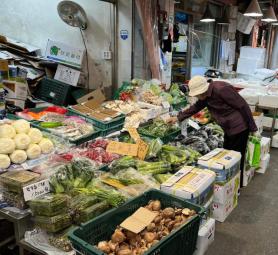
Summer heat has added pressure to fresh produce markets, although the increases have so far been most pronounced in wholesale prices.
Earlier this month, wholesale cucumber prices were up 87.1 percent from a month earlier and spinach prices had jumped 86.5 percent as prolonged heat disrupted crop growth and harvesting.
The government has said overall agricultural supplies remain manageable and has expanded discounts and supply measures aimed at limiting weather-related food price increases.
Processed-food makers are also passing on accumulated costs.
Nongshim raised shipment prices for major cup noodles by an average 6.0 percent and snacks by 5.5 percent from Aug. 1.
Ottogi plans to lift prices of selected cup noodles by an average 6.7 percent and dumplings by 7.7 percent from Sept. 7, citing higher raw-material and packaging costs.
The government earlier this month rolled out 30 billion won in seafood discounts of up to 50 percent through Aug. 23, alongside emergency fish releases and additional farm support ahead of Chuseok.
AJP Takeaways:
- Korea Consumer Agency data showed food costs rose both at home and at restaurants, with ingredients for a home-cooked samgyeopsal meal up 11.8 percent in the first half.
- Korea Consumer Agency data showed Seoul prices for samgyetang, cold noodles and gimbap all increased in July despite headline inflation slowing to 2.8 percent.
- Nongshim raised shipment prices for cup noodles and snacks in August, and Ottogi plans increases for cup noodles and dumplings from Sept. 7.

Copyright ⓒ Aju Press All rights reserved.