
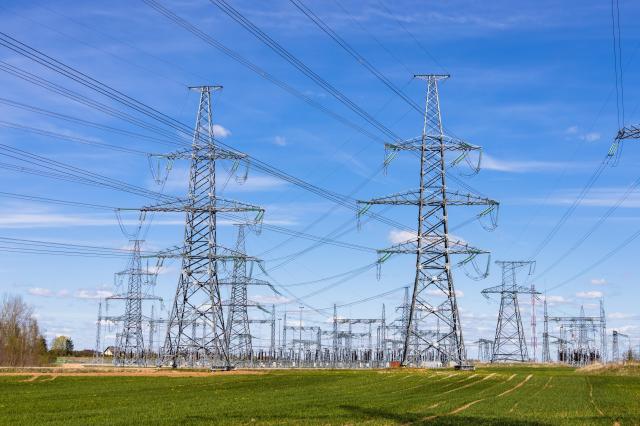
The Ministry of Climate, Energy and Environment and Korea Electric Power Corporation (KEPCO) presented the regional pricing scheme at a Wednesday public hearing in western Seoul, dividing the country into four broad zones with a new "regional adjustment charge" folded into industrial tariffs.
Under the plan, southern regions would see industrial rates fall by 13 to 18 won ($0.009 to $0.013) per kilowatt-hour, or about 7 to 10 percent against last year's average industrial selling price of 181.9 won.
The central zone of Chungcheong and Gangwon would drop 5 to 8 percent, and the northern capital area 3 to 8 percent.
The power differentiation comes as Seoul presses aggressively with its so-called Three Megaprojects envisioning to create chip, physical AI and datacenter belt beyond the capital region.
Honam and the southwest are being positioned as Korea’s second memory semiconductor production base. Chungcheong is being developed as a hub for HBM, advanced packaging, displays, batteries, and bio manufacturing.
Yeongnam and Daegyeong are being assigned to host bases for physical AI, robotics, materials, components, equipment, power semiconductors, and manufacturing conversion. AI data centers are intended to connect these regional clusters into a national compute network.

The government aims to break a one-directional structure in which power generated outside the capital is funneled through the grid into Seoul and its surroundings.
About 40 percent of the electricity produced in South Korea is consumed in the capital area, which drew 40.6 percent of national power sales last year.
That strain is set to deepen as a semiconductor cluster rises in Yongin, south of Seoul, where Samsung Electronics and SK hynix fabrication plants are expected to require 14 gigawatts by 2041, roughly the output of 10 large nuclear reactors.
Currently, the capital area's power self-sufficiency stands at about 66 percent.
The plan has drawn concern that rates could differ across a single road, stoking friction between neighboring districts, and that basing cuts on self-sufficiency rewards areas already benefiting from nearby plants.
Officials in cities such as Daegu warned that lowering rates for power-rich regions "could amount to double benefits that undermine fairness between regions," according to a March review report to the National Assembly.
Even the deepest discounts would leave industrial rates above China's, raising doubts about the plan's effectiveness while adding to the burden on KEPCO, which forecasts about 2.8 trillion won in forgone revenue.
To offset that, the government will introduce location based marginal pricing on wholesale power, buying more cheaply from generators outside the capital.
The government and KEPCO plan to complete the procedures for the regional pricing scheme within the year.
AJP Takeaways
• South Korea's Ministry of Climate, Energy and Environment and Korea Electric Power Corportaion unveiled a regional electricity pricing plan that would cut industrial power rates by up to about 10 percent in southern regions while leaving the southern capital area essentially unchanged.
• Southern industrial rates would fall 13 to 18 won per kilowatt-hour, measured against an average industrial selling price of 181.9 won per kilowatt-hour.
• The plan aims to ease the capital area's concentration of power demand, which accounted for 40.6 percent of national electricity sales last year, though even discounted rates would remain above China's and cost KEPCO about 2.8 trillion won ($2.02 billion) in forgone revenue.

Copyright ⓒ Aju Press All rights reserved.
