
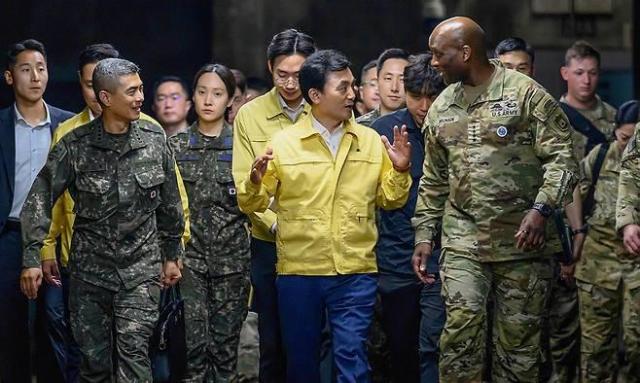
President Lee Jae Myung's nomination of retired four-star Gen. Kang Shin-chul as defense minister effectively puts a career military officer back in charge after just over a year under South Korea's first civilian defense chief in more than six decades.
Kang is set to succeed Defense Minister Ahn Gyu-back, a five-term lawmaker who became the country's first civilian to head the ministry in 64 years when he took office in July 2025.
Ahn took office pledging a series of defense reforms. His final months, however, have been consumed by resistance to the government's plan to integrate the Army, Navy and Air Force academies and a political dispute over his military service more than four decades ago.
Opposition figures have alleged that irregularities in Ahn's service record reflected an absence without leave and time in military detention. Ahn and the Defense Ministry have rejected allegations that he deserted his post, saying discrepancies in the record stemmed from administrative handling. The issue remains under investigation.
The controversy came as Ahn was already struggling to build consensus around one of the Lee administration's most contentious military reforms.
The government and ruling Democratic Party agreed in July to establish a four-year integrated military academy at Jaundae in Daejeon, bringing together the Army, Navy and Air Force academies. The plan is intended to improve joint operations and adapt officer education to a military facing a shrinking pool of recruits.
Alumni groups from the three academies have pushed back, arguing that the overhaul is being pursued without sufficient consultation and risks weakening the identities and specialized traditions of the individual services.
Against that backdrop, Kang's selection looks less like a reversal of Ahn's reform agenda than an attempt to put a senior military figure in charge of carrying it through an increasingly resistant institution.
Kang, a Korea Military Academy graduate, built much of his career around joint operations, defense policy and the South Korea-U.S. alliance. He served in senior positions at the Joint Chiefs of Staff before becoming deputy commander of the South Korea-U.S. Combined Forces Command in 2023, the highest post available to a South Korean officer within the command. He retired in September 2025 and has served as ambassador to Saudi Arabia since January.
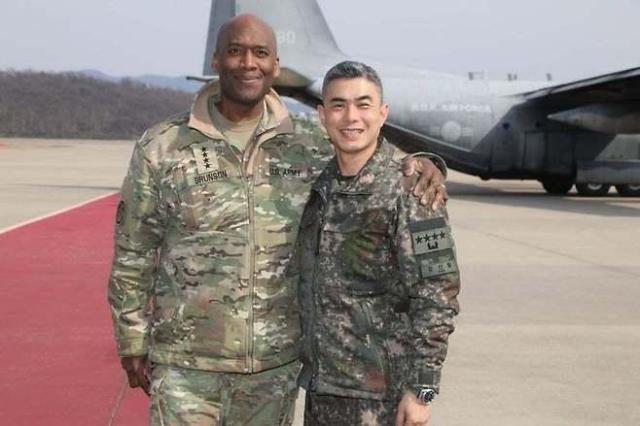
Seoul and Washington are grappling with the transition of wartime operational control, questions over the future scale and direction of combined exercises and a broader debate over how the two allies should divide military responsibilities as Washington adjusts its regional posture.
The United States has already scaled back parts of its military exercise schedule with South Korea even as Seoul, Washington and Tokyo prepare for another round of trilateral Freedom Edge drills focused on missile defense and other responses to North Korea's nuclear and missile capabilities.
One military source, speaking on condition of anonymity, offered a cautious assessment of what Kang's return is likely to mean.
“He is known to be smart and quick on his feet, but I would not say his operational expertise runs particularly deep,” the source said. “He is not the type to push through his own views based on conviction or military expertise. I expect him to largely carry out the defense policies set by the current administration.”
Kang's immediate task, therefore, is unlikely to be designing another reform blueprint. It will be turning policies already chosen by the civilian leadership into measures the military can absorb without deepening resistance inside the ranks.
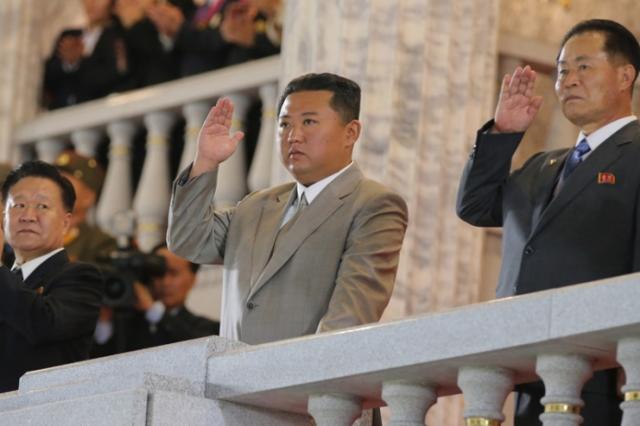
At a Workers' Party Central Military Commission meeting Saturday, Kim Jong Un replaced Defense Minister No Kwang-chol with Kim Song-gi, who had headed the Korean People's Army's powerful General Political Bureau.
Pak Jong-chon, one of North Korea's most experienced military figures, was simultaneously restored as vice chairman of the Central Military Commission, roughly six months after losing senior party and military positions during February's Workers' Party congress.
Pak also returned to the party Central Committee and Politburo, restoring him to the center of military decision-making.
His return matters because military authority in North Korea does not rest primarily with the Defense Ministry.
It runs through Kim Jong Un and the Workers' Party, particularly the Central Military Commission that Kim chairs. The body sits at the intersection of military command, personnel decisions and the party's control over the armed forces.
Pak's career has been closely associated with artillery, missile forces and military modernization. Bringing him back just months after his removal underscores the fluidity of North Korea's senior ranks but also restores an experienced commander as Pyongyang presses ahead with new weapons programs.
The other appointments reveal an equally important concern - control from within.
Yu Kwang-u, who headed the KPA Security Bureau responsible for internal security and counterintelligence, was moved to first vice director of the General Political Bureau. Om Ju-ho, previously political commissar of the Air Force, replaced him as head of the Security Bureau.
The reshuffle effectively rotates officials across two institutions central to surveillance, political indoctrination and discipline within the military.
It comes as Pyongyang has increasingly emphasized both discipline inside the armed forces and advances in weapons technology.
Kim met defense scientists and researchers involved in developing and improving new combat systems around the same time as the military commission gathering, according to state media. Former Defense Minister No, meanwhile, was moved rather than discarded, taking a senior post as first vice director of the party's Munitions Industry Department — an organization at the heart of North Korea's weapons-production apparatus.
State media said the Central Military Commission expected the newly appointed commanders to be firmly armed with the party's vision of building a powerful military and to carry out its military policies with what it called “boundless devotion” and exceptional initiative.
The personnel moves on opposite sides of the Demilitarized Zone therefore reveal two very different military problems.
Seoul has spent the past year testing how far a civilian defense minister could push institutional reform through a deeply hierarchical military establishment. With some of those reforms now encountering resistance, Lee has chosen a retired general familiar with both the armed forces and alliance machinery to carry them forward.
Pyongyang faces no comparable problem of winning institutional consent. Its concern is keeping the military politically reliable and operationally effective while weapons programs expand rapidly.
In Seoul, the general is being brought back to manage reform.
In Pyongyang, experienced commanders and political officers are being rearranged to make sure the military follows the party while the arsenal grows.
AJP Takeaways
• South Korea and North Korea are simultaneously reshuffling their military leadership, but Seoul is focused on stabilizing defense reform while Pyongyang is strengthening party control and weapons modernization.
• President Lee Jae Myung nominated retired four-star Gen. Kang Shin-chul to replace civilian Defense Minister Ahn Gyu-back as resistance builds against plans to integrate South Korea's three military academies.
• North Korea replaced Defense Minister No Kwang-chol with Kim Song-gi and restored veteran commander Pak Jong-chon as vice chairman of the Workers' Party Central Military Commission.

Copyright ⓒ Aju Press All rights reserved.
