
SEOUL, September 02 (AJP) - Investment banks and market trackers are betting South Korea's memory giants can extend their red-hot earnings streak into a third year in 2027 and possibly beyond, as AI pushes the business away from the spot-price-driven boom-and-bust cycles that have long defined memory chips.
Before the rise of AI, earnings at Samsung Electronics and SK hynix were heavily exposed to prices for mass-market DRAM and NAND flash, commodities notorious for swinging between shortage and glut.
Today, at least in advanced memory, the business is beginning to look different.
Samsung Electronics and SK hynix are increasingly locking in multi-year supply arrangements with major customers, giving them greater visibility into future demand while allowing AI chipmakers and hyperscalers to secure supplies of increasingly critical high-bandwidth memory, or HBM.
In that respect, part of the memory business is moving closer to the long-term customer relationships seen at Taiwan's TSMC, the world's dominant pure-play foundry, rather than relying as heavily on short-term commodity pricing.
The shift could make the memory cycle more predictable — and potentially less violent — than in the past.
Industry experts, however, caution that long-term agreements, or LTAs, cannot eliminate one of memory's defining characteristics: the risk that supply eventually outruns demand.
What exactly is an LTA?
A long-term agreement is essentially an arrangement under which a supplier and customer commit to a business relationship covering future chip supplies.
The terms vary widely by supplier and customer, including the length of the contract, volume commitments, pricing mechanisms and penalties.
What makes LTAs particularly important in the AI boom is the enormous amount of money and time required to produce advanced memory.
Semiconductor manufacturers cannot quickly respond to a sudden jump in demand. New fabrication capacity and production equipment must often be planned months or years before the resulting chips reach customers.
That creates a problem for both sides.
Memory makers need confidence that customers will still want their chips by the time new capacity comes online. AI chipmakers and hyperscalers need confidence that enough memory will be available for the accelerators and servers they plan to deploy.
LTAs help bridge that gap.
"It is essentially a case where the interests of both sides align," said Lee Jong-hwan, professor of system semiconductor engineering at Sangmyung University.
For Samsung Electronics and SK hynix, knowing expected volumes in advance gives them a clearer basis for deciding how much capacity to build and when to invest, Lee said.
Customers face the opposite problem. Many leading AI semiconductor companies are fabless and cannot manufacture the memory they need themselves.
U.S. big tech companies therefore want to secure supplies in advance because a shortage of memory could constrain deployment of their AI chips and data-center infrastructure, Lee said.
The amount of memory covered by long-term agreements is consequently becoming an increasingly important indicator of future demand, he added.
Why both sides benefit
For memory manufacturers, the biggest advantage is visibility.
Building or expanding a semiconductor fabrication facility requires billions of dollars, while production equipment often must be ordered well before actual demand materializes.
Long-term commitments give manufacturers greater confidence about how much capacity they may need several years ahead, reducing some of the uncertainty surrounding those investment decisions.
Lee said some agreements can extend as far as five years, giving manufacturers a basis for estimating future production volumes and determining when additional production-line investment will be necessary.
For customers, the principal benefit is supply security.
AI accelerators cannot function without advanced memory. Securing GPUs or other processors has limited value if sufficient HBM cannot be obtained alongside them.
By committing earlier, customers reduce the risk of memory becoming the bottleneck that prevents them from deploying AI infrastructure.
The arrangement effectively divides the risk: suppliers gain greater confidence that future production will find buyers, while customers gain greater confidence that capacity will be available when they need it.
A stabilizer, not a cure
The bigger question is whether those arrangements can make the notoriously volatile memory cycle less severe.
Kim Deok-kee, professor of electrical engineering at Sejong University, said LTAs should have a stabilizing effect because they reduce some of the mismatch between supply and demand that has historically driven extreme cycles.
Memory has traditionally been highly cyclical precisely because supply and demand frequently fail to match, Kim said. Locking in part of future demand should therefore make the market more stable than before.
But that stability has limits.
A contract does not necessarily guarantee that every committed chip will ultimately be purchased.
Depending on individual terms, customers could choose to absorb contractual penalties if abandoning or modifying an agreement becomes economically preferable, Kim said.
Details of individual LTAs are generally not made public, making it difficult to know how binding each arrangement ultimately is.
More importantly, contracts cannot eliminate the underlying economics of memory.
"LTAs can reduce those fluctuations, but I don't think they can completely solve them," Kim said.
Even with long-term agreements, supply and demand cannot match perfectly, leaving open the possibility of another oversupply cycle.
That risk would become more important if today's AI infrastructure boom slows unexpectedly.
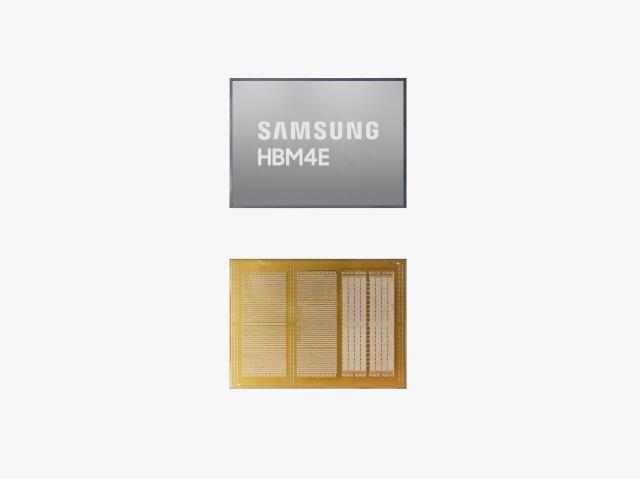
Demand is exceptionally strong as hyperscalers race to build data centers and deploy AI infrastructure. But if that investment cycle cools after memory manufacturers have expanded production, excess capacity could once again push prices sharply lower.
The emergence of Chinese memory manufacturers adds another source of uncertainty if additional capacity eventually intensifies price competition, Kim said.
That helps explain why manufacturers remain cautious about aggressive capacity expansion despite today's extraordinary demand.
Existing infrastructure can be repurposed to increase output rather than relying exclusively on large-scale greenfield expansion, Kim said, suggesting producers remain conscious of the danger of building too much capacity.
A boom big enough to move an economy
The stakes extend well beyond the balance sheets of Samsung Electronics and SK hynix.
South Korea's semiconductor exports reached a record $46.65 billion in August, accounting for 47.5 percent of the country's total exports of $98.25 billion, according to the Ministry of Trade, Industry and Energy.
Overall exports surged 68.7 percent from a year earlier to an all-time monthly high, bringing the country within striking distance of the $100 billion mark for the first time. The trade surplus reached $34.75 billion.
The figures show just how heavily South Korea's export boom has come to depend on semiconductors, fueled by surging demand for HBM and other advanced memory used in AI infrastructure.
Yet the chip boom has not spread evenly through the domestic economy.
Retail sales fell 2.4 percent in July from the previous month, while overall industrial production was unchanged, according to government data.
Sales of durable goods, including passenger vehicles, dropped 7.7 percent, while sales of semi-durable and non-durable goods also declined.
Semiconductor earnings and exports can therefore soar without producing an equally dramatic improvement in household consumption or other parts of the economy.
That makes the durability of the memory upcycle increasingly consequential not only for Samsung Electronics and SK hynix but for South Korea's broader economic outlook.
During previous booms, memory manufacturers had to make enormous investment decisions largely on forecasts of future demand. When those forecasts proved too optimistic, new capacity sometimes arrived just as demand weakened, exacerbating oversupply and sending prices tumbling.
LTAs give manufacturers something they lacked in those cycles: a clearer view of at least part of future demand.
They do not guarantee that the view will prove correct.
For an industry accustomed to swinging from shortage to glut and back again, however, greater visibility alone could make today's AI-driven memory boom different from those that came before.
LTAs may not kill the memory cycle. But they could make its swings less violent.
AJP Takeaways
● Long-term agreements are giving Samsung Electronics and SK hynix greater visibility into future AI memory demand, potentially reducing the severity of traditional memory cycles.
● LTAs benefit both sides: memory makers gain greater confidence for capacity investment, while AI chipmakers and hyperscalers secure critical HBM supplies in advance.
● Contracts cannot eliminate the cycle altogether, as weaker AI investment, excess capacity or rising Chinese competition could still push the memory market back into oversupply.

Copyright ⓒ Aju Press All rights reserved.
