South Korea has yet to decide whether to send military assets to the strategic waterway, but the Trump administration has become increasingly explicit in demanding support from an ally heavily dependent on Middle Eastern energy.
The dilemma is being watched closely in Japan, which faces an even greater exposure to Hormuz and many of the same questions over how far a U.S. ally should go in sharing the burden of keeping vital sea lanes open.
The South Korean Ministry of National Defense said Monday that no specific form of military contribution has been decided, stressing that discussions remain under way with the United States and other partners.
“The government is closely consulting with the international community, including the United States, on practical ways to contribute to freedom of navigation in the Strait of Hormuz and the swift restoration of peace and stability in the Middle East,” a Defense Ministry official said. “No specific measures have been decided at this point.”
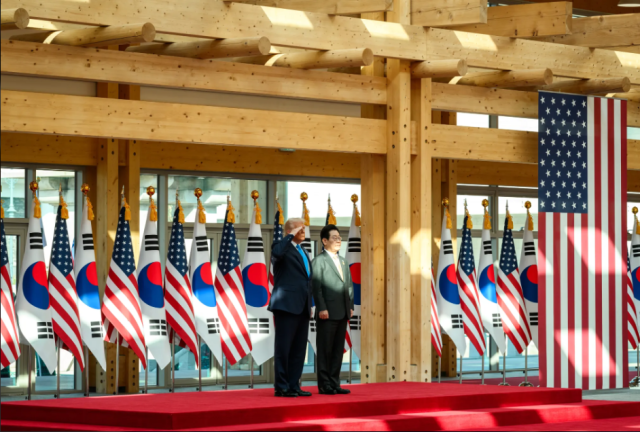
The ministry said Seoul has also been holding consultations with Britain and France without disclosing details.
The comments came as Washington sharpened its public pressure.
A White House official said Sunday that the United States was “still waiting” for South Korea to deploy resources to the region, pointing directly to the country's reliance on Middle Eastern oil.
The Pentagon separately reiterated President Donald Trump's expectation that allies help defend freedom of navigation through Hormuz.
Trump has repeatedly singled out South Korea since the war with Iran began on Feb. 28.
He said in March that South Korea, Japan, China and other countries dependent on the strait would “have to get involved a little bit,” while emphasizing that Washington had long helped defend South Korea.
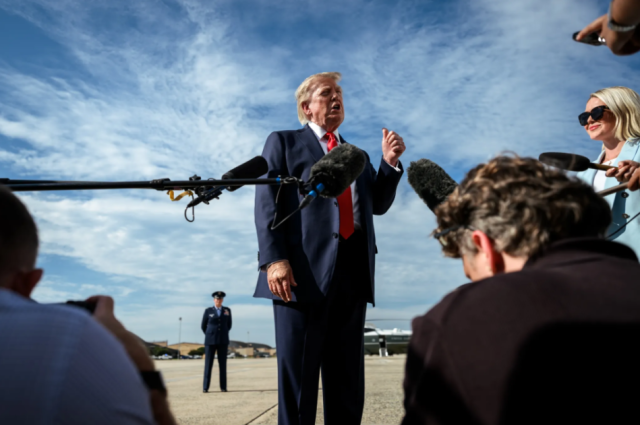
Trump said late last month that he would “remember” what he described as South Korea's reluctance to assist the United States over Iran.
He also recently shared a Washington Post opinion column urging him to pressure Seoul to sell its Cheongung-II, or M-SAM II, air defense system to Ukraine, adding to perceptions that Washington expects a broader security contribution from its ally.
The implication has not been lost on Tokyo.
Japan and South Korea sit in remarkably similar positions as two of Washington's closest Asian allies and major importers of Middle Eastern energy.
Japan's dependence is even greater.
Around 93 percent of Japan's crude oil imports pass through the Strait of Hormuz, compared with roughly 61 percent for South Korea.
The disparity leaves Tokyo vulnerable to the same argument Washington is already making to Seoul: countries whose economies depend on the waterway should contribute more directly to keeping it open.
Japanese media have increasingly framed South Korea's deliberations as a possible precedent.
A Korean deployment, even one limited to surveillance, logistics or mine-clearing support, could make it harder for Tokyo to resist similar pressure from Washington.
Japan has so far avoided committing Self-Defense Force assets to an active operation.
Its government has instead emphasized diplomacy, safe navigation and close coordination with international partners while insisting that no deployment decision has been made.
Tokyo, however, has not remained outside discussions.
Japan has taken part in consultations over a possible multinational mission led by Britain and France, reflecting concerns that prolonged disruption to Hormuz would pose an immediate threat to the country's energy security.
The legal and political hurdles are higher for Japan.
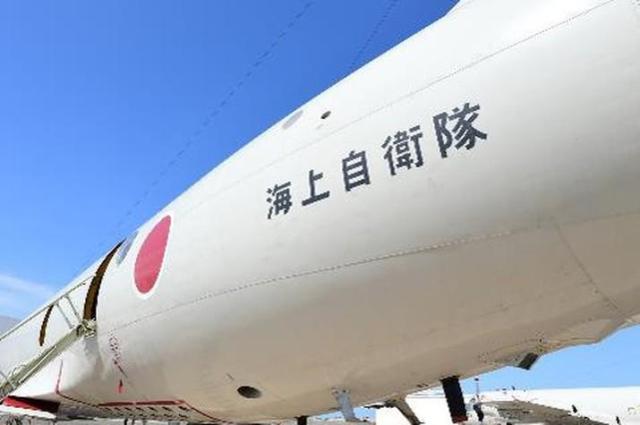
Mine-clearing after hostilities subside would be one of the more legally feasible options, while operating amid active combat would be far more complicated.
South Korea faces fewer constitutional constraints but carries its own political risks.
Iran has warned that any South Korean military action directed against it would be considered participation in the war.
Seoul therefore has strong incentives to draw a clear distinction between protecting commercial shipping and taking part in combat operations.
Defense experts said a narrowly defined deployment could offer a middle course.
“We have reached a point where it is time to consider a deployment,” Choi Ki-il, a professor of military studies at Sangji University and head of the Korea Defense Industry Research Institute, told AJP.
Choi said any mission should focus on protecting South Korean vessels and crews and supporting freedom of navigation rather than taking part in direct combat against Iran. “Even if we deploy, our role should be limited to protecting our own ships,” Choi said.
He said maritime patrol aircraft, warships or logistics support assets could be considered depending on what the government determines is necessary.
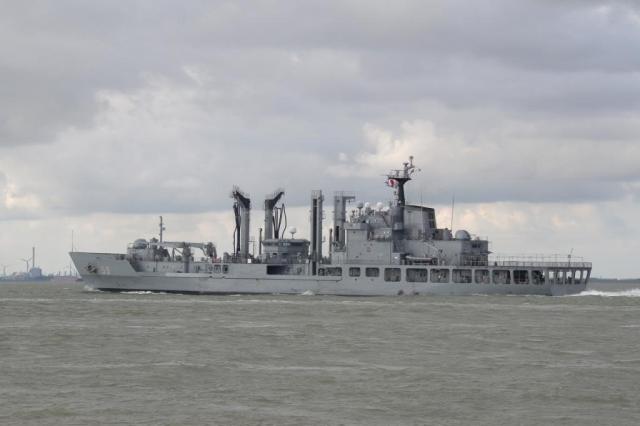
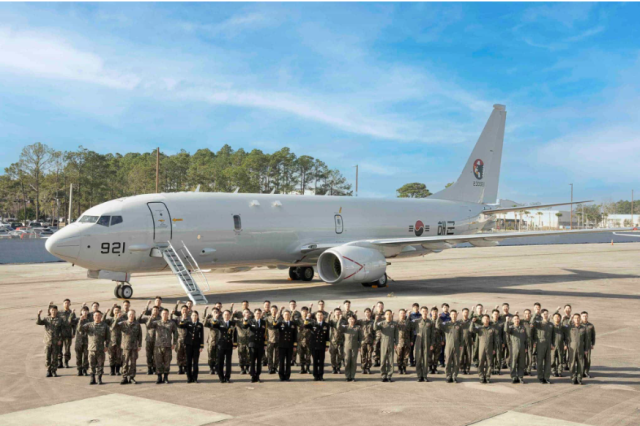
Among the assets reportedly under consideration are the Navy's P-8A Poseidon maritime patrol aircraft and the 11,000-ton ROKS Soyang fast combat support ship.
The P-8A can conduct wide-area maritime surveillance, while the Soyang can provide fuel, ammunition and other supplies to naval forces at sea.
The Defense Ministry stressed Monday that no specific assets, timing or scale have been decided.
A multinational framework could give Seoul greater political room.
Britain and France have been leading discussions over a defensive force aimed at protecting civilian shipping and supporting mine-clearing operations in and around the strait.
“If South Korea participates, it should not do so independently, but as part of a coalition force,” Kim Hong-yoo, a professor at Kyung Hee University and a policy committee member of the Korea Defense Industry Association, told AJP.
Kim said a coalition format could allow South Korea to take on support functions without leading a separate Korean operation.
Coalition fleets can include not only combat vessels but logistics and other support ships, he said.
The National Security Council would likely become involved once a deployment decision is made because the government would then have to determine which forces could be spared without undermining South Korea's own defense posture, Kim said.
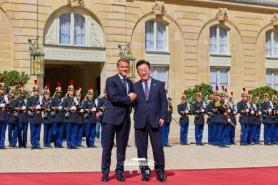
President Lee Jae Myung's state visit to France adds another layer to the deliberations.
Lee is scheduled to hold summit talks with French President Emmanuel Macron on Tuesday.
France, together with Britain, has played a leading role in discussions over a multinational Hormuz mission, making the issue a possible subject for discussion even though neither government has confirmed it will be on the summit agenda.
The same formula could eventually become relevant to Japan.
Tokyo's domestic debate already reflects competing instincts.
Conservative voices have argued that Japan cannot indefinitely rely on other countries to protect a waterway indispensable to its economy and have called for a Maritime Self-Defense Force contribution.
Others argue that Japan should avoid being pulled into a widening war and instead use its long-standing diplomatic channels with both Washington and Tehran.
The debate ultimately goes beyond Hormuz.
Washington's pressure on Seoul is becoming a broader test of how the United States expects its Asian allies to share security responsibilities outside Northeast Asia.
South Korea and Japan have long relied on the U.S. military to deter threats closer to home.
The Trump administration is increasingly asking what they are prepared to do in return when American strategic interests and global trade routes are at risk elsewhere.
A South Korean decision to send even limited assets could therefore change more than Seoul's relationship with Washington.
It could establish a new benchmark for Asian allied burden-sharing.
Tokyo would then have to explain why Japan, whose economy depends even more heavily on Hormuz, should remain on the sidelines.
For Seoul, the immediate challenge is finding a contribution substantial enough to satisfy Washington without crossing the line into direct participation in the Iran war.
For Tokyo, the harder question may be what happens if South Korea moves first.
AJP Takeaways
- Washington is intensifying pressure on South Korea to contribute to reopening the Strait of Hormuz.
- Tokyo is watching Seoul closely as Japan could face the same U.S. demand given its even heavier dependence on Middle Eastern oil.
- South Korea is weighing limited roles such as maritime surveillance, logistics and coalition support rather than direct combat.
- A Korean deployment could set a precedent for how Washington expects its Asian allies to share security burdens beyond their home region.

Copyright ⓒ Aju Press All rights reserved.