SEOUL, September 08 (AJP) - A government program created this year to keep South Korea's most decorated scientists in the laboratory after they reach retirement age will pay for five years of kidney disease research at Sookmyung Women's University.
The Ministry of Science and ICT announced the program on April 2 and picked 20 researchers nationwide with the National Research Foundation of Korea. Universities and state-funded institutes could nominate up to three candidates each. Eligibility extended to researchers aged 61 and over who had already retired or who would reach mandatory retirement within three years of the July 1 start date, including those without tenure. The ministry built the program around a problem it named plainly, that a researcher's most productive networks and expertise are cut off on a fixed date regardless of what that researcher is still capable of producing.
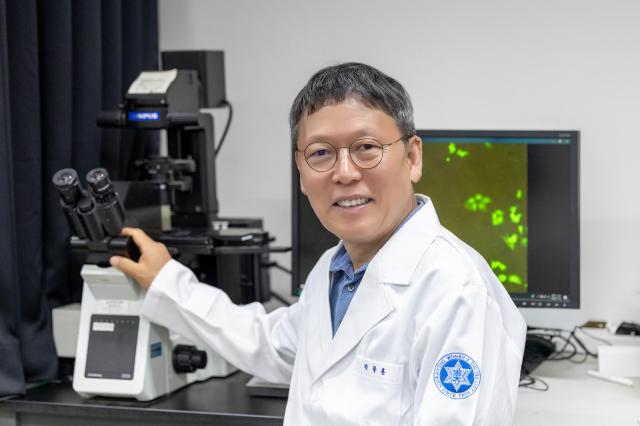
Among the 20 is Park Jong-hoon, a research professor at Sookmyung's Research Institute of Women's Health. The award is worth up to 1.125 billion won, about $836,000 at 1,345 won to the dollar, over five years.
Park spent 23 years teaching in the university's Division of Biological Sciences and retired in August 2024.
He received the Innovation Medal of the Order of Science and Technology Merit in 2026, the second of the honor's five grades. The citation credited his basic research and his work on national strategic technology projects, along with his service to scientific societies and government committees. He led the Korean Society for Biochemistry and Molecular Biology as its president in 2022, an organization of more than 17,000 members. Sookmyung said he has published more than 100 papers, including articles in journals indexed in the Science Citation Index Expanded.
The funded work centers on polycystic kidney disease, an inherited disorder in which fluid-filled sacs multiply through both kidneys until they crowd out functioning tissue. Patients often live decades without symptoms before the damage forces them onto dialysis or a transplant list. There is no cure.
Park plans to run secretome profiling on polycystic kidney disease cell lines. The secretome is the full set of proteins and other molecules a cell releases into its surroundings, the chemical vocabulary cells use to talk to one another. By cataloging what diseased kidney cells send out, he intends to identify the key factors that govern those exchanges, then trace how changes in cell-to-cell signaling line up with the way the disease starts and worsens.
The approach breaks with how the field has largely worked. Most research has examined the cyst cell on its own, treating the disease as a failure inside individual cells rather than a breakdown in how cells coordinate.
What the project will produce is a proposed mechanism, not a treatment. The work runs in cultured cell lines, not in patients or animals, and identifying a signaling factor is several steps removed from showing that blocking it slows cyst growth in a living kidney. Nothing in the plan tests a drug.
"We will move away from research centered on single cyst cells and establish a new paradigm that expands the study of polycystic kidney disease mechanisms around the network between cells," Park said.
Copyright ⓒ Aju Press All rights reserved.