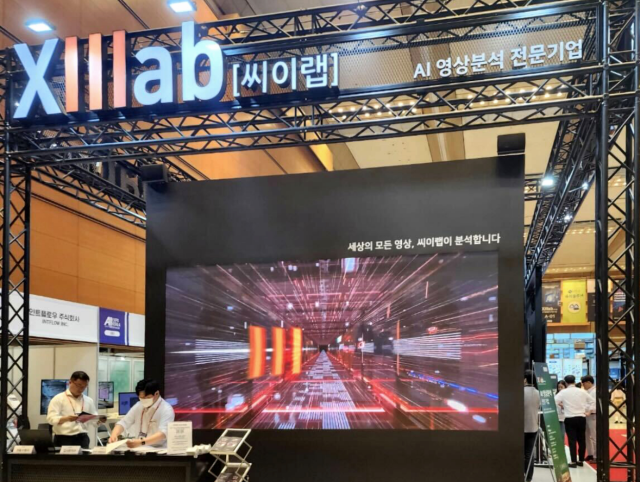
Shares traded at 11,760 won ($8.46) as of 2:09 p.m. on the KOSDAQ, up 4.91 percent from the previous close of 11,210 won. The stock opened at 11,800 won and climbed as high as 12,690 won during the session before giving back part of its gains.
“For physical AI to work in the real world, models trained in virtual environments need to perform reliably in real-world settings,” Chief Technology Officer Eugene Song said. “We will continue to advance technologies combining virtual and field data to support the real-world deployment of physical AI.”
The advance came after the company said its team took first place in Track four of the 10th AI City Challenge, an international computer vision competition whose winners were announced at the 19th European Conference on Computer Vision (ECCV 2026) in Malmö, Sweden. The final results were confirmed after organizers completed code, eligibility and reproducibility reviews.
The competition, organized by NVIDIA, focuses on technologies for intelligent transportation, smart cities and large-scale video analysis. A major theme is synthetic-to-real (Sim2Real) learning, which examines whether models trained on artificial data can retain their performance when applied in real world settings.
For Track four, participants trained their models using more than 1.01 million synthetic images showing normal and abnormal human behavior. They were then evaluated using 1,978 text queries and a gallery of real images, with the task requiring models to find specific people based on descriptions of their appearance, actions and surroundings. XIIlab's team recorded a mean average precision score of 99.3020 percent, ranking first in the final results.
The challenge is closely tied to physical AI, which enables machines such as robots, autonomous vehicles and industrial equipment to perceive and respond to their surroundings. Training such systems often relies on simulations and synthetic data before they are deployed in factories, logistics centers and other physical environments.
XIIlab plans to apply the technology to its computer vision and digital twin businesses. The company aims to use digital replicas of physical spaces to generate training data, train AI models and test them before deploying them at actual sites.
Founded in 2010, XIIlab develops AI software that analyzes video to identify people, objects and events. It also creates synthetic data for AI training and develops GPU-based software used in AI computing systems. The company listed on the KOSDAQ in February 2021.
AJP Takeaways
- South Korean artificial intelligence startup XIIlab rose 4.91 percent to 11,760 won ($8.46) on the KOSDAQ as of 2:09 p.m. on September 9, 2026, after winning a computer vision competition focused on synthetic-to-real AI performance.
- XIIlab took first place in Track 4 of the 2026 AI City Challenge, with the final result announced at the 19th European Conference on Computer Vision (ECCV 2026) after organizers reviewed the team's code and eligibility.
- In Track 4, participants trained models on more than 1.01 million synthetic images and tested them on real-world images, with XIIlab recording a mean average precision score of 99.3020 percent.

Copyright ⓒ Aju Press All rights reserved.