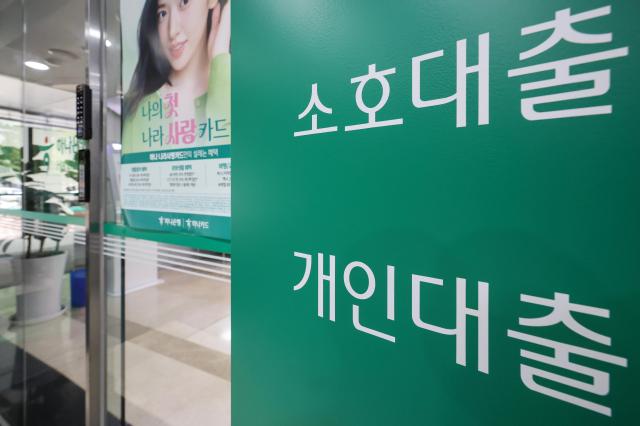
Outstanding borrowing reached 69.73 trillion won at the end of July, according to Financial Supervisory Service data submitted to Rep. Park Sung-hoon. The figure represents funds actually drawn by borrowers rather than their total approved credit limits.
The number of active overdraft accounts rose just 0.5 percent to 4.89 million from 4.87 million at the end of last year, while outstanding borrowing increased by 6.09 trillion won, or 9.6 percent, from 63.64 trillion won.
The number of accounts increased at KB Kookmin Bank, KakaoBank and Hana Bank while declining at lenders including NH NongHyup Bank, Standard Chartered Bank Korea and Toss Bank.
Average outstanding borrowing per active account rose 9.0 percent to about 14.25 million won in July from 13.07 million won at the end of last year.
Most of the increase was concentrated between April and July.
Outstanding balances rose by 5.78 trillion won during the four-month period, accounting for 95 percent of the total increase recorded in the first seven months of the year.
Balances increased by another 1.15 trillion won, or 1.7 percent, in July alone despite a sharp correction in the domestic stock market. The number of active accounts edged up only about 0.1 percent.
The July balance was the highest compared with past quarter-end figures since the end of 2021, when overdraft borrowing reached 70.18 trillion won amid low interest rates and a surge in retail stock investment.
Borrowers, however, are paying substantially more for credit than during the previous peak.
The weighted average interest rate on overdraft borrowing stood at 5.64 percent at the end of July, 1.70 percentage points above the 3.94 percent recorded at the end of 2021.
The increase has raised questions over whether some of the borrowing is being used to finance leveraged stock investment alongside household demand for living expenses and other short-term funding.
The Bank of Korea said in its September Monetary Policy Report released last Thursday that housing price gains in the Seoul metropolitan area and household loan growth were both accelerating.
The trends have kept financial stability risks high on the central bank's policy agenda.
The BOK also estimated that leveraged investment financed through unsecured credit and other forms of household borrowing expanded sharply in the second quarter. The FSS data, however, do not identify how borrowers used funds drawn from overdraft accounts.
Park called on financial authorities to look beyond aggregate lending volumes and more closely monitor household cash flows and dependence on borrowing.
AJP Takeaways
- Outstanding overdraft borrowing at South Korean banks reached 69.73 trillion won at end-July, up 9.6 percent from the end of last year, while the number of active accounts rose just 0.5 percent.
- Average borrowing per active account rose 9.0 percent to 14.25 million won, with 95 percent of this year's increase concentrated between April and July.
- Overdraft borrowing is approaching its 2021 peak, but the average borrowing rate is 1.70 percentage points higher at 5.64 percent, leaving borrowers with heavier financing costs.

Copyright ⓒ Aju Press All rights reserved.