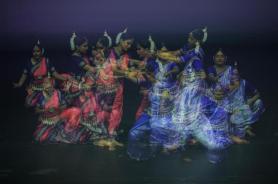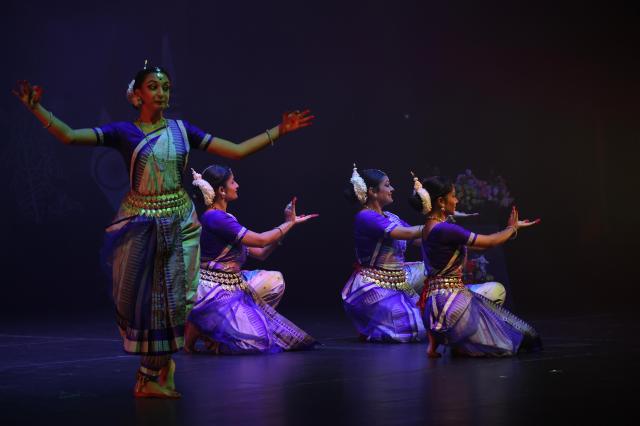
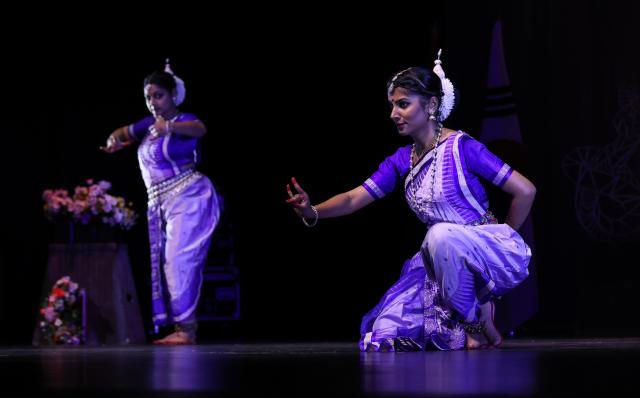
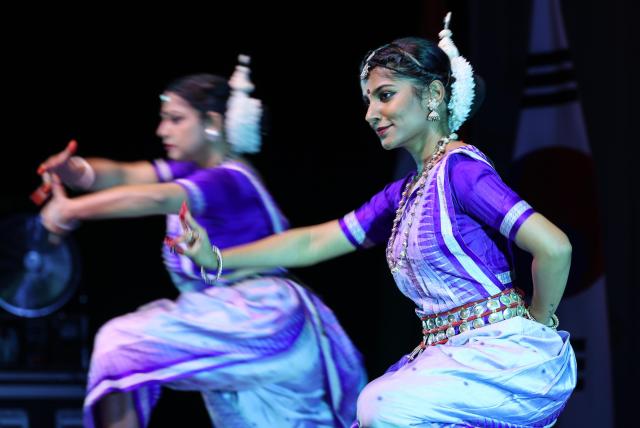
The rhythm was distinctive. Knees bent low, wrists turned sharply and elbows shifted into angular positions, while fingers repeatedly formed delicate shapes, at times with three fingers extended. A slight movement of the eyes or fingertips could change the mood of a scene.
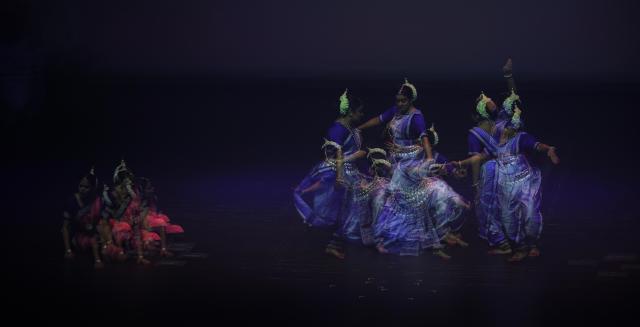
For nearly the entire performance, there were no elaborate stage props. Yet the stage rarely felt empty.
That was the language of Odissi on display Tuesday evening at Ewha Womans University’s Samsung Hall in western Seoul, where the 2026 Sarang Festival of India in Korea opened with “Siya Ram ... the eternal saga,” a full-length dance drama based on the Ramayana, one of India’s most revered epics.
Presented by the Nrityantar Dance Ensemble and choreographed and directed by noted Odissi dancer Madhulita Mohapatra, the production followed Sita and Rama through love, exile, abduction, sacrifice, war and eventual reunion.
Ramayana, Rama is the prince of Ayodhya and Sita his wife, whose relationship lies at the heart of the epic. Their story begins with love and marriage but is soon tested when Rama is sent into exile for 14 years. Sita chooses to accompany him, only to be abducted by Ravana, the powerful king of Lanka. Rama’s search for her ultimately leads to war and, after a long separation, their reunion.
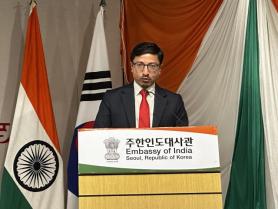
“A movement of the hand can tell a story, a glance can express an emotion, a sculptural pose can suddenly bring to life images that have adorned Indian temples for centuries,” Indian Ambassador to Korea Gourangalal Das said.
“The performance felt lively overall, but much of it also had a calm and restrained quality, and so did the music,” said Most Ven. Bogeom Woneung, head monk of Gongdeokwon, a Korean Buddhist temple in India, and host of the YouTube channel Bogeom Sunim’s World Buddhist Journey.
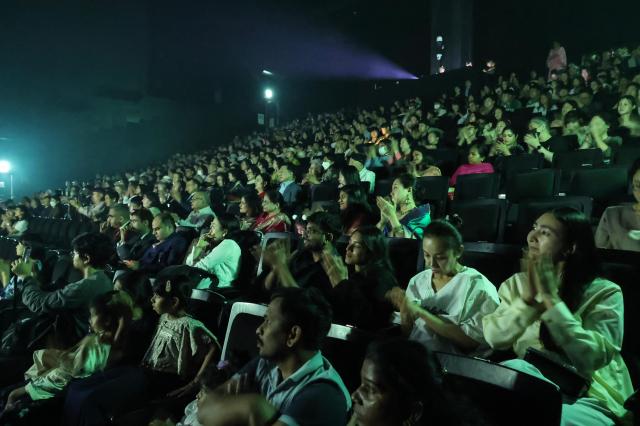
Some Korean audience members said they were initially unfamiliar with the art form but became increasingly drawn in as the story unfolded.
“Indian culture felt quite different to me, so the performance was unfamiliar at first. But even though the dance team was made up entirely of women, the stage never felt empty, and I liked how the tension built as the story progressed. I was especially fascinated by the movements of their fingertips,” said Lee So-heun, 26, a Seoul resident.
“It was an extraordinary performance. It was something I had never seen anywhere else,” said Cho Sung-rae, who is in his mid-60s and attended after hearing about the event through an acquaintance.
“It was a beautiful show. It was a pleasure to see a performance from my country here in Korea,” said Abinaya, 29, an Ewha Womans University student from India who has lived in Korea for three and a half years.
Copyright ⓒ Aju Press All rights reserved.