
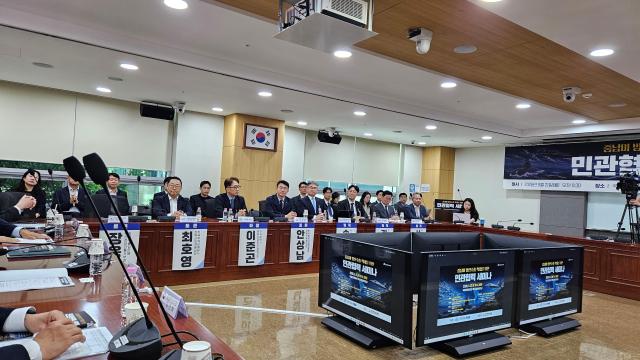
The strategy was highlighted at a public-private seminar on expanding defense exports to Latin America held on Monday at the National Assembly Members' Office Building in Seoul, hosted by the office of lawmaker Min Hong-chul and organized by the Korea Defense Industry Association.
The push reflects Seoul's effort to diversify a defense export portfolio that expanded rapidly through major European deals following Russia's invasion of Ukraine. Latin America presents a different market: many governments face aging military equipment and limited procurement budgets while seeking technology transfers, domestic production and industrial development alongside new equipment.
Peru has become the clearest testing ground for that model.
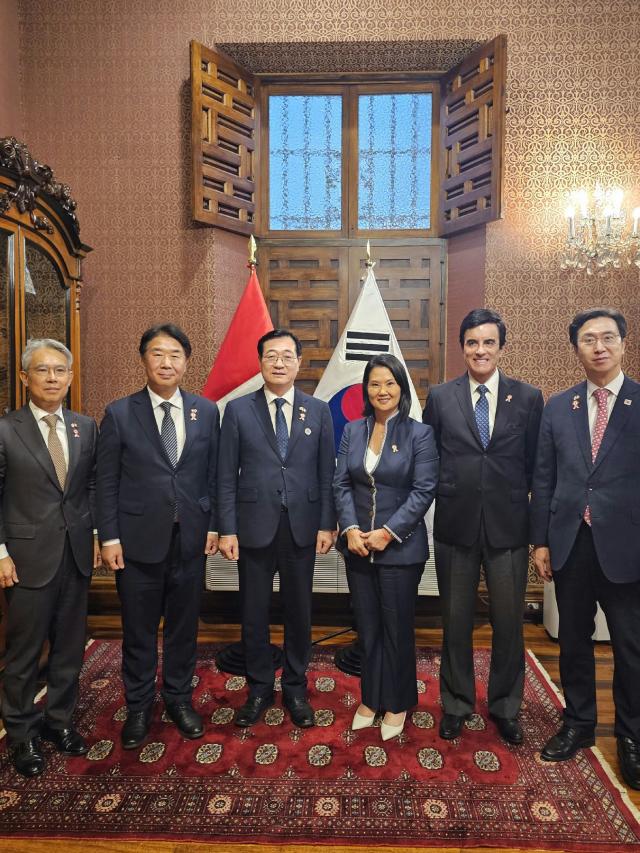
Korea Aerospace Industries and Peru jointly produced 20 KT-1P trainer aircraft under a government-to-government contract signed in 2012. Four were built in Korea and 16 were produced in Peru with state-run aviation company SEMAN, alongside technology transfer and training.
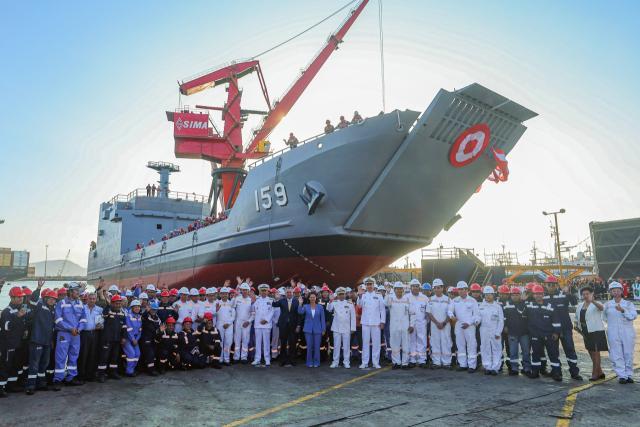
Cooperation has since expanded into naval and ground systems. HD Hyundai Heavy Industries signed a 640.6 billion won (US$460 million at the time) deal in 2024 with Peru's state-owned SIMA shipyard to jointly build four naval vessels - a frigate, an offshore patrol vessel and two landing ships - in Peru.
The two sides later signed an agreement in December 2025 laying the groundwork for joint development and eventual local production of submarines.
Peru has also pursued cooperation with Hyundai Rotem on K2 tanks and K808 wheeled armored vehicles. A strategic agreement signed in December 2025 laid out plans for their future acquisition and for greater participation by Peru's domestic defense industry.
"Defense exports are evolving beyond weapons sales into strategic partnerships that jointly design a road map for the partner country's defense-industry self-reliance," Kim said.
He said Seoul's approach would include financing tailored to buyers with tight annual budgets, donations of retired military equipment linked to follow-on cooperation, support for local industrial capacity and closer government-to-government engagement.
Min similarly said cooperation among government, industry and lawmakers would be critical if Korean companies are to establish a lasting presence in the region.
"Cooperation among the private sector, government and political community is what the globalization of our defense industry should look like," Min said, adding that Korea should develop a stronger legal framework for defense-industry contracts.
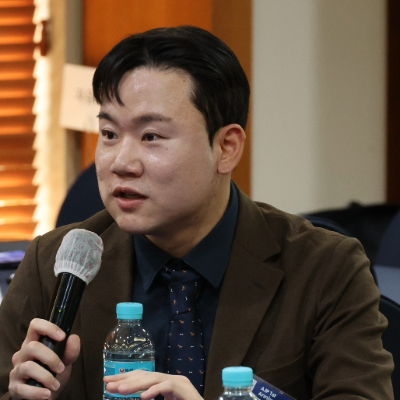
HD Hyundai Heavy Industries Executive Vice President Song Woon-sung said the company's Peru project has exposed shortages of skilled workers in areas including design, welding, painting and electrical work. The shipbuilder is proposing a training center backed by Korean official development assistance to develop a local workforce and supplier base, turning the current shipbuilding program into a longer-term industrial partnership.
KAI Executive Vice President Kim Jae-hong said the company hopes to build on the KT-1P program to sell FA-50 light combat aircraft in Peru and elsewhere in Latin America. He called for government-backed financing and G2G arrangements, saying countries such as Peru and Colombia have strong modernization demand but limited procurement budgets.
Hyundai Rotem Executive Vice President Seo Jun-mo likewise said Latin American buyers tend to emphasize cost efficiency, financing and equipment capable of operating across mountains, jungles, deserts and poor road networks. He said Korean exporters would increasingly need to combine equipment sales with local industrial cooperation and government support.
The regional push is already moving beyond Peru. During a Korea-Brazil summit in Brasilia on July 27, the two governments agreed to launch a bilateral defense industry joint committee in the second half of 2026 and pursue broader defense-industrial cooperation.
Copyright ⓒ Aju Press All rights reserved.
