
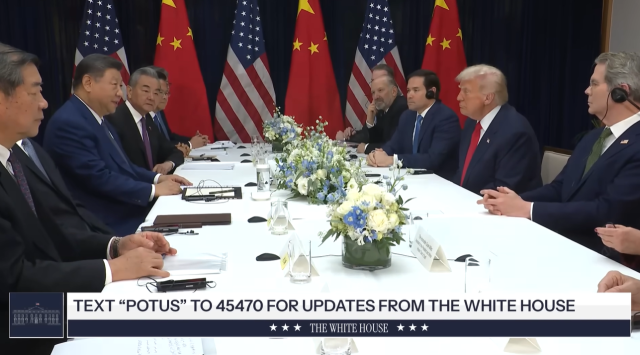
SEOUL, September 21 (AJP) - U.S. President Donald Trump and Chinese President Xi Jinping have a crowded table for their summit this week, ranging from trade, artificial intelligence and critical minerals to Taiwan and the wars in the Middle East and Ukraine.
Both leaders also arrive with domestic and geopolitical pressures of their own, raising the stakes for a meeting where the easier task may be producing headline agreements and the harder one making them stick.
The immediate test is whether the world's two largest economies can preserve the fragile trade truce struck in South Korea last October and due to expire Nov. 10. Trade, Taiwan, AI, critical minerals, fentanyl and the Iran war are among the issues expected to feature when Trump and Xi meet in Washington on Sept. 24.
Plenty of tit-for-tat bargaining is expected.
Washington is seeking progress on Chinese purchases of Boeing aircraft and U.S. agricultural products, while Beijing wants relief from technology restrictions and more predictable treatment of Chinese companies. U.S. officials are also pressing for better access to critical minerals.
Meaningful breakthroughs extending beyond bilateral interests are far less certain.
"Both leaders are likely to go small," David Fields, associate director of the Center for East Asian Studies at the University of Wisconsin-Madison, told AJP.
"Banality with lots of flags will probably be the order of the day."
Richard K. Betts, professor emeritus of international and public affairs at Columbia University and former director of national security studies at the Council on Foreign Relations, also cautioned against attaching too much significance to the frequency of leader-level meetings.
"I don't believe there is great significance in the frequency of meetings," Betts said, adding that "what is discussed and what agreements may result" can matter.
Dániel Balázs, senior research analyst at the Institute for China-Europe Studies, placed greater weight on the value of sustained contact.
"High-level, sustained interaction demonstrates that both major powers value open channels of communication," Balázs told AJP.
"Direct, face-to-face engagements allow leaders to clarify strategic intent, manage areas of friction, and inject a basic level of predictability in the relationship," he said.
A long history of Trump-Xi summitry
Xi's trip will be his first to the United States since November 2023, when he attended the Asia-Pacific Economic Cooperation summit in San Francisco and met then-President Joe Biden at the Filoli estate outside the city.
Trump and Xi already have an extensive history of face-to-face diplomacy.
They first met at Trump's Mar-a-Lago resort in Florida in April 2017 and again three months later on the sidelines of the Group of 20 summit in Hamburg. Trump traveled to Beijing for a state visit in November 2017, followed by meetings at the G20 summits in Buenos Aires in December 2018 and Osaka in June 2019.
Those meetings repeatedly eased immediate tensions without removing the disputes driving the broader rivalry.
Mar-a-Lago produced a 100-day economic action plan and new high-level dialogue mechanisms. Buenos Aires temporarily halted an escalating tariff confrontation and opened a 90-day negotiating period, while Osaka restarted stalled trade talks and postponed another round of U.S. tariffs.
Summit diplomacy resumed after Trump returned to office.
Trump and Xi met in Busan, South Korea, on Oct. 30, 2025, after months of tariff escalation. Washington reduced some trade pressure while Beijing agreed to measures involving fentanyl precursors, agricultural purchases and rare-earth export controls. The tariff suspension was eventually extended through Nov. 10, 2026.
Trump then traveled to Beijing in May. The visit produced plans for additional economic engagement and announcements involving Chinese purchases of U.S. goods, including a proposed order for 200 Boeing aircraft, but many details remained unresolved. Reuters described the trip as heavy on pageantry and short on major policy breakthroughs.
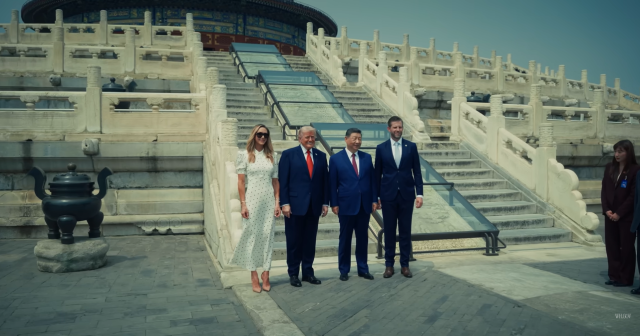
Thursday's summit therefore adds another chapter to a recurring pattern of leader-level diplomacy lowering the temperature while leaving the structural competition intact.
Fields pointed to China's commitment to purchase 200 Boeing aircraft as an example of the difficulty of converting summit announcements into completed transactions.
China agreed in May to buy 200 Boeing aircraft, but Boeing Chief Executive Kelly Ortberg played down expectations this month that a major order would be completed around the September summit.
Trade remains the most immediately negotiable part of the agenda.
"Probably trade will be the most important issue to the Trump administration, followed by Taiwan," Betts said.
Balázs also expects Washington to seek tangible commercial commitments.
"Following the extreme tariff escalation and subsequent pause last year, the underlying economic priority for Washington remains narrowing the trade gap and securing purchase commitments," he said.
Potential commitments include aircraft, agricultural products and energy, while technology restrictions and supply chains remain central sources of friction.
"China's dominant position in the processing and supply of rare earth elements gives it significant leverage in global manufacturing," Balázs said.
Washington is seeking more reliable access to the materials after repeated export restrictions disrupted global supply chains, while Beijing continues to use licensing and export controls as leverage in trade negotiations.
AI joins the bargaining table
Artificial intelligence has emerged as another potentially important area of discussion.

"While there is growing interest from technical experts and industry leaders in establishing bilateral guardrails around AI security, formal mechanisms remain difficult to achieve," Balázs said.
"The heavy securitization of artificial intelligence makes binding agreements unlikely in the short term, though basic exploratory dialogues may still be pursued."
U.S. Treasury Secretary Scott Bessent and Chinese Vice Premier He Lifeng discussed AI in New York ahead of the summit, with Washington proposing a notification mechanism for major AI safety incidents and continued dialogue on areas including critical infrastructure and weaponization. Beijing has not publicly committed to the proposal.
Betts also placed AI near the top of the agenda, while questioning how far the Trump administration would be prepared to go on regulation.
Competition over AI has intensified alongside disputes over semiconductor export controls, access to advanced chips and national-security risks.
Taiwan poses a harder test
Taiwan remains one of the most politically sensitive issues in the relationship.
Beijing claims the democratically governed island as Chinese territory and has not renounced the use of force to bring it under its control. Washington maintains unofficial relations with Taipei and supplies defensive arms under longstanding U.S. policy.
The issue has proved resistant to the transactional bargaining that can produce agreements on tariffs or commodity purchases.
Trump's May visit to Beijing produced no major shift on Taiwan, with Washington maintaining its longstanding strategic ambiguity and Xi warning against mishandling the issue.
Iran and the war in Ukraine could also enter the discussions because of Beijing's ties with Tehran and Moscow.
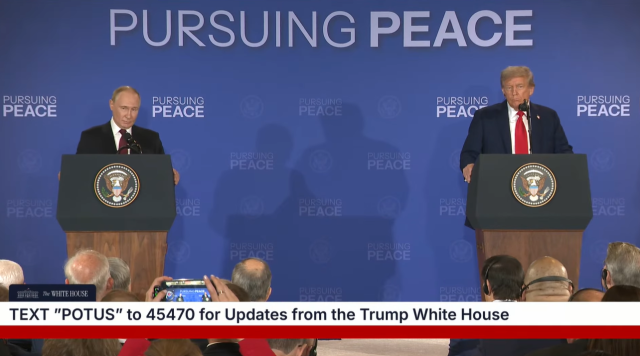
Balázs expects both conflicts to feature but cautioned against anticipating major joint initiatives.
The talks are "unlikely to be highly publicized and even less likely to produce formal joint agreements," he said.
"It took a trade war, a pandemic, dozens of incidents of Chinese coercion, and nearly two decades of growing distrust between the US and China to get us to where we are today," Fields said. "This cannot be undone in one, or even many summits."
Betts took a similarly cautious view of what summitry itself can accomplish.
"The meetings are more significant as symbols of efforts to keep competition under control," he said.
Domestic policy decisions in Washington and Beijing will ultimately carry greater weight, Betts said.
"What matters is what decisions each of the two governments make internally," he said. "Negotiations are more likely to refine or clarify changes in policy than to produce them as a result of formal diplomatic dialogue."
Balázs sees value even in an outcome that falls short of a major agreement.
"Even without resolving core ideological or structural differences, this level of engagement signals directionality to global markets and third parties, allowing international actors to adjust their policies and mitigate global economic instability," he said.
What South Korea should watch
The consequences will reach well beyond Washington and Beijing, particularly for export-dependent economies such as South Korea that maintain deep economic ties with both powers.
South Korean companies are exposed to U.S.-China competition across semiconductors, batteries, critical minerals and supply chains. Large purchasing agreements between Washington and Beijing could also redirect trade flows without explicitly targeting Korean companies.
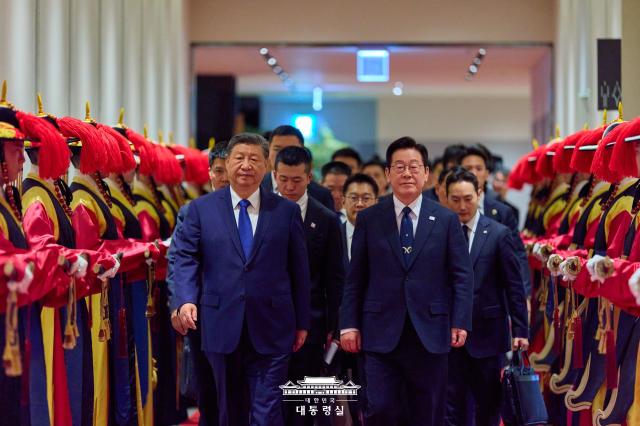
"Third parties need to focus on structural implications rather than just headline diplomacy," Balázs said.
Greater U.S.-China economic and technological separation could leave third countries under stronger pressure to align with one side in sensitive industries, he said, while a more stable bilateral relationship would create greater room to engage both.
Thursday's summit may ultimately be judged by narrower tests.
Markets and U.S. allies will be watching whether the trade truce is extended, whether China provides more predictable access to critical minerals, whether aircraft and agricultural commitments move toward implementation, whether AI talks acquire a durable framework and whether either government adjusts its language on Taiwan. The existing tariff suspension is scheduled to run until Nov. 10.
A comprehensive bargain remains difficult while Washington and Beijing disagree over technology, security and regional order.
Keeping those disputes from repeatedly escalating into crises may prove the more attainable measure of success.
The flags and handshakes will come on Thursday. The devil will emerge afterward, in whether either government carries out what was agreed.
AJP Takeaways
- Trump and Xi enter Thursday’s Washington summit with a broad agenda spanning trade, AI, critical minerals, Taiwan and global conflicts, but experts expect limited, transactional agreements rather than a sweeping reset.
- Trade remains the most immediately negotiable issue, with Washington seeking Chinese purchases of aircraft and agricultural goods and more reliable access to critical minerals, while Beijing wants relief from technology restrictions.
- The summit’s significance will depend less on headline announcements than on implementation, including whether the trade truce is extended, commercial commitments are fulfilled and both sides keep broader strategic competition from escalating.
Copyright ⓒ Aju Press All rights reserved.
