The Joint Chiefs of Staff said South Korean surveillance assets had detected changes to the terrain near the Military Demarcation Line, or MDL, on the western front, prompting Seoul to request an on-site inspection by the UNC.
The inspection had been scheduled for early next week, and Monday's operation was intended to open a search route and prepare access to the area before the UNC team entered, according to the JCS.
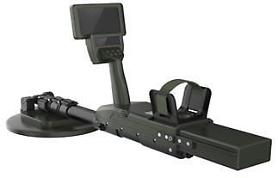
Troops were using mine detectors while clearing the route when an explosion believed to have been caused by a land mine occurred. The blast site was "in close proximity to the MDL," the JCS said, without disclosing its precise location.
The disclosure provided new details about the mission underway when the explosion occurred Monday morning in the western sector of the DMZ under the Army's 25th Infantry Division.
The JCS initially said three South Korean officers were injured in the explosion. Two were airlifted to the Armed Forces Capital Hospital, where they underwent surgery for serious injuries and were confirmed to be in stable condition.
A third officer was transported by land along with other troops and was later assessed by medical staff as not seriously injured, the JCS said Tuesday.
About 10 troops had been taking part in the operation, with the remaining personnel also taken to the hospital for medical examinations.
The two seriously injured officers had been wearing protective gear, including protective clothing and mine-protection overshoes, according to the JCS.
The cause of the explosion remains under investigation.
Military authorities are considering multiple possibilities, including an unidentified South Korean mine, a North Korean mine displaced by flooding or other natural causes, or a mine recently planted by North Korean troops.
"We are keeping all possibilities open and will thoroughly determine the cause before taking necessary measures," the JCS said.
The military has so far declined to say how far the blast site was from areas where North Korean mine-laying has been suspected, despite repeated questions during Tuesday's briefing.
The JCS said the lack of details was not due to operational security, but because a field inspection and investigation had yet to establish the precise location and cause of the explosion. It said further information would be released after the investigation.
Rep. Yoo Yong-won of the main opposition People Power Party said Monday that the accident occurred near areas where North Korean troops are suspected of creating minefields south of the MDL.
Yoo had earlier claimed that minefields and other structures at six locations in the 25th Infantry Division's sector extended about 10 to 15 meters south of the MDL. The JCS said Monday that the blast site was some distance from the areas cited by Yoo, but has not provided a specific distance.
North Korea has been carrying out extensive construction along the MDL since declaring inter-Korean relations to be between "two hostile states," including laying mines, erecting fences and barriers and building tactical roads near the border.
The South Korean military said it has responded to North Korean MDL violations in accordance with established rules and principles.
A JCS official also confirmed Tuesday that the military has taken responsive measures in the western sector, but could not immediately provide the number or timing of such actions.
No unusual North Korean military activity was detected at the time of Monday's explosion, the JCS said.
It remains unclear when the UNC inspection will now take place following the accident.
The JCS said dealing with the aftermath of the explosion and ensuring safety would come first before further steps are decided.
AJP Takeaways
- South Korean troops were clearing a DMZ route for a planned UNC inspection when a suspected land mine exploded, seriously injuring two officers.
- The JCS said the cause remains under investigation, including whether the mine was linked to North Korea.
- The blast comes amid North Korea’s ongoing mine-laying, fencing and tactical road construction near the MDL.

Copyright ⓒ Aju Press All rights reserved.