
The two governments announced the three initiatives Thursday in Seoul and Wednesday in Washington under the investment agreement accompanying last year’s $350 billion bilateral trade deal. The remaining $150 billion is earmarked for shipbuilding.
The announcement follows months of negotiations over implementing the deal, first announced in July 2025 and reaffirmed by President Lee Jae Myung and U.S. President Donald Trump at their October summit in Gyeongju.
The strategic investment agreement was signed in November as part of a broader bargain securing a 15 percent U.S. reciprocal tariff rate for South Korea instead of the threatened 25 percent.
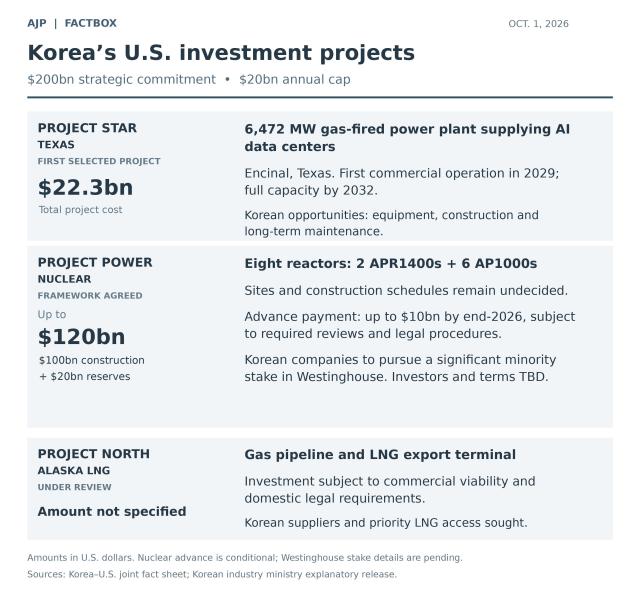
The energy projects are at different stages and subject to commercial viability requirements. Texas has cleared Korea’s domestic selection procedures, while individual nuclear projects and an Alaska investment decision remain pending.
In a live announcement Wednesday, Trump said South Korea would invest up to $200 billion to support a 6-gigawatt power facility, eight large nuclear plants and an Alaska gas pipeline.
The joint fact sheet draws a clearer distinction between the selected Texas project and the nuclear and LNG plans that still require further agreements and reviews.
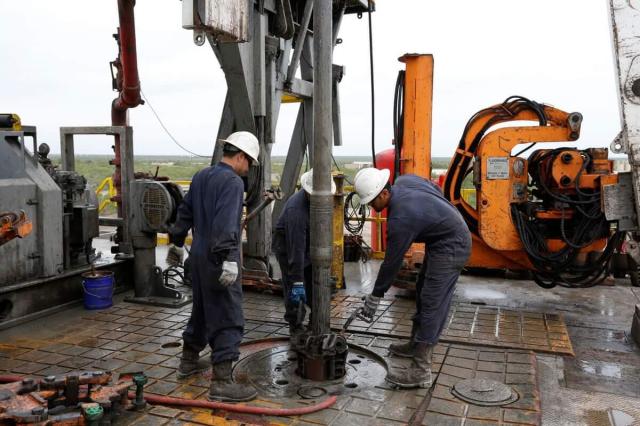
The $22.3 billion development will be operated by a joint venture between Related Companies and NextEra Energy Resources. Texas gas producer Lewis Energy Group will provide the site, natural gas, water and related infrastructure.
South Korea’s industry ministry said the project had passed its commercial assessment based on the partners’ experience, rising electricity demand from Texas data centers and expected power prices.
Korean companies are expected to seek contracts across equipment supply, engineering and construction, and long-term operation and maintenance. Washington also expressed its intention to offer Korean suppliers, including turbine makers, opportunities in similar U.S. projects.
The names of Korean contractors and specific procurement figures have not been detailed.
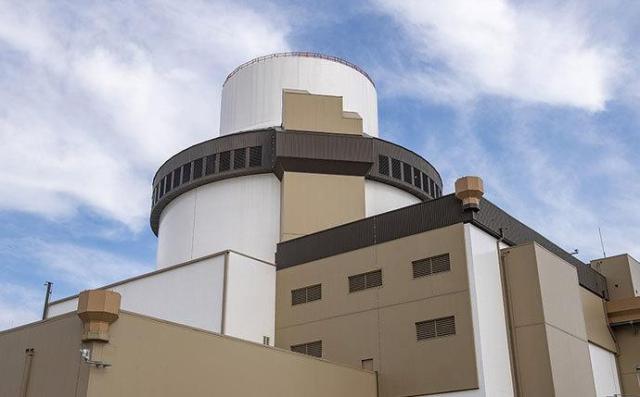
Project Power is much larger financially but remains a framework for developing individual investments.
It envisages eight reactor units - two Korean-designed APR1400s and six Westinghouse AP1000s. Sites, construction schedules and commercial terms have yet to be finalized.
The project allocates $120 billion of the $200 billion strategic investment envelope to the nuclear framework - $100 billion in construction costs and $20 billion in contingency reserves.
According to the Korean side, financing would be capped at $30 billion for each pair of reactors, comprising $25 billion in construction costs and $5 billion in reserves.
The ministry said the strategic investment fund would bear no additional costs above that ceiling, while unused reserves would still count toward Korea’s investment commitment.
The two governments agreed to cooperate on a $10 billion advance payment by the end of 2026, primarily to secure equipment with long manufacturing lead times.
The Korean release envisages two AP1000 units first, followed by two APR1400s and two more AP1000s, then the final two AP1000s. The parties would make reasonable efforts to keep the first and second stages’ engineering, procurement and construction contract signings within six months of each other.
Seoul presented the inclusion of Korea's homegrown APR1400 design as a breakthrough into a market previously restricted under a settlement between the reactor companies.
Korean builders and equipment suppliers would also participate in Westinghouse's AP1000 projects.
The framework additionally provides for Korean companies to pursue a "significant minority stake" in Westinghouse, allowing them to share in commercial gains.
The buyers, ownership percentage and price remain undecided.
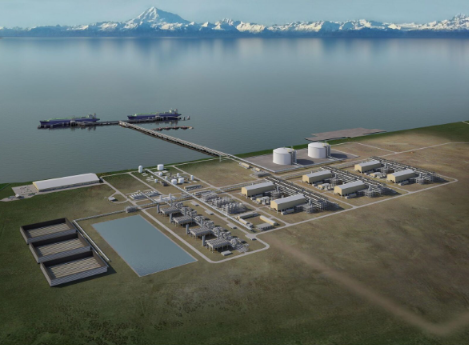
Project North, covering Alaska LNG, is the least settled of the three initiatives.
The backbone of Alaska LNG is an 807-mile, 42-inch diameter mainline pipeline with a daily capacity of 3.3 billion cubic feet. Compressor stations along the pipeline will move natural gas from the North Slope to Southcentral Alaska. Most of the pipeline will be buried and will include interconnection points to serve in-state gas distribution to Alaska communities and utilities.
The two governments have agreed to begin reviewing the project, but Seoul added that investment depends on commercial reasonableness and compliance with domestic law.
Seoul claims Washington would provide tariff reductions on steel and other project equipment and guarantee economically viable long-term LNG purchase arrangements with priority access for Korea.
Washington's release promises to provide purchase assurances “to the extent possible” and support favorable participation by Korean supplier regarding offtake agreements at economically viable prices.
Broadly, the governments agreed to reflect the $200 billion overall ceiling and $20 billion annual limit in a legally binding operating agreement.
All projects would sit under a single umbrella investment company, with distributions pooled for recovery purposes.
Korea and the United States would retain a 50:50 split until Korea recovers its aggregate invested principal and deemed interest across the projects. The subsequent shift to a 10:90 split would be deferred until that recovery is complete.
The deemed interest rate would equal the 20-year U.S. Treasury yield plus a separately agreed project spread.
Seoul also outlined tax adjustments to preserve Korea’s after-tax distribution share, reporting rights and consent rights over major changes affecting its investment.
Copyright ⓒ Aju Press All rights reserved.
