
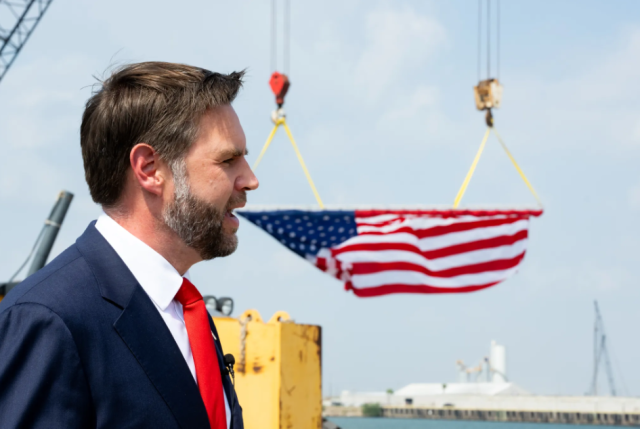
SEOUL, October 06 (AJP) - Washington and Seoul still need to "work out" details of the long-delayed Alaska liquefied natural gas project, U.S. Vice President JD Vance said Monday, striking a more measured tone days after President Donald Trump threatened to double tariff retaliation should South Korea fail to commit to the Alaska project.
“The pipeline is something that we really want to see happen and a lot of our Asian friends want to happen as well,” Vance said, according to a White House pool report. “It’s not just the South Koreans. The Japanese would love to see this pipeline.”
He said, “So I think it’s something that’s going to happen.” “Obviously, you still got to work out some of the details and the South Koreans, you know, have spoken to that.”
The remarks appeared to acknowledge a gap between Washington and Seoul over how far negotiations have progressed.
Trump said Friday that South Korea would face higher charges if it failed to join the project soon.
“If they don’t want to do it, that’s OK with me. I’ll just charge them more,” Trump told reporters. “Tell them if they don’t sign shortly, I’m going to double it up.”
Trump did not specify what he intended to double.
South Korea has repeatedly stressed that no final investment decision has been made. The government said Seoul and Washington have agreed only to begin reviewing the Alaska project and that participation would depend on “commercial reasonableness” and compliance with domestic legal procedures.
The caution reflects longstanding questions over the economics of one of the largest proposed energy infrastructure projects in the United States.
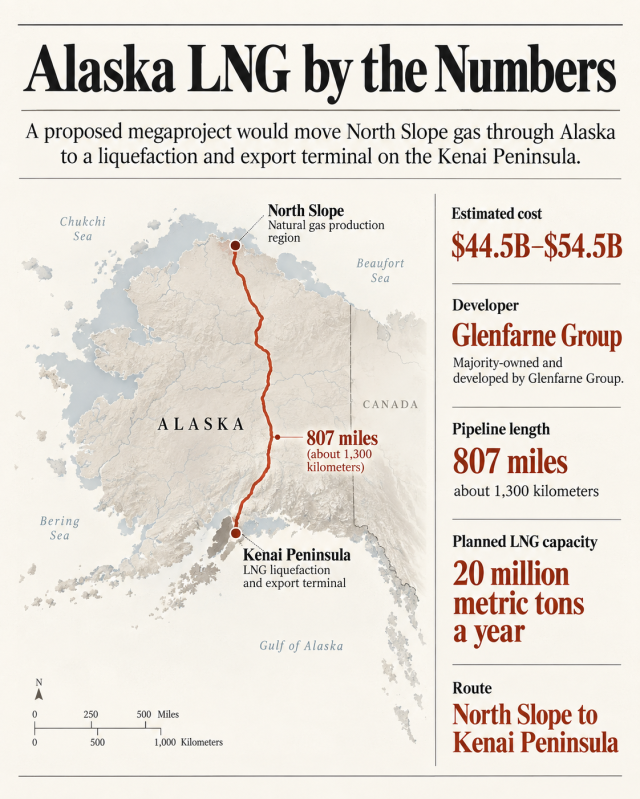
Alaska LNG, majority-owned and developed by Glenfarne Group, is estimated to cost between $44.5 billion and $54.5 billion. It would carry North Slope gas through an approximately 807-mile, or 1,300-kilometer, pipeline to a liquefaction and export terminal on the Kenai Peninsula, with planned capacity of about 20 million metric tons of LNG a year.
The project has been discussed in various forms for more than a decade. ExxonMobil, BP, ConocoPhillips and the state of Alaska were among the participants when an LNG export application was filed in 2014, before the project went through years of delays and restructuring. Glenfarne became the lead developer and acquired a 75 percent stake in 2025.
Commercial momentum has since increased. Glenfarne says it has preliminary long-term agreements covering about 13 million tons of LNG annually with buyers including companies in South Korea, Japan, Taiwan and Thailand. It is targeting contracts covering 16 million tons to support project financing.
POSCO International has separately entered a strategic partnership with Glenfarne that includes proposed LNG purchases and steel supplies for the pipeline, but that corporate arrangement is distinct from any South Korean government commitment to finance the broader project.
Supporters argue Alaska LNG would give Asian importers a shorter Pacific shipping route than U.S. Gulf Coast terminals. Critics, however, point to its enormous upfront cost and the largely preliminary nature of its existing customer commitments.
Vance said strong Asian demand could ultimately overcome those obstacles.
“When there’s a demand for this stuff and there really is strong demand for American natural gas, I think we’re going to be able to get it done,” he said.
AJP Takeaways
- Vance says Washington and Seoul still need to work out details of the Alaska LNG project, striking a more measured tone than Trump’s recent warning.
- Seoul says participation remains conditional on commercial viability and domestic procedures, despite Washington portraying Korean investment as more advanced.
- The $44.5 billion-to-$54.5 billion project has gained Asian buyers but still faces major financing and cost questions after years of delays.
Copyright ⓒ Aju Press All rights reserved.
