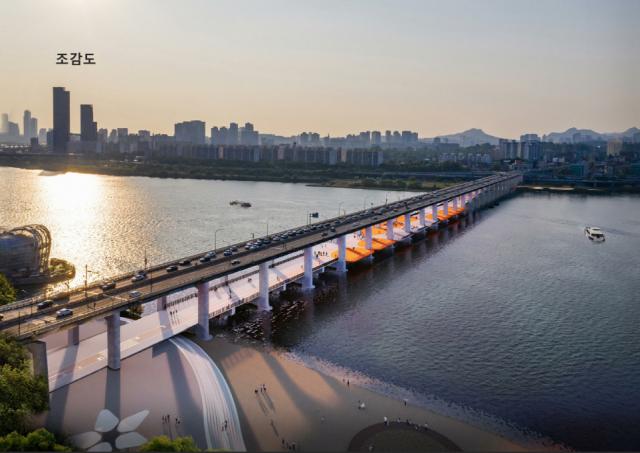
The renovation project is due for completion in August 2027, according to the Seoul Metropolitan Government Thursday.
Jamsu Bridge runs beneath Banpo Bridge, forming the lower level of a double-deck crossing that connects the northern and southern sides of the capital. Its name means “submersible bridge” in Korean and designed to go underwater when the river rises during heavy rain.
Its periodic closures have become a familiar gauge of flood conditions for Seoul residents. But its proximity to the water also offers views that higher bridges cannot, making it a popular setting for riverside walks and car-free festivals.
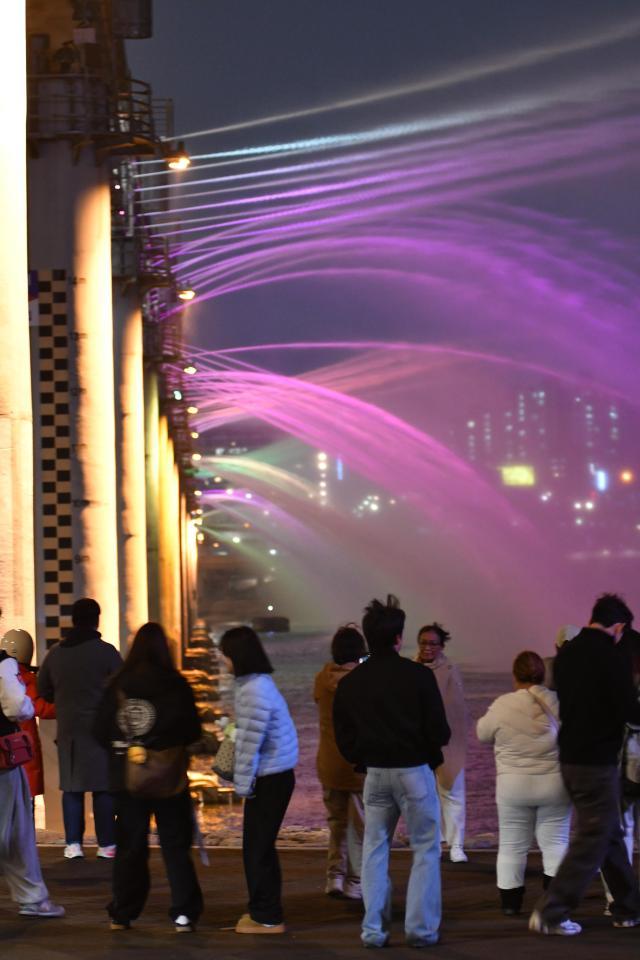
The redevelopment will add 22 viewing decks where visitors can rest and take in the river and the rainbow fountain along Banpo Bridge above. Two sections over navigation channels will feature transparent flooring, allowing pedestrians to watch the water beneath their feet.
The city revised the original competition-winning design to address flood safety, removing a proposed elevated pedestrian deck. It said consultation with the Han River Basin Environmental Office on the revised plan has been completed.
Opened in 1976, Jamsu Bridge originally carried four lanes of traffic. Two were converted into pedestrian and bicycle space in 2008. The latest project will remove the remaining vehicle lanes, creating what the city describes as its first pedestrian-only bridge across the Han River.
Vehicle access will end at midnight at the start of Oct. 26, following this year’s final car-free walking festival.
Pedestrians and cyclists will be able to cross during most of construction, using passageways separated from work areas. Access will be suspended for about six weeks during paving work between May and August next year, with a detour via Banpo Bridge.
The project will also turn the underground approach at the bridge’s northern end into a car-free passage, improving walking connections between the river, Yongsan Park and the Itaewon tourist district.
Vehicles will be diverted to Banpo Bridge above. The city said its traffic analysis projected only a slight reduction in travel speeds, with no change in the road’s overall traffic service level.
Bus routes 740 and 405 will also use Banpo Bridge in both directions. Their stops at Jamsu Bridge’s southern end, serving Banpo Hangang Park and the Sebitseom floating cultural complex, will close.
“Making Jamsu Bridge fully pedestrian-only 50 years after its opening will mark an important shift from a route for simply crossing the Han River to a place where people can experience, enjoy and spend time on it,” said Lim Choon-geun, head of Seoul’s Urban Infrastructure Headquarters.
Copyright ⓒ Aju Press All rights reserved.