
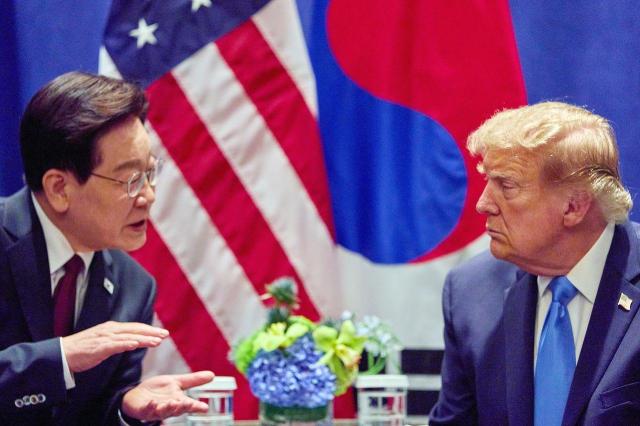
The U.S. military commitment remains intact, with about 28,500 troops stationed in South Korea. Seoul and Washington continue to coordinate on North Korea, share intelligence and maintain combined defense arrangements.
But that operational continuity sits alongside growing political uncertainty as tariff pressure and demands for greater burden-sharing test the alliance under Trump's America First policy.
North Korean missile launches on Monday illustrated how closely the allies still cooperate on immediate military threats.
South Korea's Joint Chiefs of Staff said North Korea fired multiple ballistic missiles from the Pyongyang area toward the East Sea at around 9:20 a.m., with at least one type flying more than 900 kilometers. Seoul and Washington tracked the launches and shared information from the outset, while South Korea, the United States and Japan exchanged missile data.
The harder question is how far that cooperation extends when Seoul needs Washington's support in managing disputes with Pyongyang.
One test has been the recent controversy over North Korean military activity near the Military Demarcation Line, or MDL, and a land mine explosion inside the Demilitarized Zone that injured three South Korean officers.
The case underscored South Korea's reliance on the United Nations Command. Under the armistice framework, the UNC retains a central role in overseeing compliance with the agreement, limiting Seoul's ability to handle some incidents entirely on its own.
Yet that framework offers limited leverage if North Korea sees more advantage in testing the Lee Jae Myung government's response than in cooperating.
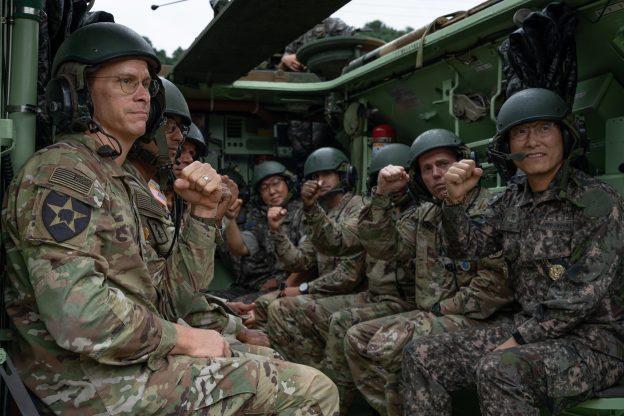
“If that creates internal conflict in the South and problems within the government, wouldn't that work to North Korea's advantage?” he added.
Lim said small incidents around the MDL could persist because they impose relatively little cost on North Korea while allowing Pyongyang to test Seoul's military and political response.
“There is not much the United Nations Command can actually do under its own banner in the current situation,” Lim said. “It can tell North Korea to comply with the Armistice or propose talks over the MDL, but North Korea can simply ignore it.”
That limitation becomes more consequential as Washington takes a more transactional approach to its relationship with Seoul, he said.
“Under President Trump, the alliance itself appears to be shifting from a security alliance toward a more transactional relationship based on interests,” Lim said. “From that standpoint, I don't think the United States is likely to step in very deeply on every Korean Peninsula issue.”
Seoul is thus left with a difficult balance: managing a neighbor with an incentive to keep probing while relying on an ally whose willingness to engage in each dispute may depend on a narrower calculation of U.S. interests.
The Lee administration has sought to draw a line between disagreements with Washington and the health of the alliance itself.
Unification Minister Chung Dong-young said Monday that there was “absolutely nothing wrong” with the South Korea-U.S. alliance, while acknowledging that allies do not always have identical interests.
“An alliance shares values, but interests can be aligned or conflicting,” Chung said, adding that other U.S. allies were also negotiating with Washington over security and trade while seeking to protect their national interests and autonomy.
Intelligence cooperation has nevertheless become a point of friction.
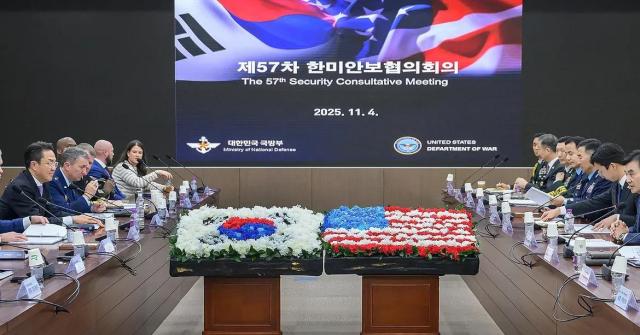
The comments followed scrutiny of Chung's public mention earlier this year of a suspected North Korean uranium enrichment facility in Kusong. South Korea's National Intelligence Service also said it was excluded from a June meeting with the United States and Japan on North Korean cyber threats, raising questions about trilateral intelligence cooperation.
Those concerns have added to a wider debate in Seoul over whether defense, intelligence, tariffs and industrial policy can still be handled as separate areas of the relationship.
National Security Adviser Wi Sung-lac acknowledged the problem in February, saying U.S. tariff pressure was negatively affecting follow-up security consultations, including discussions on nuclear-powered submarines.
A bilateral package included South Korea's pledge to invest $350 billion in the United States in exchange for reduced U.S. tariffs, alongside separate security commitments and follow-up negotiations on nuclear-powered submarines and nuclear fuel-cycle rights.
“President Trump's transactional style and frequent linkage of economic and security issues have eroded trust in the U.S.-ROK relationship,” a joint report by the Asan Institute for Policy Studies and the Center for Strategic and International Studies said.
The report said the alliance's core military structure remains in place: U.S. troops are still stationed in South Korea, joint exercises continue and Washington's extended deterrence commitments remain intact.
But tariff negotiations, burden-sharing disputes and questions over U.S. troop deployments are making Seoul less certain about how firmly Washington will uphold those commitments.
Asan Institute President Choi Kang and CSIS Korea Chair Victor Cha also noted that Washington's approach could give South Korea greater room to strengthen its own defense capabilities, even as it raises questions about the alliance's long-term reliability.
For Seoul, the challenge is to turn that room into greater capacity to act while preserving the cooperation on which its security still depends. The military machinery remains in place, but the question is whether the political hands that guide it remain equally reliable.

Copyright ⓒ Aju Press All rights reserved.
