
The robot is a graduation project by Shin Jung-wook, a 27-year-old senior at Korea University of Technology and Education. He wrote the code himself and mounted an arm from Chinese maker AgileX on a Unitree A2 quadruped.
It was one of the robots on show at the Physical AI Tech Week, a two-day event at COEX hosted by the Ministry of Science and ICT.
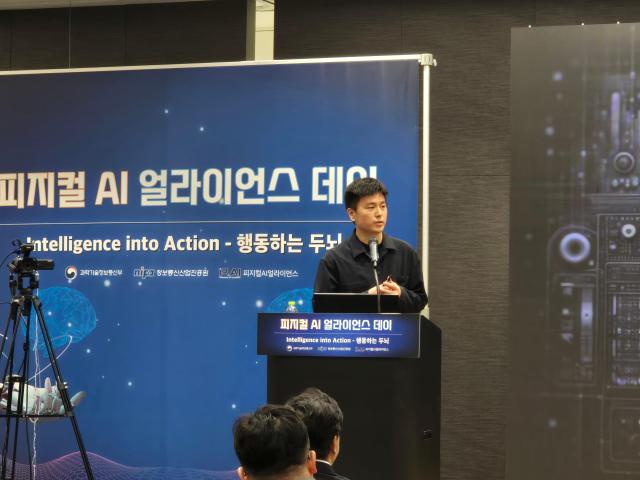
"To be frank, physical AI is in a very grave situation right now," Jho Joon-hee, co-chair of the government-backed Physical AI Alliance, said in his welcoming speech.
"Now is the time to show what has actually changed in the field."
Building AI takes good talent, data and computing resources, said Lee Kang-wook, chief AI officer of game publisher Krafton.

Lee played a video of a Unitree G1 humanoid running an agentic system from Ludo Robotics, Krafton's robotics company where he also serves as chief technology officer.
The robot fetched a drink for a man's partner in another room. When the man said the Pepsi would be better, it stopped mid-reach and switched cans.
"Many robot foundation models are coming out, but one that can work while talking with people doesn't exist anywhere in the world yet," Lee said. Like Shin's robot dog, Ludo's humanoid runs Korean code on a Chinese body.
South Korea's factories had 1,220 robots per 10,000 manufacturing workers in 2024, the highest density in the world, according to the International Federation of Robotics.
Jho said government physical AI projects now accept bids only from suppliers that team up with companies holding factories and data. He urged those companies to join the alliance.
"Putting a foundation model into a robot, solving the battery and on-device problems, and making it actually run in a factory is too difficult for one company to handle alone," Jho said.
Korea's computing power is flowing into data centers.
Deputy Prime Minister and Science Minister Bae Kyung-hoon presented a plan in June to build about 8.4 gigawatts of AI data center capacity by 2029, with about 550 trillion won ($411 billion) in public and private investment.
Nvidia agreed in October 2025 to supply more than 260,000 GPUs to the government, Samsung, SK, Hyundai Motor and Naver.
Bae also urged companies to adopt homegrown neural processing units (NPUs). These AI chips draw far less power than GPUs and are seen as a candidate brain for humanoids.
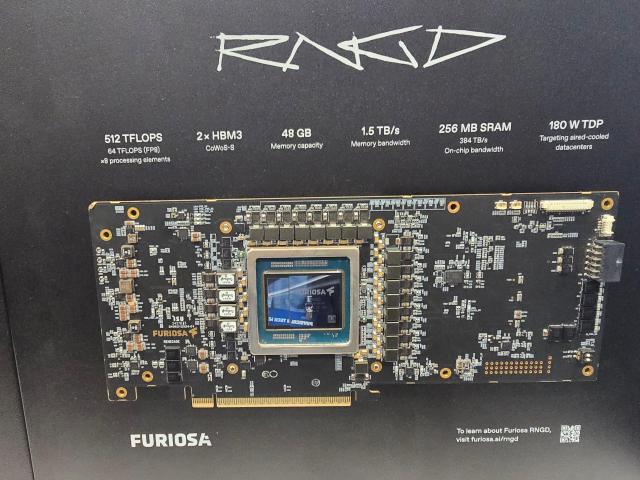
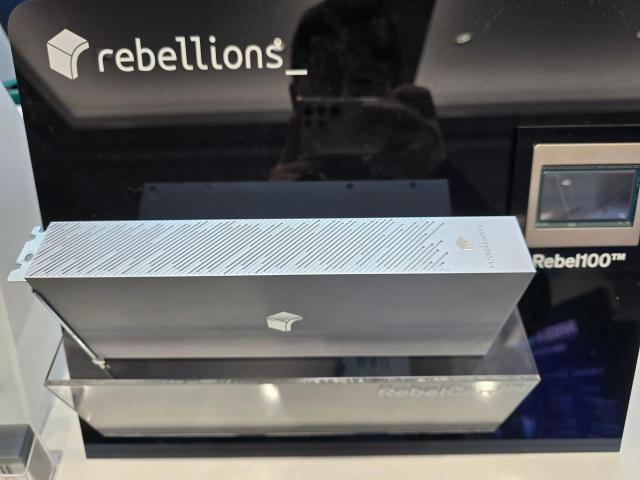
Korea's two leading NPU designers, Rebellions and FuriosaAI, brought only server chips to COEX.
"Nothing has been planned for that yet," Han Hyung-ki, a business development manager at Rebellions, said when asked about an on-device chip for humanoids.
FuriosaAI's RNGD (pronounced "renegade") card comes prepared primarily for data centers, said Lauren Kwon, a tech sales manager at the company. She said a lighter version planned for next year's second half will target workstations.
"It would still be a bit heavy to mount directly on a humanoid," Kwon said.
"Being here, we can figure out which direction to take and what we should study," Shin said, standing beside the robot that had missed its tissue.
AJP Takeaways
- Physical AI Alliance co-chair Jho Joon-hee said on Oct. 13, 2026, at the Physical AI Tech Week in Seoul that South Korea's physical AI industry is in a "very grave situation."- Krafton Chief AI Officer Lee Kang-wook said building AI takes talent, data and computing resources. Ludo Robotics, Krafton's robotics company, showed a Unitree G1 humanoid running its agentic system that changed course when a user corrected it.
- South Korea has the world's highest factory robot density and is building about 8.4 gigawatts of AI data center capacity by 2029. Its leading NPU designers, Rebellions and FuriosaAI, have no chip yet light enough to put inside a humanoid.
Copyright ⓒ Aju Press All rights reserved.
