
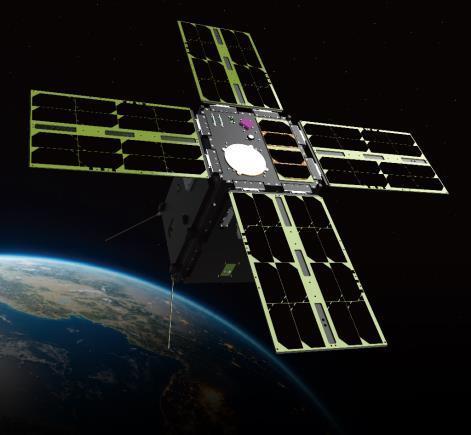
The pilot mission ran Tuesday aboard BEE-1012, a CubeSat that reached orbit on Oct. 7 aboard Nuri, South Korea's homegrown space rocket.
A ground station beamed up a mock fault signal, and the module traced its cause and scope before compiling a technical report on how to respond and transmitting it back to Earth, KAI said.
Conventional satellites must relay data to the ground and wait for engineers to diagnose a problem. Processing on board allows decisions in real time, which KAI said would bolster a satellite's survivability and sharply cut communication costs.
KAI developed the module with defense AI firm Funzin and trained it on tens of thousands of failure scenarios, drawing on fault-prediction systems refined in its aircraft programs.
It runs on a chip from Mobilint, which said it was the first Korean-designed AI processor to fly on a satellite.
"We plan to integrate all space systems on the basis of AI technology," said Seo Hyun-seok, head of KAI's space business division. The company will begin its main autonomous-operation mission in December and aims to make the technology standard on satellites it builds.
AJP Takeaways
- Korea Aerospace Industries said on Oct. 21, 2026, that its in-house AI module diagnosed a simulated fault and generated a response report in orbit aboard the BEE-1012 CubeSat on Oct. 20.
- BEE-1012 reached orbit on Oct. 7, 2026, on the fifth flight of South Korea's Nuri rocket, which carried a record 15 satellites. The module runs on a neural processing unit from Korean startup Mobilint.
- KAI plans to begin its main autonomous satellite operation mission in December 2026 and to make the technology a standard feature of the satellites it builds.

Copyright ⓒ Aju Press All rights reserved.
