
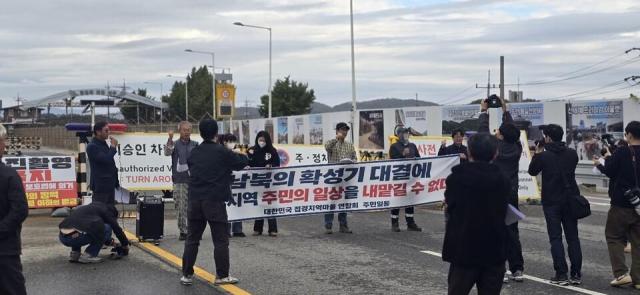
Authorities are preparing for renewed disturbances and residents are checking their soundproof windows, shuddering at the thought of another relentless stream of sirens, metallic scraping and ghostly cries.
On Monday, residents urged both Koreas to refrain from restarting the broadcasts that previously robbed them of sleep and disrupted their daily lives.
Their appeal follows an October 21 warning by Kim Yo-jong, sister of North Korean leader Kim Jong-un, that Pyongyang would reactivate its loudspeakers directed toward the South by the end of the month, potentially ending a 16-month pause.
About 10 residents from Tongilchon and Haemaru Village gathered near Tongil Bridge in Paju on Monday morning to call for restraint.
The villages sit about 4.5 kilometers and 6.4 kilometers south of the Military Demarcation Line, respectively. Both are within the Civilian Control Zone, where military restrictions govern access to areas just south of the Demilitarized Zone.
Residents recalled struggling to sleep and carry out ordinary activities during previous broadcasts. They urged both sides to put the safety and livelihoods of border communities ahead of another round of confrontation.
The two Koreas have used loudspeakers for psychological warfare for decades, repeatedly suspending and resuming broadcasts as relations have shifted.
The latest round began when South Korea resumed broadcasts on June 9, 2024, in response to North Korea’s launches of trash-filled balloons. Seoul expanded the broadcasts across the border the following month.
North Korea responded in July 2024 with metallic scraping, ghostly noises and animal cries, subjecting nearby communities to sounds designed to disturb rather than conventional propaganda messages.
South Korea suspended its broadcasts on June 11, 2025, under President Lee Jae Myung’s administration. The North followed suit, with its noise broadcasts last detected late that night.
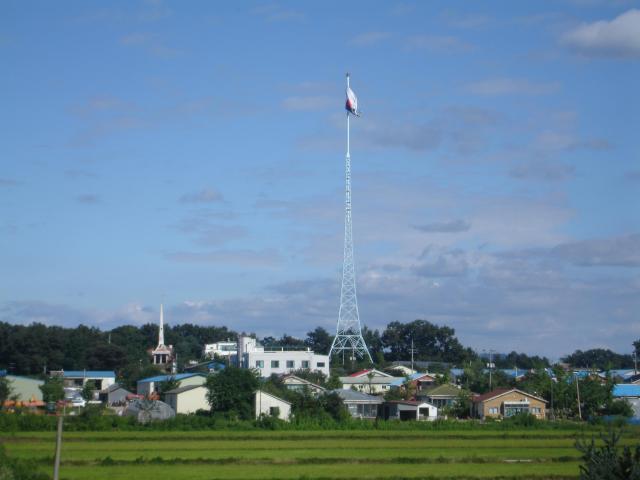
An official at Paju City’s Safety Management Division told AJP on Monday that noise-measuring equipment had already been placed in areas expected to be most vulnerable.
“We have coordinated with local administrative offices so that noise levels can be measured during both the day and night if the broadcasts resume,” he said.
During previous broadcasts, noise levels in Daeseong-dong exceeded 80 decibels, the official said. He had also heard reports of readings reaching 100 decibels.
Having visited the village during the broadcasts, he recalled how their unpredictability made them particularly disturbing.
“There were ghostly sounds, laughter and noises like something being scraped,” he said. “They didn’t come at regular intervals, so people couldn’t help but be bothered by them.”
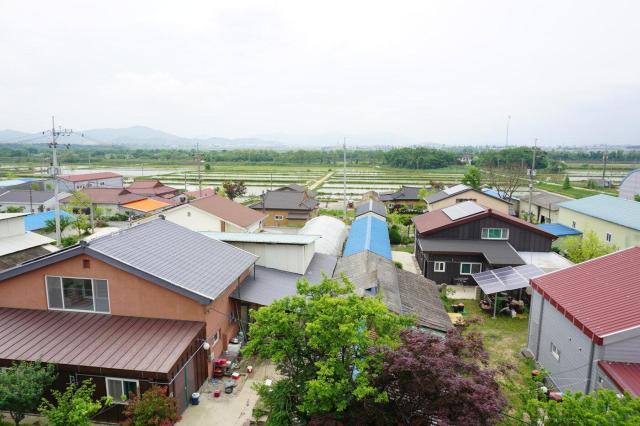
Many homes in Daeseong-dong are old, the official said, making it hard to keep the noise out even after soundproofing improvements.
Paju installed soundproof windows and doors in affected homes in late 2024 and provided temporary accommodation and medical assistance to some residents. The measures reduced the disturbance but could not eliminate it.
“Even after soundproof windows and doors were installed, residents could still hear the noise through their roofs,” he said.
Many villagers are elderly and remain anxious about another prolonged spell of broadcasts.
“They don’t want to go through that suffering again, especially when they don’t know when the noise will end,” he said.
A Paju Police Station official told AJP on Monday that police had not confirmed any resumption.
The impact of the previous broadcasts varied sharply across the city, the official said. “Unjeong New Town was not heavily affected, but Tanhyeon-myeon suffered much greater disruption.”
Unjeong is in southern Paju, while Tanhyeon lies closer to the North Korean border.
“There isn’t much the police station can do directly,” the official said, referring to the limits of local policing when the noise originates across the border.
In Ganghwa County, west of Seoul, the threat of renewed broadcasts comes as residents receive compensation for the last round.
The county paid about 1.76 billion won to 3,078 residents affected by the noise. According to county figures, 181 residents in the more severely affected Zone 2 received 3,000 won per affected day, while 2,897 in Zone 3 received 2,000 won.
Authorities assessed damage over a 328-day period from July 19, 2024, to June 12, 2025, identifying about 240 to 320 affected days depending on the area.
Compensation did not cover livestock deaths or business losses because authorities could not establish that the broadcasts had caused them.
An official at Ganghwa County’s Safety Management Division told AJP that payments had been calculated under guidelines issued by higher authorities.
Preventing another round of disturbances mattered more than further financial assistance, he said.
“Compensation is secondary,” he said. “What’s more important is that the noise doesn’t occur in the first place, because residents are the ones who suffer.”
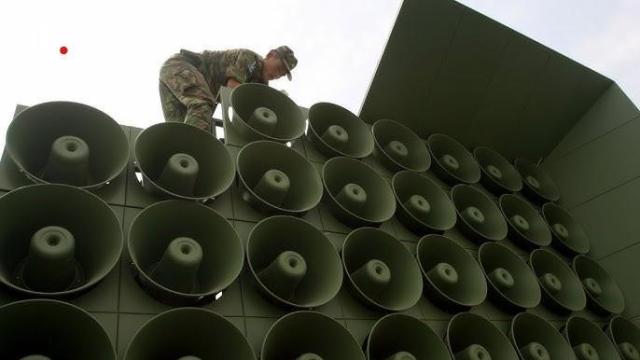
“It has not even been decided whether the broadcasts will resume, let alone when,” a defense ministry official told AJP on Monday.
The ministry has said it could consider proportionate countermeasures if the North restarts its broadcasts.
For those living closest to the border, another exchange could mean months of unpredictable noise with no clear end.
“From our perspective, it would be best if the loudspeakers were not used at all,” the Paju city official said.

Copyright ⓒ Aju Press All rights reserved.


