
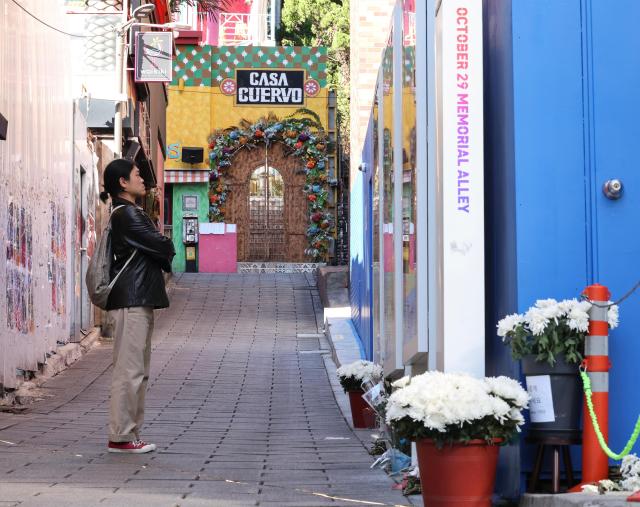
On Wednesday, people came to linger.
A day before the fourth anniversary of South Korea’s deadliest crowd crush, bereaved families and other visitors returned to the narrow passage in Seoul’s nightlife district to remember those who never made it home.
Among them was Yu Jung, whose younger sister, Yu Yeon-ju, was 21 when she left home for Itaewon on Oct. 29, 2022. Yu next saw her at a hospital in the early hours of the following morning.
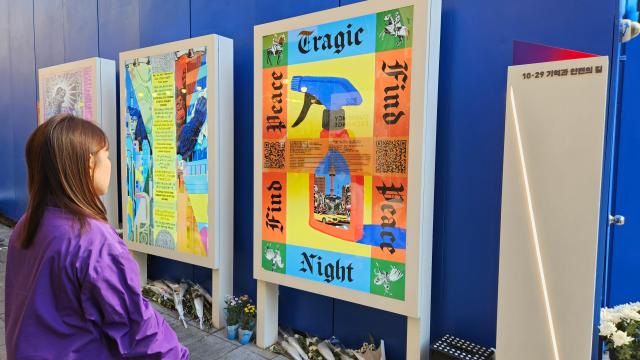
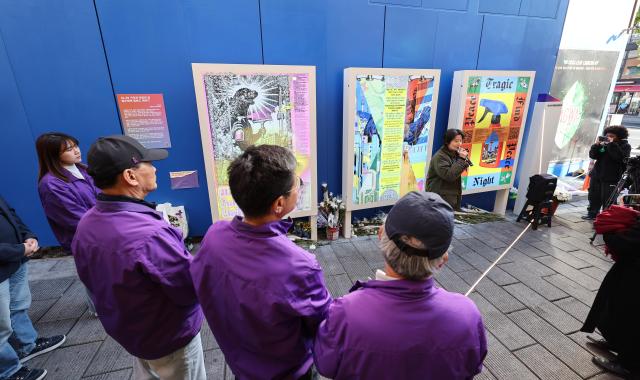
For Yu, her parents and her two surviving younger siblings, “I’m home” has become the greeting they most long to hear from Yeon-ju again. She attended the unveiling of new memorial panels along the “October 29 Memorial Alley,” also known as the “Path of Memory and Safety.”
Four years on, the passage is a place of remembrance. It is also a reminder of questions that families say remain unanswered, even as investigations expose further failures in crowd management, police deployment and emergency response.
“My sister was just 21. She wanted to become a police officer specializing in cybercrime investigations. She was someone who believed in justice,” Yu told AJP.
“The past four years have been far too long. It has felt like walking through a dark, endless tunnel,” she said.
“What kept us going, day after day, was knowing that there were citizens standing beside us.”
Time has brought support, she said, but too little clarity.
“A special investigation commission has been established, but there are still so many things we want to know and so few answers we have received,” Yu said.
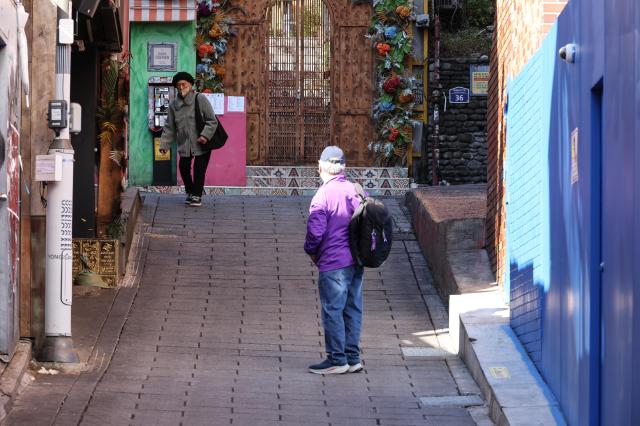
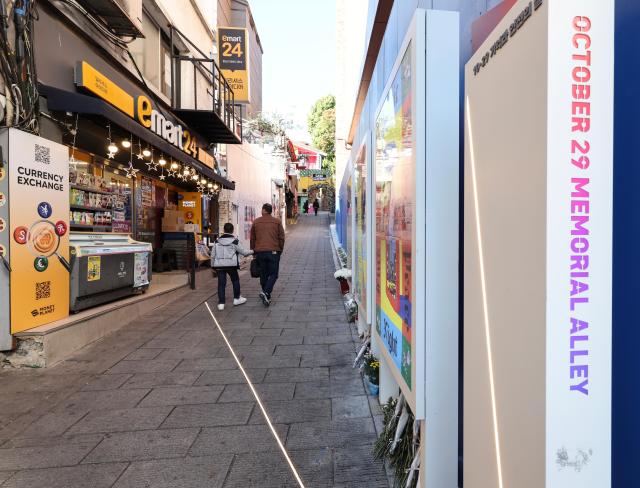
On the night of Oct. 29, 2022, Halloween crowds filled Itaewon’s main thoroughfare, World Food Street and the narrow, sloping alley beside the Hamilton Hotel. The crowd crush began at about 10:15 p.m.
Na Yong-soon, 78, who has operated a tailor shop barely a minute’s walk from the site for more than four decades, remembers people filling every available space.
“In more than 70 years of my life, I had never seen so many people gathered in one place,” Na said.
“The main road, the alley where the disaster happened and World Food Street were all packed with people. And all the while, more and more people kept coming out of Exit 1 of Itaewon Station.”
For Na, the enduring question is why the agencies responsible for the neighborhood failed to communicate as the crowds grew.
“Even a fourth-grade elementary school student knows how to send a text message,” Na said. “Why couldn’t Itaewon Station, Yongsan District Office and Yongsan Police Station coordinate? Why didn’t the station send a message saying too many people were pouring out?”
Na recalled crowd-control measures during previous Halloween celebrations that were missing that night.
“In other years, they put up barriers. Four years ago, for the first time, there were no barriers and no police. The police left the crowds unattended. If uniformed officers had come and blown their whistles, this would never have happened,” Na said.
A police officer who responded to the disaster, speaking to AJP on condition of anonymity, also recalled the absence of dedicated crowd-control units.
“Police officers covered the bodies with blankets. There were so many bodies that we had to bring even the blankets officers used when resting to cover them,” the officer said.
“Mobile police units should have been there, but they had all been deployed to rallies and demonstrations, so none came.”
Subsequent investigations have examined how police resources were allocated that night, drawing a distinction between officers present in Itaewon and units specifically assigned to manage crowds.
A government audit released in October 2025 found that the relocation of the presidential office to Yongsan under then-President Yoon Suk Yeol had sharply increased demands on local police. Commanders prioritized demonstrations near the presidential office while leaving Itaewon without dedicated crowd-control personnel.
The audit recorded 921 rallies and demonstrations within Yongsan Police Station’s jurisdiction between May 1 and Oct. 30, 2022, compared with 34 during the same period a year earlier.
Police had prepared Halloween crowd-management plans in 2020 and 2021, but no equivalent plan was drawn up in 2022.
On Tuesday, the independent special investigation commission examining the disaster presented interim findings identifying failures across the police, fire services, Yongsan District Office and central government.
According to the commission, 120 police officers were deployed to Itaewon as of 10 p.m. that night, but 49 were detectives assigned to narcotics enforcement. No dedicated mobile police units were deployed to manage the crowds.
Personnel responsible for public-order operations had instead been assigned to demonstrations near the presidential office, investigators found.
The commission also said Yongsan District Office had failed to address illegal structures in the alley. As warnings of dangerous crowding mounted, personnel responsible for disaster management were away removing protest leaflets.
The number of people formally recognized as victims has also grown. In August, the commission recognized two firefighters whose later deaths it linked to psychological trauma from their rescue work, bringing its total to 162. A civilian rescuer had previously been recognized on similar grounds.
For families, the findings give greater substance to questions they have asked for years: why warnings went unheeded, why agencies failed to coordinate and whether timely intervention could have saved their loved ones.
Authorities are preparing for this year’s Halloween under substantially different arrangements.
Changes to the Framework Act on the Management of Disasters and Safety, effective from March 2024, require local governments to prepare safety plans for qualifying large gatherings even without an identifiable organizer. The amendment addressed a gap exposed by the Itaewon disaster.
With Halloween falling on Saturday this year, Seoul has designated Oct. 23 through Nov. 1 as a special safety-management period.
The city plans to deploy 3,271 public and private safety personnel across 14 areas in 10 districts, including Itaewon, Hongdae, Seongsu and Myeong-dong.
Of the 1,094 artificial intelligence-powered crowd-detection cameras installed across Seoul, 361 in designated Halloween management areas will monitor congestion. The system is designed to alert municipal, police and fire-service control rooms automatically when density reaches roughly five to six people per square meter.
Real-time population data and drones will help identify bottlenecks, while joint command centers will bring local officials, police, firefighters and other responders together.
In Itaewon, authorities plan to close Itaewon-ro to vehicles on Oct. 31 to create more space for pedestrians. One-way walking routes and movable barriers will be introduced along narrow streets, including World Food Street.
Police have separately announced plans to deploy 4,594 officers, including 30 mobile units, across five priority areas in Seoul during the Halloween period.
Authorities can also restrict subway station access, have trains pass without stopping and issue emergency text alerts when crowding becomes dangerous.
The preparations address several failures identified by witnesses and investigators: too few officers assigned to crowd control, inadequate pedestrian management and poor communication between agencies. Their effectiveness will depend on whether warnings prompt action before dangerous crowding takes hold.
For the families returning to the alley, those safeguards matter. So does establishing why they were absent four years ago.
Yu thanked the people who have continued to remember her sister and the other victims.
“I want to thank the citizens who have continued to remember our families and stand with us,” she said. “I hope they will continue to stand beside us until our families receive answers to the questions we still have.”

Copyright ⓒ Aju Press All rights reserved.
