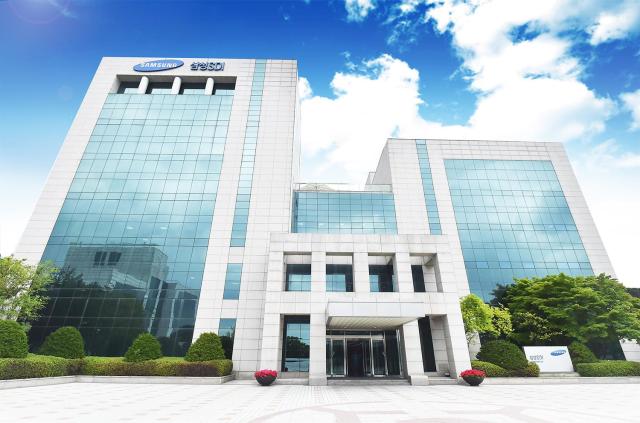
According to regulatory filings, the company's operating profit doubled from 203.8 billion won in the second quarter to its highest level since the third quarter of 2023.
Samsung SDI explained that the demand from artificial intelligence data centers lifted sales of energy storage systems (ESS) and battery backup units, which keep servers running during power outages.
Higher sales of cylindrical batteries for power tools and electric vehicles also helped the battery division swing to an operating profit of 361.9 billion won.
Revenue rose 52.6 percent from a year earlier to 4.69 trillion won. Net profit fell 27.4 percent from the previous quarter to 342.2 billion won, while net profit attributable to the parent company's shareholders came to 294.6 billion won, up from 47.9 billion won a year earlier.
The electronic materials division, which makes chipmaking and display materials, raised operating profit 18.3 percent to 45.9 billion won.
Samsung SDI said it has won more than 60 gigawatt-hours of ESS orders this year and began mass-producing lithium iron phosphate cells, a cheaper battery chemistry widely used for energy storage, at its StarPlus Energy plant in the United States this month.
"We expect solid growth in the ESS and small battery businesses to continue in the fourth quarter, keeping us in the black," the company said.
Shares of Samsung SDI traded at 532,000 won per stock at 9:09 a.m., 1.03 percent lower than the day before.
AJP Takeaways
- Samsung SDI reported a preliminary third-quarter 2026 operating profit of 407.8 billion won on Oct. 29, 2026, reversing a 591.3 billion won loss a year earlier and doubling from the second quarter.
- Revenue rose 52.6 percent from a year earlier to 4.69 trillion won, and the battery division posted 361.9 billion won in operating profit on stronger ESS and BBU sales to AI data centers.
- Samsung SDI said it has secured more than 60 gigawatt-hours of ESS orders in 2026 and expects to stay profitable in the fourth quarter.
Copyright ⓒ Aju Press All rights reserved.