
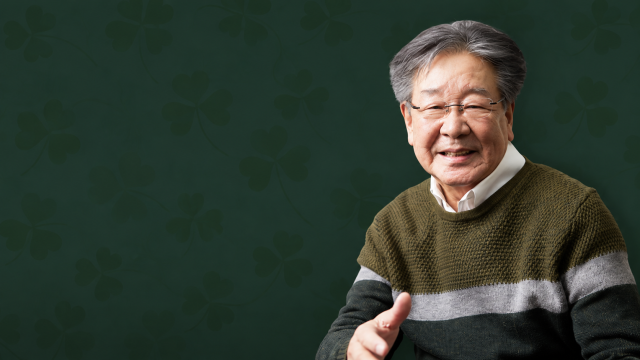
The veteran actor, whose real name was Choi Young-han, died at around 10 p.m. while receiving treatment at a hospital in western Seoul, his family said Friday.
Choi had experienced difficulty walking after undergoing surgery for a herniated disc in March last year. His declining mobility forced him to step down from the KBS documentary series "Korean Food Table," which he had hosted for 14 years.
For more than half a century, Choi was a familiar presence in Korean living rooms, embodying the country's changing ideas of family, morality and community. His commanding voice, hearty laugh and unassuming warmth made him more than a television star. To millions of viewers, he was simply the nation's father.
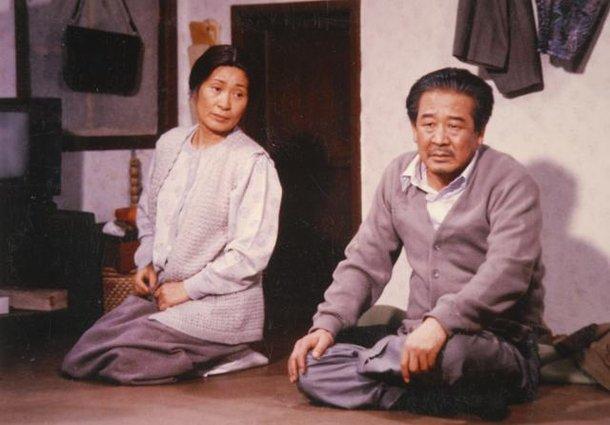
That image was forged through MBC's rural family drama "Country Diaries," which ran for 22 years from 1980 to 2002, spanning South Korea's transformation from a largely traditional society into an increasingly urban and affluent nation.
Choi played Kim Min-jae, the patriarch of an extended farming family in the fictional village of Yangchon-ri. Known respectfully as Chairman Kim, he was a stern but compassionate father, a devoted son to his elderly mother and a village elder whom neighbors turned to for advice on everything from rice farming to family disputes.
Actress Kim Hye-ja played his wife, Lee Eun-sim, in an on-screen marriage so convincing that some viewers believed they were a real couple.
At a time when South Korea's traditional extended families were giving way to smaller nuclear households, the drama offered a nostalgic portrait of a disappearing communal life. Choi's character became its moral anchor, a figure of authority whose strength lay as much in kindness and understanding as in discipline.
In an essay, Choi wrote that he had wanted to portray a father like a broad-canopied zelkova tree, offering shade and comfort to those around him.
The actor himself had grown up without a lasting memory of fatherhood. Born in Incheon in 1939, Choi lost his father while attending elementary school. His father, who ran a newspaper and film business, died at just 35.
His father's early death also gave him the name by which the entire country would come to know him.
Fearing that the young Choi might suffer the same fate, his uncle gave him the name Bool-am, sharing the Chinese characters of Bulamsan, or Bulam Mountain, in northeastern Seoul. The name became a lifelong connection. In 2009, Choi was appointed the mountain's honorary guardian, and a stone monument bearing his poem "O, Bulam Mountain!" still stands near its entrance.
His widowed mother provided another formative influence.
In 1955, she opened a drinking establishment called Eunseong in Seoul's Myeong-dong district, then the heart of the capital's literary and artistic life.
The tavern became a gathering place for writers, poets and painters, among them poets Park In-hwan and Kim Soo-young and painter Kim Whanki, a pioneer of Korean abstract art.
Growing up around their conversations, Choi absorbed the bohemian spirit of postwar Seoul, learning about literature, art and the rituals of companionship over drinks. That early exposure would shape his understanding of human character and his approach to acting.
He studied theater and film at Sorabol College of Arts and Hanyang University and made his stage debut in "Hamlet" in 1959. He joined the National Theater Company of Korea in 1965 before moving into television in 1967.
His breakthrough came with MBC's "Chief Inspector," a police drama that ran from 1971 to 1989 and made him one of the country's best-known television detectives.
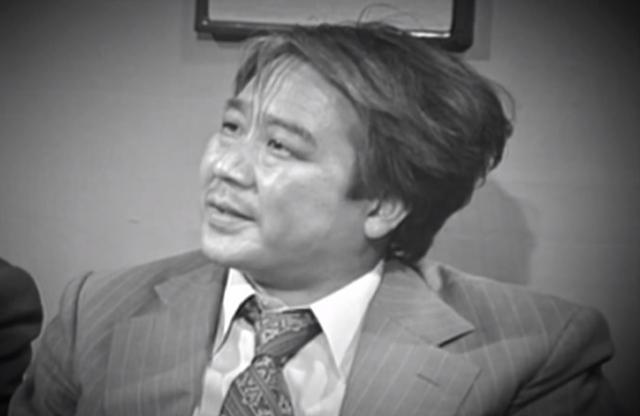
As Park Young-han, Choi portrayed an investigator who relied on empathy and moral conviction as much as police authority. Rather than emphasizing a gun and handcuffs, he developed trademarks including a trench coat, a white handkerchief and cigarettes.
He later credited his mother with encouraging him to portray a detective who could win the public's respect through his humanity rather than force.
The role established him as a symbol of justice, while "Country Diaries" made him the embodiment of paternal wisdom.
Choi believed that actors had a duty to represent ordinary people truthfully. He meticulously studied his characters' habits and personalities, seeking performances that made viewers feel they were watching real lives rather than scripted drama.
His public persona, however, was not confined to solemn authority.
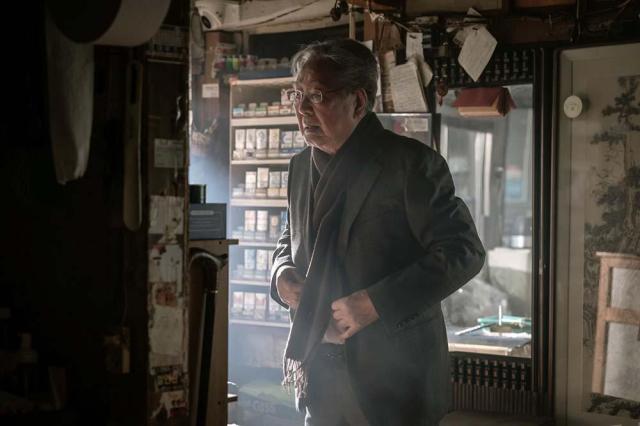
During the 1990s, a wave of absurdist jokes known as the "Choi Bool-am series" swept South Korea. The jokes gently mocked the stern, patriarchal image he had cultivated on television, turning him into an unlikely figure of popular comedy.
Rather than resist the parody, Choi embraced it. He appeared in television sketches based on the jokes and allowed publishers to use them without charging royalties, saying he was happy if students burdened by academic pressure could enjoy a moment of laughter.
His private life reflected the romantic devotion he portrayed on screen.
Choi fell in love with actress Kim Min-ja after seeing her in a television drama and eventually joined KBS partly to be closer to her. They married in 1970.
More than five decades later, he was still speaking of her with the enthusiasm of a newlywed.
"Even now, my heart races when I think of her," he said during a television appearance in 2023.
Choi also ventured briefly into politics at the invitation of Chung Ju-yung, the founder of Hyundai Group. He served as a proportional representation lawmaker from 1992 to 1996 under Chung's Unification National Party.
After losing a constituency race in 1996, he returned to acting. He later recalled a voter telling him that the public needed him more on television than in parliament.
Beyond entertainment, Choi devoted much of his later life to children's welfare.
After an episode of "Country Diaries" in which his character adopted a child drew an outpouring of public praise, Choi felt uncomfortable receiving credit for an act written into a fictional script.
He decided instead to help a child in real life.
That decision began a decades-long relationship with ChildFund Korea, a children's welfare organization, where he served for about 30 years as national sponsorship chairman. He also supported campaigns to find missing children, help seriously ill youngsters and rehabilitate at-risk adolescents through cultural and artistic programs.
In a documentary broadcast in May, fellow actor Lim Ho, who played his adopted son in "Country Diaries," described Choi as an elder of the acting profession who placed extraordinary importance on an artist's responsibility to society.
Choi's final long-running television role brought him back to ordinary Koreans and their daily lives. From 2011, he traveled across the country for "Korean Food Table," exploring regional dishes, family traditions and the memories preserved through food.
The program introduced another generation to the familiar face and reassuring voice that had accompanied the nation's changing fortunes for decades.
Reflecting on his career in an essay written as he approached 70, Choi said the purpose of his remaining years was no longer personal recognition but sharing the experience and wisdom he had accumulated.
"I have received more love than I deserve from so many people," he wrote. "If I can help open a horizon for tomorrow where all our people can move forward with strength, I believe it is my duty to devote whatever energy I have left."
He is survived by his wife, a son and a daughter.
His funeral will be organized under the auspices of ChildFund Korea, recognizing not only his contribution to Korean television but also his decades of service to children.
For the boy who grew up wondering what a father should be, the answer became the work of a lifetime. And for generations of South Koreans, that answer had Choi Bool-am's face.
Copyright ⓒ Aju Press All rights reserved.
