SEOUL, November 02 (AJP) - History has often intruded on business between South Korea and Japan, two of Asia’s technology powerhouses.
In 2019, a dispute over compensation for wartime forced labor spilled into semiconductor supply chains. Japan tightened export controls on critical chipmaking materials, and the two countries removed each other from lists of preferred trading partners.
Since then, Korean manufacturers accelerated efforts to replace Japanese supplies with domestic products and alternative sources.
The AI boom is now giving both sides stronger reasons to keep those supply chains connected.
Samsung Electronics and SK hynix supply the advanced memory essential to AI computing. Japanese companies provide materials and equipment needed to manufacture and package increasingly complex chips. Disrupting that relationship would carry consequences far beyond the two countries.
Necessity can mother cooperation.
Within days of each other, South Korea’s two memory giants have stepped up engagement with Japanese suppliers, seeking closer coordination on technology development, investment and future production needs.
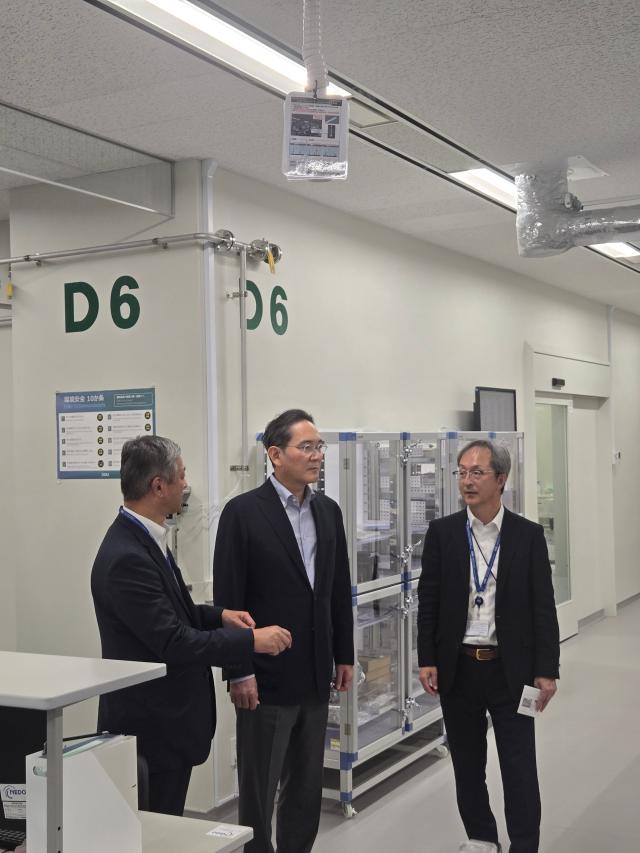
Samsung Electronics Executive Chairman Lee Jae-yong visited the company’s Advanced Package Lab (APL) in Yokohama on Sunday to review next-generation packaging research and discuss cooperation with Japanese materials and equipment companies.
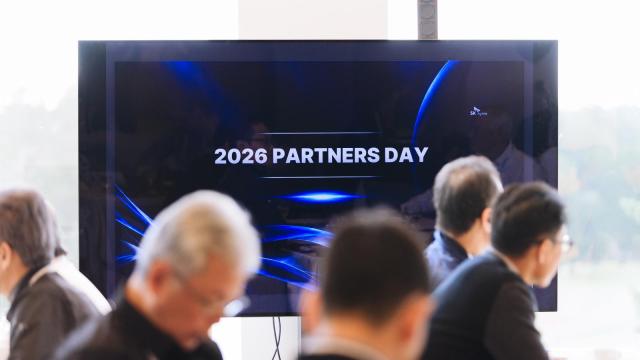
Three days earlier, SK hynix held its first Partners Day in Japan, bringing together executives from more than 20 suppliers to share its business strategy and technology roadmap. The aim was to give partners enough visibility to prepare their own investments and production capacity as AI memory demand grows.
The initiatives build on complementary strengths. South Korea leads in advanced memory manufacturing, while Japan retains a strong position in the materials, equipment and components that make production possible.
For Samsung, the immediate focus is advanced packaging: integrating memory, processors and other components into systems whose performance increasingly depends on how efficiently those chips work together.
Its Yokohama laboratory formally opened in September. Samsung is investing 40 billion yen over five years beginning in 2024 to establish the research base, with work spanning wafer bonding, glass substrates and other technologies intended to improve performance and power efficiency.
The facility connects Samsung’s chip design and manufacturing capabilities with Japan’s concentration of specialist suppliers and researchers.
SK hynix’s Oct. 29 gathering in Chiba Prefecture covered a broader cross-section of its manufacturing supply chain.
Participants included materials companies Shin-Etsu, SUMCO, JSR and Namics; equipment makers Tokyo Electron and SCREEN Holdings; and back-end processing and testing specialists DISCO and Advantest.
Chief Production Officer Lee Byung-ki emphasized the countries’ complementary strengths and the contribution of Japanese partners to SK hynix’s technological competitiveness. Sharing roadmaps earlier allows suppliers to align technology development and capacity decisions with the chipmaker’s expected needs.
The direction matches recommendations from the Korea Institute for International Economic Policy (KIEP), a government-funded research institute.
In an April report on Japan’s semiconductor supply chain, researcher Gyu-Pan Kim identified joint development of advanced packaging and cooperation in AI semiconductors as priorities. The report also proposed exploring longer-term cooperation with Rapidus, Japan’s government-backed advanced chipmaking venture.
Its analysis of 2020 input-output data found that South Korea’s dependence on Japan reached 63 percent for primary plastic products and 58 percent for abrasives used as intermediate inputs in integrated circuit production. The figures illustrate how deeply Japanese suppliers remained embedded in Korean manufacturing even after the 2019 dispute.
Such interdependence should not be confused with Japanese leadership in high-bandwidth memory (HBM), the stacked memory used alongside AI processors, said Hong Sang-jin, a semiconductor professor at Myongji University.
"That's not the case. South Korea has far more advanced technology and expertise when it comes to HBM," Hong told AJP.
He suggested that Korean chipmakers may also be considering how to meet substantially higher memory demand if their existing expansion plans prove insufficient.
Building a semiconductor factory takes years. Companies therefore need to examine alternatives well before a shortage becomes urgent, he said.
"What if we need to produce much more HBM in the future?" Hong said, describing the question facing executives. "If building a new factory takes six or seven years, what happens if we can't get it ready in time?"
Japan could be one option if expansion at home becomes difficult.
"Of course, it would be best if we could do it in South Korea. But what if we can't? Shouldn't we have a Plan B?" Hong said.
Such planning does not amount to a commitment to build overseas, he stressed. The confirmed initiatives concern research and supplier coordination; potential manufacturing investment remains a separate question.
Reports in August raised the possibility of an SK hynix memory plant in Japan’s Miyagi Prefecture. In response, the company said it was reviewing various ways to strengthen its memory business, including additional production bases, but had finalized nothing.
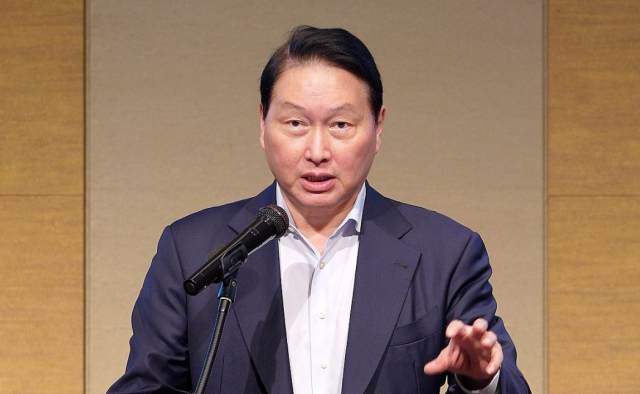
Speculation resurfaced after SK Group Chairman Chey Tae-won discussed investment opportunities in Japan and closer economic integration between the two countries. SK Group subsequently disputed reports suggesting he had confirmed consideration of a specific joint semiconductor factory, saying his remarks concerned broader investment possibilities.
The company already has financial ties to Japan’s memory industry through Kioxia, formerly Toshiba Memory. SK hynix committed 395 billion yen to the Bain Capital-led consortium that acquired Toshiba’s memory business in a transaction completed in 2018.
Japan’s efforts to revive its semiconductor industry, including support for Rapidus, add another reason for Korean manufacturers to stay closely engaged with its industrial base.
The political backdrop has also improved.
Japan relaxed the tighter controls on hydrogen fluoride, photoresists and fluorinated polyimides in March 2023. South Korea restored Japan to its preferred trading list in April, and Japan restored South Korea’s status in July.
The experience of 2019 nevertheless left Korean chipmakers with a lasting incentive to diversify supplies. Their latest moves suggest that reducing vulnerability can also involve deeper coordination with established partners.
For Hong, the distinction between preparation and commitment remains essential.
"They're securing possibilities, but that doesn't mean they're signing contracts right now," he said.
History has shown how quickly politics can unsettle the relationship. AI is raising the economic stakes of keeping it intact.

Copyright ⓒ Aju Press All rights reserved.