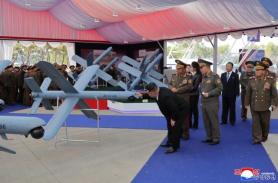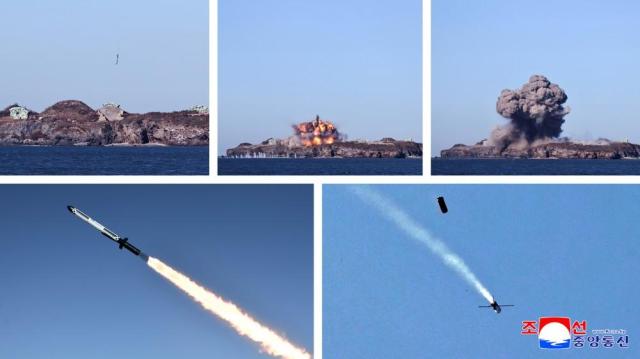
According to the state-run Korean Central News Agency (KCNA), the North's Missile General Bureau conducted the tests the previous day, with one to assess the destructive power of a dispersal warhead, and another to examine a missile's ability to carry out a vertical strike against targets.
KCNA quoted the bureau as saying, "The medium-sized dispersal warhead mounted on the cruise missile is capable of turning a target area of five to six hectares into ashes."
A cluster warhead carries multiple smaller explosive devices, known as submunitions, which scatter over a wide area after the main warhead detonates. Such weapons are intended to strike multiple targets simultaneously, posing a serious threat to military personnel and equipment.
In a separate test, the bureau also assessed the missile's ability to hit targets from above, although it provided no technical details or evidence demonstrating the extent of the improvement.
KCNA said the latest tests, which followed similar ones conducted late last month, were part of efforts to strengthen the country's weapons systems, adding that developing a wider range of weapons had become increasingly "urgent."
"The necessity of developing a variety of weapon systems is more urgent than ever before. It is because our armed forces should defend the country's security and deter all sorts of threats," it said.
The bureau also vowed to develop several types of cluster warheads and equip military units with them by the end of this year, allowing the weapons to be deployed according to operational requirements and targets.
Copyright ⓒ Aju Press All rights reserved.