PAJU, South Korea, November 3 (AJP) — Getting a table at a restaurant in this South Korean village takes more than a reservation. You must first submit your name, the names of everyone traveling with you and your car's license plate number for military clearance.
Only after the restaurant confirms that the information has been submitted can the journey begin.
Google Maps is of little help. The restaurant sends its own directions because the navigation service does not provide routes through the restricted military area.
The destination is not a military installation but a traditional thatched-roof-style restaurant serving tofu and soybean dishes.
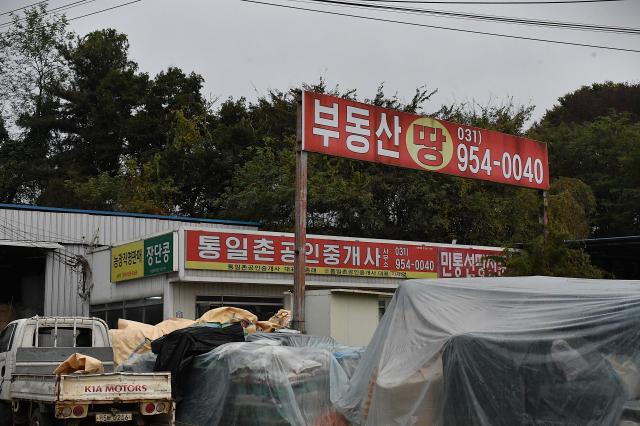
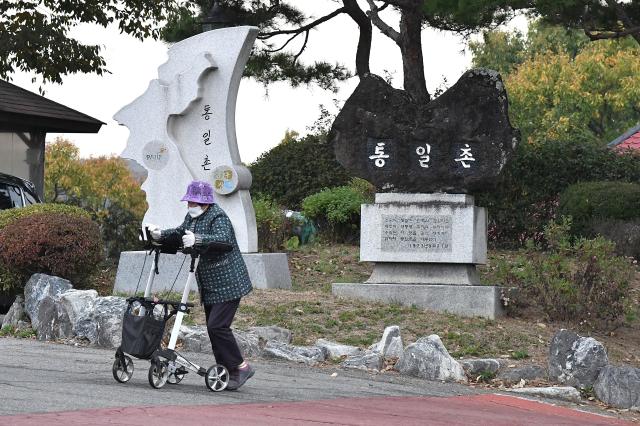
Welcome to Tongilchon, or Unification Village, a small farming community near the Demilitarized Zone (DMZ), where the Korean War has been on hold under an armistice for more than seven decades.
Here, military checkpoints are a fact of everyday life. North Korean missiles are familiar enough for some residents to shrug off, and an outsider cannot simply drive in for lunch.
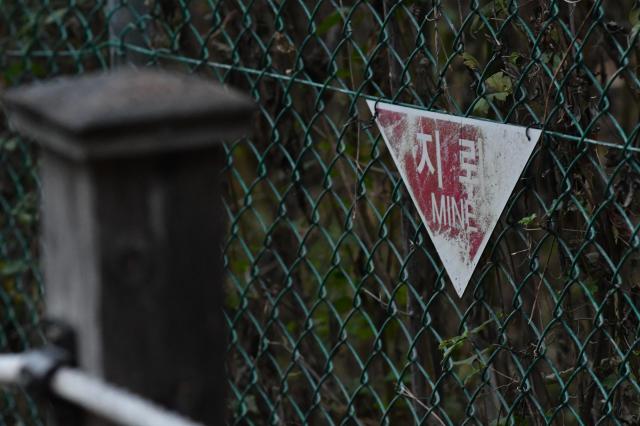
For outsiders, the idea sounds like a long-overdue liberation from decades of military control. For some of the people living behind the checkpoint, however, the prospect of greater freedom is unsettling.
"We've never had to lock our doors here," said a woman working at the Tongilchon Women's Association Restaurant.
Her fear was not that the checkpoint would stay, but that it would go.
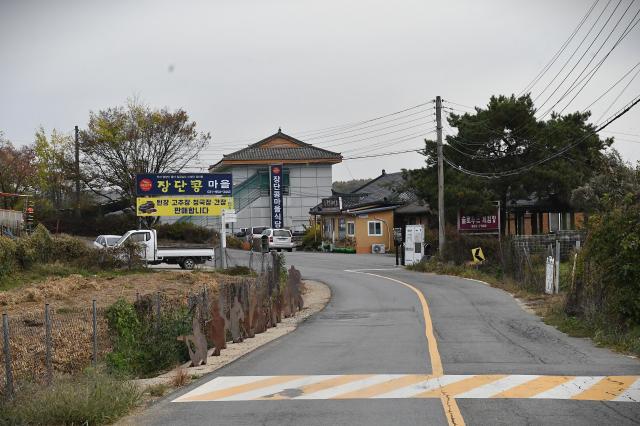
The restaurant, Jangdan Bean Village, was bustling when AJP reporters arrived on October 29.
Dozens of elementary school students from North Jeolla Province were having lunch during a trip to the border area. Their voices filled the dining room as staff moved between tables carrying dishes.
Then the students departed.
The noise faded, leaving only a handful of customers. An elderly woman wearing a headscarf moved between tables, clearing dishes.
A name tag on the left side of her chest read "Han Hye-ja, Director."
Asked what it was like to live so close to North Korea, she offered a matter-of-fact answer.
"I just live here," she said.
Han has been doing just that since 1973, when the government of President Park Chung-hee established Tongilchon as a settlement for former soldiers and families displaced by the Korean War.
"We were a military family," she recalled.
The village was founded in August that year with 40 households of former soldiers, 40 families displaced by the war and four households associated with a local school and church.
More than half a century later, descendants of the original settlers still live and farm here, behind a military boundary that most South Koreans encounter only when visiting border attractions.
The village is not inside the DMZ itself. That four-kilometer-wide buffer separates North and South Korea along the Military Demarcation Line (MDL).
Tongilchon lies south of the DMZ but north of the Civilian Control Line (CCL), in a military-restricted area known as the Civilian Control Zone (CCZ). Entry is controlled, and civilians must follow military access procedures.
Asked whether North Korea's recent missile launches frightened her, she answered without hesitation.
"No, I'm not scared," she said. "They do that all the time."
Her response was striking in a place where the possibility of military confrontation remains woven into daily life.
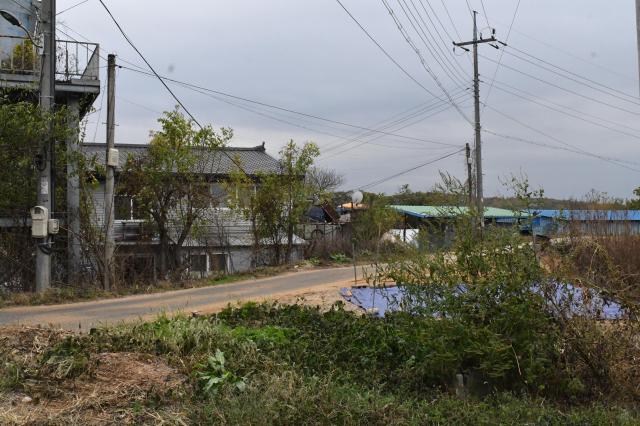
The military boundaries that have shaped Tongilchon for decades could soon change.
Under a plan announced by the Ministry of National Defense on June 17, the CCL is to move northward by an average of two kilometers beginning in 2027, narrowing its average distance from the Military Demarcation Line from eight kilometers to six.
Paju, the border city northwest of Seoul that administers Tongilchon, followed with a proposal on October 27 to move the civilian control boundary and the military checkpoint at Tongil Bridge roughly three kilometers north.
The city wants to reduce repeated entry checks, ease restrictions on land use and open more opportunities for tourism and development.
On paper, the economic argument appears compelling.
Paju's restricted northern area spans 130.37 square kilometers across four administrative districts and 24 administrative villages. Yet only 687 people in 318 households were registered there as of August 31.
Of those, 542 lived in Gunnae-myeon, which includes Tongilchon. Just 384 were registered in Baekyeon-ri, the village's administrative location.
The population is also aging. Nearly 39 percent of residents in the area administered by Jangdan-myeon were 65 or older as of September, compared with about 18 percent across Paju.
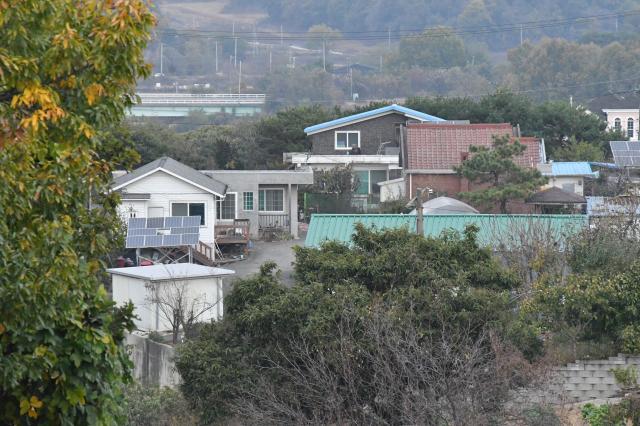
An AJP analysis of 2026 government-assessed land values found that the median value of 26 reference plots in Baekyeon-ri was 36,100 won per square meter, less than a quarter of Paju's median of 153,050 won.
Land use and other differences make it impossible to attribute that entire gap to military restrictions. Still, the figures illustrate how differently land is valued within the same city.
For farmers who must repeatedly pass through checkpoints, fewer restrictions could mean less time lost and easier access to their fields.
For local businesses, it could mean customers arriving without military paperwork.
But the people in Tongilchon were far from united behind the idea.
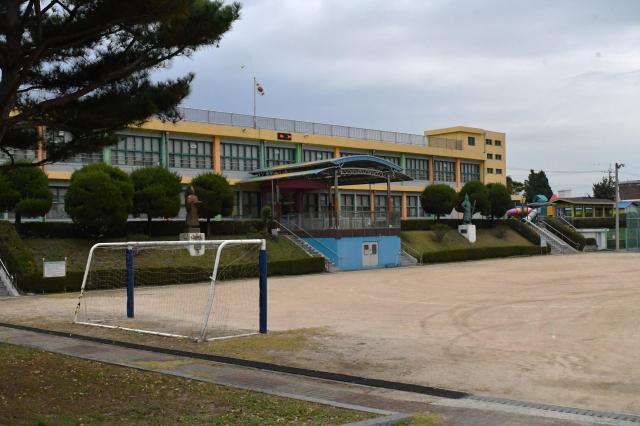
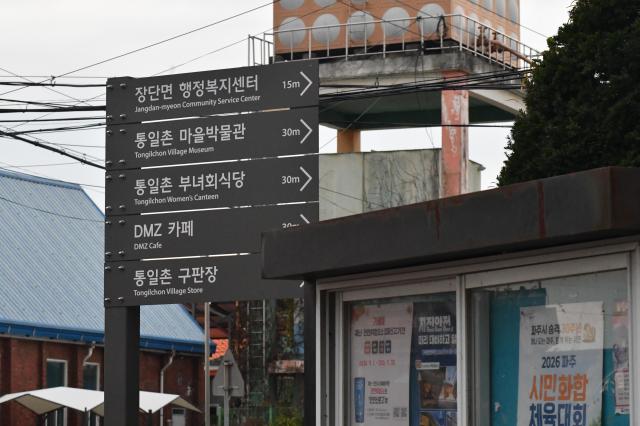
A few minutes' drive from the soybean restaurant stands the Jangdan-myeon Administrative Welfare Center.
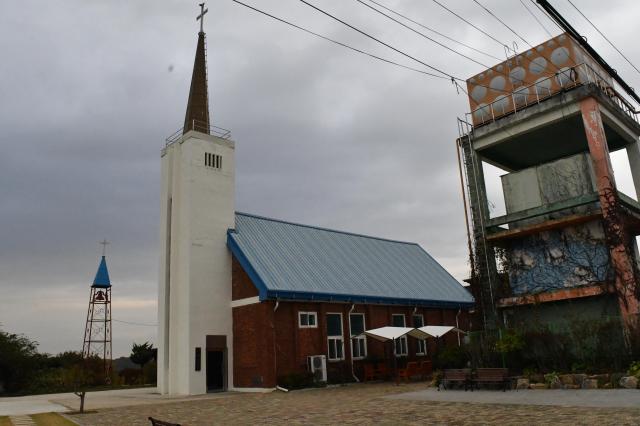
An elementary school sits behind the building, with a church and health clinic across the street. Together they form the everyday infrastructure of a community that has survived for decades behind military controls.
At the center, a female employee offered a nuanced assessment.
"For farmers who come here, the entry procedures can be complicated, so they would probably want the restrictions eased," she said.
But the existing restrictions have also preserved something unusual about the place.
"Because access is controlled, this area has its own unique characteristics, and the environment has been preserved," she said.
"If people can freely come and go, those things could disappear."
Asked whether she supported or opposed the proposed relocation, she hesitated.
"I'm half and half," she said.
The employee does not live in Tongilchon, but her answer captured a tension that became more apparent as the reporters continued through the village.
The same checkpoint that inconveniences farmers and visitors also protects the seclusion some residents have come to value.
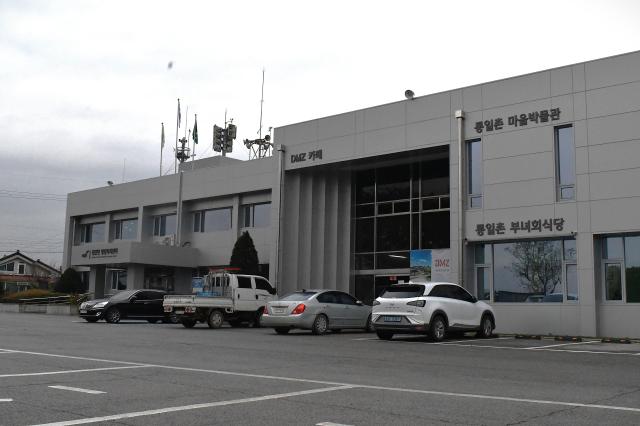
A short walk from the administrative center leads to a building housing the DMZ Cafe upstairs and the Tongilchon Women's Association Restaurant below.
At the cafe, a female employee first wanted to know why the reporters were asking about village life.
"I would appreciate it if you could clarify whether you're asking personally or as a journalist," she said.
Once the purpose was explained, she described how familiar the military procedures had become to people living in the area.
"Honestly, people living here don't experience much inconvenience," she said. "Going in and out has become a very familiar process for them."
She suggested that any official position should come from the village chief.
Downstairs, the reaction was much more forceful.
"We're all against moving it north," said a woman working at the Women's Association Restaurant.
She was referring to the proposed relocation of the military checkpoint.
"If the checkpoint moves up to the intersection, we'll be completely exposed," she said.
"We've never had to lock our doors here."
The remark turned the conventional understanding of a military checkpoint on its head.
To visitors, a checkpoint means inspection, paperwork and restricted movement. To this resident, it also means a boundary between the village and the outside world.
"We've lived here for 54 or 55 years, putting up with much greater inconvenience than this," she said.
Farmers who regularly travel into the restricted area might see things differently, she acknowledged.
"They have to go back and forth, so perhaps that's why they want it," she said.
"But we're against it."
Her opposition was emphatic, although it could not be taken as the view of the entire community.
Outside the restaurant, a man cleaning the area appeared surprised when asked about the proposed changes.
"This is the first time I've heard about it," he said.
He worked in the village but did not live there.
Even among the people encountered during the visit, awareness of the plan was uneven.
A few steps away, the Tongilchon agricultural products store offered another glimpse of the village's contradictions.
This is a tiny settlement best known for Jangdan soybeans, rice and ginseng, yet its shelves held more than local farm produce.
Rows of drinks included imported soft drinks, the kind one might expect in an urban convenience store.
One of the reporters bought a cherry-flavored cola imported from the United States.
It was an unexpectedly ordinary purchase in a place where getting to a restaurant had required military clearance.
Tongilchon may be isolated, but it is hardly cut off from commerce or outside visitors.
The village is an established stop on Paju's DMZ Peace Tour, along with the Third Infiltration Tunnel and Dora Observatory. Tourists passing through the military checkpoints can eat at local restaurants and buy agricultural products.
According to Paju, more than 700,000 people used the Tongil Bridge crossing last year, including approximately 550,000 tourists and 150,000 people engaged in farming.
That is an enormous flow of outsiders through an area with only a few hundred registered residents.
The checkpoint, in other words, has not simply kept people out. It has also helped define the village's place in the tourism economy.
Removing or relocating it could bring more independent customers to local businesses, as city officials hope. But it could also change the controlled-access experience on which some established tourism activities depend.
There are other economic uncertainties.
Under the Special Act on Support for Border Areas, qualifying development projects can receive government funding, while eligible businesses may benefit from tax incentives under separate laws.
The economic outcome is therefore more complicated than a simple trade-off between military restrictions and commercial freedom.
At the agricultural store, the man running the business seemed comfortable discussing everyday matters. His answers became noticeably shorter when the conversation turned to the checkpoint proposal.
He said he was not particularly concerned and suggested the reporters seek out the village chief.
"If you want to speak with the village chief, you should ask the women at the Women's Association Restaurant for his contact information," he said.
It was not the first time the reporters had been directed to the same person.
Before leaving Tongilchon, the reporters returned to the administrative welfare center in another attempt to reach the village chief.
Throughout the visit, several people had suggested that his views would better represent the community. Yet none had provided his contact details.
At the center, an official declined to disclose the chief's personal contact information but offered to pass along a business card, without promising a response.
An attempt to arrange an interview with the head of the administrative center also failed. Staff said a prior appointment was required.
AJP left without speaking to either representative.
The village chief's position remained unknown. And the interviews conducted that day could not establish whether opponents or supporters of the proposal represented a majority of residents.
What they did reveal was a village whose relationship with the military boundary is more complicated than the usual story of residents longing to be free of restrictions.
There were those who saw the inconvenience of repeated checks, those who feared losing the quiet and security of a controlled-access community, and others who had grown so accustomed to the system that the proposed changes seemed to matter little.
Tongilchon was created in the shadow of war, populated by people whose lives had been shaped by military service, displacement and national division.
Over five decades, its residents built homes, raised families, cultivated fields and opened businesses behind a checkpoint.
The military boundary that once defined their isolation has become part of their everyday identity — and, for some, a source of reassurance.
For the government, moving the line north is a matter of restoring freedom of movement and expanding economic opportunity.
For some villagers, it means opening a door they have never felt the need to lock.
In Tongilchon, the question is no longer simply how to make a restricted community more accessible. It is also what might be lost when the barrier finally moves.

Copyright ⓒ Aju Press All rights reserved.