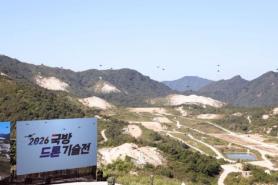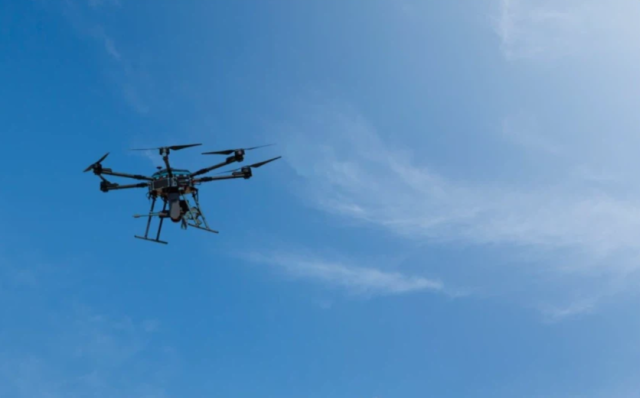
The change goes beyond a new nameplate. The Defense Drone Headquarters will help identify what the military needs, test emerging technologies and bring civilian innovations into service. Individual military branches will operate the drones, with the Joint Chiefs of Staff coordinating joint operations.
Formally established on Nov. 1 and inaugurated the following day, the headquarters replaces the Drone Operations Command as South Korea seeks to make unmanned warfare a capability shared across its forces.
"The reorganization is intended to strengthen our military's drone and counter-drone capabilities in response to changes in the operational environment," the Ministry of National Defense told AJP in a written response.
The former command was established in September 2023 under then-President Yoon Suk Yeol after five North Korean drones crossed into South Korean airspace in December 2022. One reached the Seoul area, exposing weaknesses in the military’s ability to detect and intercept small unmanned aircraft.
A civilian-government-military advisory committee recommended abolishing the command in January 2026, citing inefficiencies from overlapping functions.
The ministry instead retained and repurposed its headquarters, transferring operational missions and combat units to the individual services.
"The subordinate units and operational missions of the former command will be transferred to operational commands under each military branch, while its headquarters will be reorganized to specialize in combat capability development, technology testing and civil-military cooperation," the ministry said.
That changes a division of responsibilities under which the services largely gathered intelligence while the dedicated command handled attacks.
"Under the previous structure, the military branches mainly conducted surveillance and reconnaissance, while the Drone Operations Command focused on strike operations," the ministry explained. "Following the reorganization, each branch will conduct both surveillance, reconnaissance and strike missions."
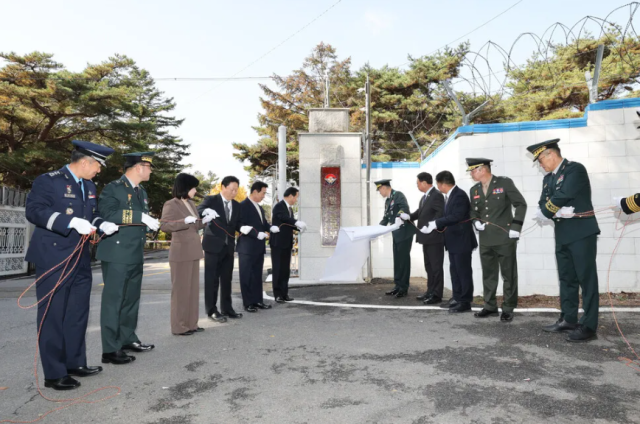
Its smaller size comes with a broader mandate to connect military needs with civilian technology.
"The former command emphasized security, which limited cooperation with the private sector," the ministry said. "The new headquarters will place greater emphasis on openness, allowing a higher level of civil-military cooperation."
The headquarters will support a military certification system for commercial drones, component standardization and testing under conditions relevant to the Korean Peninsula, according to the ministry’s launch announcement. These functions are intended to help promising technology reach military units more quickly.
The urgency is visible both on distant battlefields and across the border.
North Korean leader Kim Jong-un attended an unmanned aviation technology exhibition on Oct. 29 featuring reconnaissance and one-way attack drones. State media footage showed attacks on mock targets resembling South Korean frontline guard posts and U.S. tanks.
The wars in Ukraine and the Middle East have also exposed the economics of drone warfare: relatively cheap aircraft can threaten valuable targets and force defenders to expend costly interceptors.
Iranian-designed Shahed drones are estimated to cost 20,000 to 50,000 dollars each, while a Patriot interceptor can cost around 4 million dollars, according to analyses by the Center for Strategic and International Studies. The disparity has sharpened the need for affordable defenses alongside cheaper attack systems.
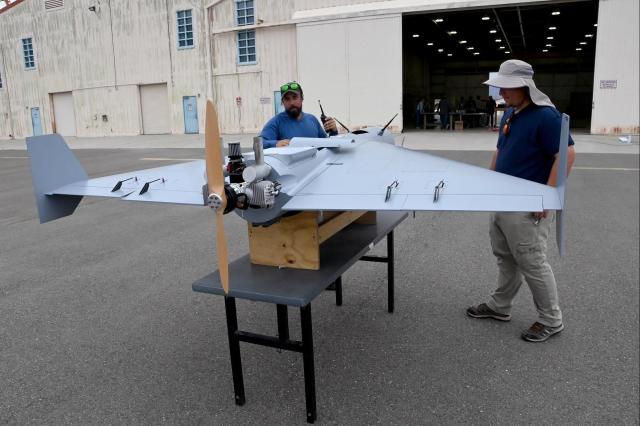
For South Korea, the question is whether reorganizing the bureaucracy can accelerate the arrival of such capabilities.
Jung Kyeong-woon, a research fellow at the Korea Association of Military Studies, said leaving combat operations to the services fits the military’s existing structure.
"Under the current structure of the South Korean military, it makes sense for the headquarters to have neither subordinate drone units nor operational command authority," Jung told AJP.
He was more cautious about creating another organization in a field already served by established research and procurement institutions.
"In principle, it would not be desirable to give the new headquarters separate research, development and procurement authority, because existing organizations already perform those functions," he said.
"However, drone technology is advancing extremely rapidly, while our development and procurement processes have been too slow. In that sense, establishing a dedicated organization to focus on this area is not necessarily a bad approach."
The ministry draws a distinction between the headquarters and the Defense Acquisition Program Administration (DAPA), which manages weapons development and procurement.
The headquarters will identify and coordinate operational requirements, support technology testing and help civilian products meet military needs. Purchasing and contracting will remain with DAPA. That division will matter as South Korea pursues additional one-way attack drones, including the planned K-LUCAS long-range system.
The reorganization spreads responsibility for drone warfare across the services while giving a smaller headquarters the task of helping them keep pace with technology.
Its practical test will be how quickly a need identified by a combat unit becomes a tested drone in service — and whether defenses against North Korea’s unmanned aircraft can advance just as fast.

Copyright ⓒ Aju Press All rights reserved.