
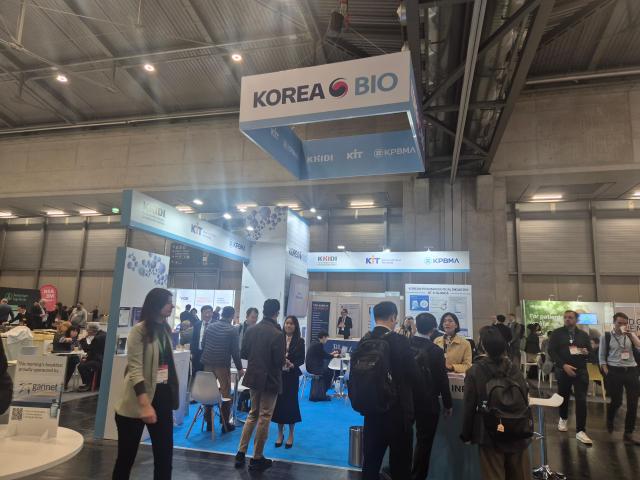
ZURICH, November 08 (AJP) -Small and mid-sized South Korean drug developers are tapping the European market through BIO-Europe this week, seeking licensing deals with global pharmaceutical companies to bring their experimental medicines to patients worldwide.
At least eight Korean firms will attend the three-day event opening Monday in Cologne, Germany. The gathering brings together more than 2,000 companies and investors from over 60 countries for about 30,000 one-on-one business meetings.
For smaller developers, securing a global partner can help bridge the costly gap between a promising drug candidate and an approved medicine. Licensing agreements can provide funding and access to the clinical development, regulatory and sales networks needed to reach international markets.
Now in its 32nd year, BIO-Europe offers Korean companies a chance to meet European drugmakers and investors face to face. Organizer Informa Connect says the event is expanding beyond dealmaking to address broader industry strategy, including regulation, manufacturing and financing.
Korean developers arrive with some high-profile deals already behind them. ABL Bio licensed its brain drug-delivery technology to Britain’s GSK in April 2025 and to U.S. drugmaker Eli Lilly in November that year.
In Cologne, ABL Bio will pursue further partnerships for the technology, called Grabody-B, which is designed to help medicines cross the blood-brain barrier — a protective layer that prevents many drugs from reaching the brain. It will also promote Grabody-T, its cancer immunotherapy platform designed to help the immune system attack tumors.
D&D Pharmatech will continue licensing discussions for DD01, a once-weekly injection being developed for metabolic dysfunction-associated steatohepatitis (MASH), a serious form of fatty liver disease.
In a U.S. mid-stage trial, 62.5 percent of patients receiving DD01 achieved resolution of MASH without worsening liver scarring, compared with 5.3 percent of those given a placebo.
Rznomics, which already has a deal with Eli Lilly to develop a treatment for hereditary hearing loss, will seek partners for its ribonucleic acid (RNA) editing technology. It will also promote RZ-001, a drug candidate being developed for liver cancer and glioblastoma, an aggressive form of brain cancer.
G2GBio will pitch GB-5001, a once-monthly injection intended as an alternative to daily doses of donepezil, a medicine used to treat symptoms of dementia.
Other participants include Olix, which is developing RNA-based treatments for obesity and macular degeneration, an eye disease that can cause severe vision loss. Vigencell will present cell therapies for lymphoma, brain cancer and liver cancer, while Y-Biologics will promote its antibody-based cancer drug candidates.
Pangen, a subsidiary of Huons Group, is seeking European partners for its biosimilar of erythropoietin (EPO), a medicine used to treat anemia. Biosimilars are medicines highly similar to existing biological drugs and can offer lower-cost treatment options.
“We are expanding our biopharmaceutical business from emerging markets into developed countries based on our own core technology,” Pangen CEO Yoon Jae-seung said.
Cologne is the latest stop in a busy year of overseas outreach for Korean biotech companies, following participation in BIO USA in San Diego in June and BIO Japan.
The commercial goal is to turn those meetings into agreements that fund further development and establish a route to market. For smaller Korean firms, global partnerships can help advance their leading drug candidates while freeing resources for the next generation of treatments.
AJP Takeaways
- At least eight South Korean biotech firms, including ABL Bio, D&D Pharmatech and Rznomics, will seek licensing partners at BIO-Europe in Cologne, Germany, from November 9 to 11.
- BIO-Europe brings together more than 2,000 companies and investors from over 60 countries for about 30,000 one-on-one partnering meetings, according to Korean media reports.
- South Korean biotech companies have drawn growing global interest, with ABL Bio licensing its brain drug delivery technology to GSK and Eli Lilly in 2025.
- Tags: BIO-Europe, South Korea, biotech, ABL Bio, D&D Pharmatech, Rznomics, G2GBio, Olix, Vigencell, Y-Biologics, Pangen, Hugel, Eli Lilly, GSK, Informa Connect, Cologne, licensing
Copyright ⓒ Aju Press All rights reserved.
