

The author, Abe Kwak, is the Chairperson of the Asia-Pacific Media Association based in Seoul.
Jensen Huang’s Sudden Exit, Nvidia’s Uncertain Future, and the Struggle for Technological Supremacy Between America and China
The man who helped build the infrastructure of the artificial intelligence revolution has been brought down not by a rival's superior technology, a Chinese breakthrough in semiconductor manufacturing, or a political campaign against his company. His undoing began with something as old as civilization itself: human desire, and the fragile bonds of trust it can destroy.
Jensen Huang, one of the most consequential business leaders of his generation, has resigned from Nvidia, the company he co-founded 33 years ago and transformed into the defining enterprise of the AI age.
On November 12, Nvidia announced that Huang had stepped down as president, chief executive and a member of its board. The board had accepted his resignation the previous day.
Colette Kress, Nvidia's longtime chief financial officer, was appointed interim chief executive while retaining her financial responsibilities. Harvey C. Jones, a director since the company's founding year, became Nvidia's first designated chairman of the board. A search for a permanent successor is underway, with both internal and external candidates under consideration.
The transition marks the end of an extraordinary chapter in Silicon Valley history.
But the circumstances surrounding Huang's departure raise questions that extend far beyond corporate succession.
Reports of an extramarital relationship with a Chinese businesswoman suspected by American authorities of having intelligence connections were followed by allegations involving a female Nvidia executive. Huang publicly acknowledged having been unfaithful to his wife and apologized to his family and employees. Nvidia's board launched an independent investigation, while lawmakers and investors began asking difficult questions about corporate governance, national security and the movement of advanced American chips through international supply chains.
It is essential to distinguish what has been established from what remains alleged.
Huang's admission of infidelity does not establish his involvement in espionage. His resignation does not prove that company secrets were compromised or export-control laws were violated. Allegations involving other individuals remain subject to verification and, where appropriate, investigation.
Yet even with those distinctions firmly in place, the significance of this episode is unmistakable.
A controversy that began in the private life of a powerful executive has become entangled with the future of the world's leading AI chipmaker, Washington's strategic confrontation with Beijing, China's drive for technological independence, and the economic fortunes of countries such as South Korea.
This is no longer merely a story about an affair.
It is a story about the collision of human weakness and extraordinary power, private conduct and public responsibility, technological ambition and the limits of control.
Above all, it raises a question that has occupied philosophers for thousands of years:
Can human beings master the world without first learning to master themselves?
Can a Human Being Become a God?
Jensen Huang's career ranks among the most remarkable entrepreneurial achievements of modern capitalism.
In 1993, he co-founded Nvidia, a company whose graphics processors were initially associated with computer games and visual computing. Over the following decades, he recognized that the architecture of those processors could serve a much greater purpose.
What began as a technology for rendering images became indispensable to machine learning, scientific research, cloud computing and, eventually, generative artificial intelligence.
Huang did more than build a successful semiconductor company. He helped shape the technological foundations of a new industrial era.
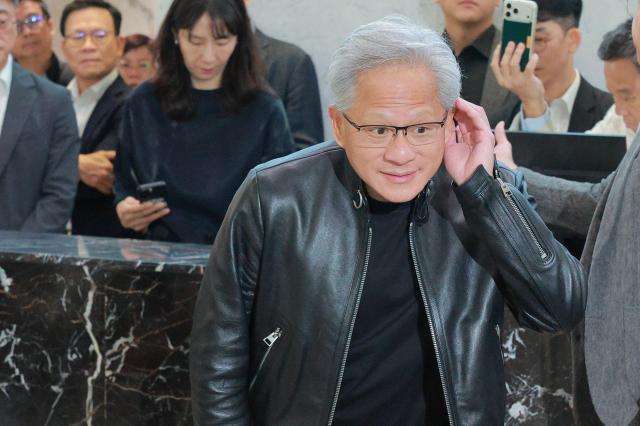
His black leather jacket became an unlikely symbol of innovation. His product presentations were followed by engineers, investors, heads of government and corporate executives around the world. His decisions influenced the investment plans of technology giants and the industrial strategies of nations.
In the public imagination, Huang became something approaching an emperor of artificial intelligence.
But even an emperor remains human.
The ancient Greeks had a word for the arrogance that arises when exceptional individuals forget the limits of their own power: hubris.
In Greek tragedy, hubris often precedes catastrophe. Its victims are not necessarily villains. Frequently, they are gifted individuals whose achievements become so extraordinary that they begin to mistake success for invulnerability.
There is a temptation to interpret Huang's resignation as the complete collapse of his legacy. That would be an error.
His contributions to computing remain immense, whatever the outcome of the investigations surrounding him.
But his departure illustrates an enduring truth: As human capabilities expand, the need for judgment, humility and restraint becomes more urgent, not less.
Confucius expressed this principle in the Analects through the phrase keji fuli wei ren — 克己復禮為仁.
It is commonly understood to mean that overcoming selfish impulses and returning to proper conduct is the path toward ren, or humaneness.
The point is not that desire must be abolished. Desire is inseparable from human life. Ambition has built civilizations, inspired art and driven scientific discovery.
The question is whether desire governs our judgment or whether judgment governs desire.
A man may help develop machines capable of extraordinary calculations and still struggle with the ordinary human task of governing his own impulses.
Perhaps the most difficult frontier to conquer is neither outer space nor the microscopic architecture of a semiconductor.
Perhaps it is the human heart.
Love Is Personal. Power Is Not.
Love is among the most powerful forces in human civilization.
Without it, much of the world's literature, music and art would scarcely exist in recognizable form. Love inspires sacrifice, imagination and courage. It can make life meaningful in ways that wealth and power cannot.
But love cannot excuse every action undertaken in its name.
For individuals who exercise enormous authority, private relationships may create public obligations.
A relationship involving a subordinate can raise questions about professional advancement, consent, favoritism and the unequal distribution of power. A relationship involving someone connected to a major business partner can raise concerns about conflicts of interest and access to sensitive information.
Such concerns do not establish misconduct by themselves. They do, however, warrant careful and impartial examination.
Reports involving a woman in Nvidia's health-care business have raised questions about the relationship between Huang's personal conduct and his managerial authority. The available public record does not establish every allegation, and the individuals involved are entitled to fair treatment.
The proper question is not whether society should police the intimate lives of prominent people.
It is whether private relationships affected public decisions, compromised corporate safeguards or damaged the legitimate interests of employees and shareholders.
Western political philosophy developed systems of checks and balances to prevent power from becoming arbitrary. Eastern philosophy placed particular emphasis on the moral cultivation of those who exercise authority.
The traditions differ in method, but they converge on a fundamental principle: Power requires discipline.
Montesquieu understood that institutions must restrain institutions.
Confucian philosophy went further into the individual conscience.
The classical Chinese text The Great Learning describes a moral progression from cultivating oneself to ordering one's family, governing the state and ultimately bringing harmony to the world.
Known as xiushen qijia zhiguo pingtianxia — 修身齊家治國平天下 — the teaching is not a literal blueprint for modern corporate management.
But its underlying insight remains relevant.
The ability to govern others begins with the responsibility to govern oneself.
A successful executive may possess extraordinary technical intelligence. Yet intelligence alone does not guarantee wisdom, and professional achievement does not exempt anyone from ordinary standards of responsibility.
At the same time, personal wrongdoing must not be confused with the totality of a person's accomplishments.
A mature society must be capable of acknowledging both.
Alice Huang, Beijing and the Shadow of Intelligence Operations
The controversy surrounding Huang acquired geopolitical significance because of the identity and business connections of Alice Huang, a Chinese businesswoman associated with Megaspeed, a Singapore-based cloud-computing company.
American news reports have described suspicions among U.S. officials that she had connections to Chinese intelligence.
Those suspicions are serious. They are not, however, equivalent to a public finding of espionage.
The evidentiary basis for the intelligence assessments has not been fully disclosed. Chinese authorities have rejected the spying allegations, and the publicly available record does not establish that Huang knowingly participated in a foreign intelligence operation.
Reports and speculation about Alice Huang's whereabouts, including suggestions that she has been in Beijing, have generated further questions.
But presence in China is not proof of espionage, nor does it demonstrate that the Chinese government is protecting an intelligence operative.
Those are matters that require evidence.
The broader concerns about China's political and intelligence systems nevertheless deserve scrutiny.
The Chinese Communist Party exercises extensive authority over national security institutions. China's legal framework, including its national intelligence and counterespionage legislation, gives the state significant powers in matters involving security and information.
Those institutional realities have contributed to persistent concern in Washington and other capitals about the relationship between Chinese businesses, state interests and overseas technology networks.
Such concerns should not be dismissed merely because they arise amid a wider strategic rivalry.
Nor should they become a license to declare individuals guilty by association.
The distinction matters profoundly.
A free society should demand transparency and accountability from powerful governments. But it must also insist that allegations against individuals be judged on evidence rather than nationality, political suspicion or presumed loyalty.
That is not a weakness of democratic principles.
It is their strength.
The $7.5 Billion Question
Behind the personal controversy lies a potentially more consequential question: the movement and use of advanced Nvidia processors through international commercial networks.
Technology reporting has raised allegations involving companies connected to Megaspeed and transactions described as totaling approximately $7.5 billion, with accounts referring to roughly 240,000 AI chips.
Those figures demand attention.
But they must be understood correctly.
They are reported figures associated with allegations about transactions and supply chains, not a judicially established total of illegally diverted chips.
The precise destinations, ownership arrangements and ultimate users of the equipment require independent verification.
Megaspeed has denied wrongdoing and said it has cooperated with inspections by American export-control authorities. Nvidia has said it has no reason to believe that its confidential information or national security was compromised.
Those statements, too, belong within the evidence that investigators must assess.
What makes the controversy especially important is the underlying problem it illuminates.
For decades, export controls were designed primarily around physical goods.
Governments could regulate the shipment of military equipment, sensitive machinery, advanced components and strategic materials across borders.
But artificial intelligence has complicated the meaning of technological access.
Suppose an advanced Nvidia processor is installed in a data center in Singapore or Malaysia. Suppose a customer in China can access the computing capacity of that processor remotely.
The chip itself has not crossed the Chinese border.
Its computational power has.
The economic and technological value of the machine can move through a network even when the physical device remains thousands of miles away.
This creates a profound challenge for governments attempting to regulate access to advanced computing.
In the industrial age, controlling the movement of steel, oil and machinery was central to economic power.
In the AI age, control over data, algorithms, computing capacity and the infrastructure connecting them may prove equally consequential.
The border remains a political reality.
But computation does not always respect its traditional boundaries.
The question for Washington is therefore no longer simply where an advanced chip is shipped.
It is who ultimately controls its use.
Can America Contain China's AI Ambitions?
The United States faces a difficult strategic dilemma.
It seeks to preserve its technological advantages by restricting China's access to the most advanced semiconductors and manufacturing equipment.
Yet the more restrictive its policies become, the greater the incentive for Chinese companies to develop domestic alternatives.
American lawmakers have considered measures addressing advanced-chip export licensing, the ability to verify the location of restricted processors, access to remote computing services and closer export-control coordination with allies such as Japan and the Netherlands.
These proposals are not all enacted law. Their status and precise provisions differ.
But taken together, they reflect an increasingly broad understanding of technological security.
The concern is no longer limited to the physical export of a semiconductor.
It extends to the identity of its ultimate user and the circumstances under which its computing power becomes available.
Huang's resignation introduces a new uncertainty into this debate.
He had been one of the technology industry's most prominent advocates of maintaining commercial engagement with China while complying with American law.
His argument reflected an uncomfortable reality: China is simultaneously a strategic competitor, a major market and an increasingly sophisticated source of technological innovation.
His successor will inherit that contradiction.
The central challenge will not disappear with a change in management.
The United States seeks to maintain technological leadership. China seeks to reduce dependence on American technology.
Both objectives are understandable from the perspective of national strategy.
But there is a paradox at the heart of technological containment.
The harder Washington presses, the stronger Beijing's incentive becomes to build an independent semiconductor ecosystem.
That does not mean American restrictions are ineffective.
They can raise costs, delay progress and deny access to equipment that remains extraordinarily difficult to reproduce.
Nor does it mean that China's eventual success is inevitable.
Technological ambition cannot eliminate the constraints of physics, engineering and manufacturing economics.
Advanced semiconductors require far more than political determination. They depend on precision lithography, specialized materials, sophisticated design software, reliable production yields, high-performance memory and advanced packaging.
These capabilities take decades to develop.
A government can command investment.
It cannot simply command innovation into existence.
China's Technological Great Wall
China is already responding to American restrictions through a broad effort to strengthen its domestic technology industries.
Huawei's Ascend processors, AI accelerators developed by Cambricon, semiconductor manufacturing at SMIC, and memory development at CXMT and YMTC form different parts of that effort.
Chinese AI developers, including DeepSeek and Alibaba's Qwen teams, are also pursuing improvements in model efficiency and computational architecture.
Their work reflects an important principle: Progress in artificial intelligence does not depend solely on possessing the most powerful individual chip.
Software efficiency, system design, networking and the ability to coordinate large numbers of processors can also shape performance.
But major obstacles remain.
One is extreme ultraviolet lithography, the extraordinarily sophisticated manufacturing technology used in producing leading-edge chips.
Another is high-bandwidth memory, which has become essential to advanced AI accelerators.
A third is manufacturing yield — the ability to produce sophisticated chips reliably, in large quantities and at commercially viable costs.
China is exploring alternatives, including multiple patterning with deep ultraviolet lithography, chiplet architectures, three-dimensional integration and domestic development of critical manufacturing technologies.
Some approaches may narrow the gap.
Others may prove too costly or difficult to scale.
The outcome cannot be determined by political rhetoric alone.
China's technological self-reliance campaign is therefore more than an effort to catch up with American companies. It is an attempt to establish an industrial ecosystem less vulnerable to external restrictions.
But independence and isolation are not the same thing.
A nation can reduce strategic dependence while remaining open to scientific exchange, competition and international cooperation.
The danger arises when self-reliance becomes an excuse for closing the door to the world.
China must ultimately decide whether its technological Great Wall will protect a thriving civilization connected to the global economy — or become a barrier that limits its own potential.
South Korea Between Two Giants
For South Korea, the consequences of this confrontation are immediate and substantial.
Samsung Electronics and SK Hynix occupy crucial positions in the global memory industry.
High-bandwidth memory, in particular, has become indispensable to the performance of advanced AI systems.
Nvidia's accelerators rely on a complex network of suppliers, and Korean memory manufacturers play an important role in that network.
Yet South Korea faces its own strategic paradox.
If Washington tightens restrictions on advanced AI processors entering China, Chinese companies may accelerate the development of domestic accelerators.
That could increase demand for advanced memory within China's emerging AI ecosystem.
But greater demand does not necessarily mean greater sales for Korean suppliers.
American export restrictions can limit transactions involving certain high-bandwidth memory products and customers. Meanwhile, China is investing heavily in domestic memory manufacturing.
Conversely, a reduction in Nvidia's China business would not automatically destroy global demand for advanced memory.
Investment in AI infrastructure across the United States, Europe, the Middle East and other parts of Asia may continue to support the industry.
Huang's departure adds another uncertainty.
A new Nvidia leadership team will have to maintain product road maps, customer relationships, supplier commitments and the confidence of investors.
For Samsung and SK Hynix, the key question is not simply who occupies the chief executive's office in Santa Clara.
It is whether the broader AI ecosystem continues to expand and whether Korean companies can preserve their technological advantages.
South Korea cannot afford a strategy based solely on choosing between Washington and Beijing.
The United States remains a central security ally and technology partner. China remains a major market, manufacturing center and increasingly capable competitor.
The task is to manage both relationships without sacrificing national interests or legal obligations.
That requires continued investment in advanced memory, semiconductor packaging, research, engineering talent, energy infrastructure and reliable supply chains.
It also requires rigorous export-control compliance and credible verification of end users.
Neither indiscriminate disengagement from China nor uncritical dependence on its market offers an adequate strategy.
South Korea needs what might be called a policy of principled engagement: competing where necessary, cooperating where possible, and preserving the capacity to make independent economic judgments.
Ultimately, a nation's competitiveness is not determined solely by which geopolitical camp it joins.
It is determined by whether the world needs the technology, capabilities and trust that nation can provide.
Can Nvidia Outgrow Its Founder?
The question now confronting Nvidia is both practical and philosophical.
Can a company whose identity has been inseparable from one extraordinary individual become an institution capable of thriving without him?
Huang's contributions cannot be overstated.
He led Nvidia through technological transitions that destroyed or diminished many of its competitors. He helped establish accelerated computing as a central component of modern scientific and industrial progress.
But a publicly traded corporation is not the private kingdom of its founder.
It belongs to its shareholders and operates through obligations to employees, customers, regulators and society.
Its leadership must ultimately be accountable to institutions larger than any individual.
The appointment of Colette Kress as interim chief executive provides continuity at a moment of extraordinary uncertainty.
Her experience in finance, capital allocation and investor relations is substantial. Yet the chief executive of Nvidia must also oversee technological strategy, research priorities, global partnerships and increasingly sensitive relations with governments.
Harvey Jones's appointment as chairman marks another significant institutional change.
A formally designated board chairman may help clarify the distinction between executive leadership and board oversight.
But governance does not become effective merely because new titles appear on an organizational chart.
The real test is whether independent oversight, transparent decision-making and credible internal controls function when powerful personalities are involved.
Questions surrounding the company's recent controversies remain unresolved.
Did personal relationships affect business decisions? Were conflicts of interest adequately managed? Were warning signs concerning sensitive transactions properly addressed? Did investors and regulators receive accurate and timely information?
Each question requires its own evidence.
No resignation can substitute for a fair investigation.
Nor should a change of leadership be treated as proof of every allegation that preceded it.
The broader lesson is clear.
A great founder may create a great company.
But a truly enduring company must eventually become greater than its founder.
That is the difference between personal brilliance and institutional maturity.
Artificial Intelligence Cannot Govern the Human Heart
The deepest irony of this episode lies in the contrast between technological progress and moral development.
Human beings are constructing machines capable of processing extraordinary volumes of information, solving complex mathematical problems, accelerating scientific research and transforming industrial production.
AI systems are increasingly able to perform tasks once considered uniquely human.
Robotics may eventually reshape the meaning of labor itself.
Yet has human character advanced at anything approaching the same speed?
We have developed machines capable of extraordinary computation while remaining vulnerable to familiar temptations.
We can manage vast networks of data and still fail to manage a moment of personal weakness.
We can connect continents through digital infrastructure while damaging the trust of those closest to us.
The ancient Chinese philosopher Laozi addressed this paradox long before the invention of the transistor.
In Chapter 33 of the Tao Te Ching, he wrote:
Zhi ren zhe zhi, zi zhi zhe ming.
知人者智,自知者明。
To understand others is wisdom; to understand oneself is enlightenment.
He continued:
Sheng ren zhe you li, zi sheng zhe qiang.
勝人者有力,自勝者強。
To overcome others is to possess strength; to overcome oneself is to be truly powerful.
Could there be a more fitting lesson for the age of artificial intelligence?
Huang understood how to compete against formidable technological rivals.
He understood the importance of architecture, performance, software and scale.
But the controversy surrounding his departure invites a more difficult reflection: What does it mean to conquer a market if one cannot reliably govern one's own conduct?
That question should not be used to deny the presumption of innocence regarding unproven allegations.
Nor should it be turned into an invitation to public cruelty.
Human beings are imperfect, and justice requires proportion, evidence and restraint.
But the episode reminds us that technological progress does not automatically produce moral progress.
Intelligence and wisdom are not interchangeable.
Power and character are not the same.
And the capacity to change the world does not guarantee the ability to live responsibly within it.
Humanity, Culture and Nature: The Civilization AI Must Serve
Human beings remain part of nature.
However sophisticated our technologies become, we cannot escape the physical laws that govern the universe.
However great our fortunes grow, our lives remain finite.
However powerful our institutions become, human dignity still depends on our relationships with others.
Ancient East Asian philosophy frequently understood humanity not as a sovereign force standing above the natural world, but as part of a larger relationship among heaven, earth and human life.
The concept is known as Cheon-Ji-In in Korean — 天地人 — the harmony of heaven, earth and humanity.
It is an old idea with striking contemporary relevance.
Artificial intelligence should not be judged solely by how much human labor it can replace or how much corporate wealth it can generate.
It should also be judged by whether it helps people live with greater dignity, whether it enriches culture and whether its development can coexist with the natural world.
The same principle applies to geopolitical competition.
A future in which America seeks total technological exclusion of China, China seeks complete displacement of America, and smaller nations wait anxiously for a winner is unlikely to produce lasting stability.
Competition is inevitable.
Cooperation remains indispensable.
Technological progress must be reconciled with human dignity, and economic growth with the limits of the natural environment.
A philosophy of civilization should begin with three ordinary human needs: sustenance, meaningful work and the freedom to dream.
In Korean, these can be expressed simply as bap, il and kkum — 밥, 일, 꿈.
Bap literally means a meal, but it also evokes the material foundations of life.
Il means work: the activity through which people create, contribute and assume responsibility.
Kkum means dreams: the imagination, culture and aspiration that give human existence a purpose beyond survival.
These three belong together.
Semiconductors help sustain modern economies. Artificial intelligence is transforming the nature of work. But human beings must still decide what kind of future those technologies should serve.
Without material security, freedom becomes fragile.
Without meaningful work, prosperity can lose its purpose.
Without dreams, technological progress becomes little more than an accumulation of machinery.
Only when sustenance, work and aspiration coexist can technological development become genuine civilization.
Before Governing the World, Govern Yourself
Jensen Huang's resignation marks the end of one era and the beginning of another.
He has left the company he led for 33 years, but the technological legacy he helped create remains deeply embedded in the infrastructure of modern artificial intelligence.
Nvidia's future will now depend on whether its engineers, executives, directors and partners can preserve that legacy while building a more resilient institution.
The United States may intensify its semiconductor restrictions on China, or adjust parts of its policy through negotiation and strategic calculation.
China will continue its pursuit of technological independence, though the pace and ultimate outcome remain uncertain.
South Korea will confront new opportunities and risks as the global semiconductor industry evolves.
Yet amid these changes, one truth endures.
Human capacity may be capable of extraordinary expansion.
Human power must nevertheless be governed by restraint.
This controversy should not be reduced to entertainment about a famous executive's private life.
Nor should unproven allegations become a pretext for erasing a person's achievements or abandoning the basic requirements of fairness.
What matters is responsibility.
Individuals must answer for their conduct. Corporations must protect the trust placed in them by shareholders, employees and society. Governments must defend legitimate national interests without abandoning the rule of law.
And humanity must continually examine the civilization it is building through the technologies it creates.
The ancient Chinese Book of Changes, or I Ching, contains a warning in the hexagram associated with the creative power of heaven:
Hang long you hui — 亢龍有悔。
The dragon that rises too high will have cause for regret.
The image is profound.
A dragon soaring toward the heavens needs more than the strength to ascend.
It needs the wisdom to recognize its limits.
Huang rose to extraordinary heights in the technological world. His achievements will remain part of the history of computing. But his departure has exposed the vulnerability that accompanies the concentration of extraordinary influence in a single human being.
The lesson extends beyond Silicon Valley.
It applies to American power, Chinese ambition and the strategic choices facing South Korea.
Technological supremacy does not confer moral supremacy.
National strength does not confer a right to dominate the world.
And extraordinary intelligence does not free anyone from the obligations of conscience.
The greatest achievement of the AI age should not be the creation of machines that surpass human beings in every measurable capacity.
It should be the cultivation of human beings wise enough to use those machines responsibly.
Greater than the semiconductors that move the world is the human conscience. Stronger than the power to rule the world is the discipline to govern oneself.
That is the most enduring lesson of the controversy surrounding the man once celebrated as the emperor of artificial intelligence.
Before humanity can claim to have mastered the world, it must learn to master itself.
That is the path of humanity, the purpose of culture, and the foundation of a civilization capable of living in harmony with nature and the wider universe.
Copyright ⓒ Aju Press All rights reserved.
