The assessment comes as President Lee Jae Myung's administration seeks to complete the long-delayed transfer within his term, raising concerns over the future of the South Korea-U.S. military alliance.
"It has been said, and I think said very credibly, that President Trump sees OPCON transition as a way to pull the forces from the peninsula," Victor Cha, Korea Chair at the Center for Strategic and International Studies (CSIS), said during a discussion hosted by the Washington-based think tank on Nov. 13.
Cha warned that congressional restrictions on reducing the roughly 28,500 U.S. troops stationed in South Korea might not prevent Trump from pursuing a withdrawal, citing his authority as commander in chief.
Randall Schriver, a former U.S. assistant secretary of defense for Indo-Pacific security affairs, said he fully agreed that Trump could view OPCON transfer as an opportunity to withdraw or reduce American forces, describing it as consistent with the president's instincts.
Former U.S. Ambassador to South Korea Mark Lippert, who moderated the discussion, said the transition could also provide an opportunity for broader talks on the alliance's future, even as Trump might seek troop withdrawals.
Former U.S. Forces Korea Commander Gen. Vincent Brooks, meanwhile, criticized Seoul's urgency to complete the transfer within Lee's term, comparing it to similar efforts under former President Moon Jae-in.
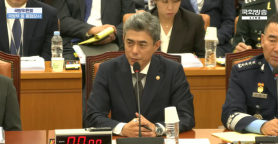
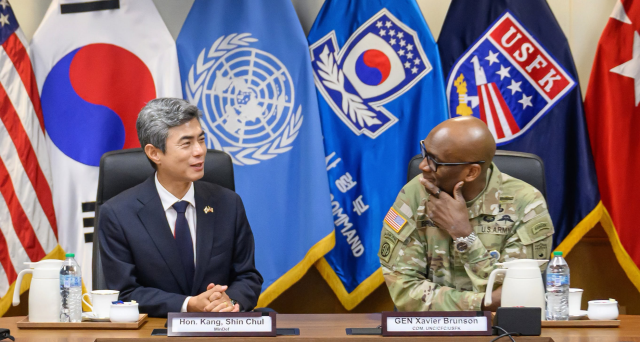
Brooks also expressed disappointment over Defense Minister Kang Shin-chul's recent assertion that all three conditions for OPCON transfer had been met and that the transition could take place immediately.
He compared the claim to a college student declaring readiness to graduate without completing required courses or passing final examinations.
Brooks warned against selectively interpreting the conditions for the transfer and criticized proposals to replace the existing South Korea-U.S. Combined Forces Command with a parallel command structure, arguing that such an arrangement could create confusion and risks during wartime.
The experts also discussed the implications of the Democratic Party's sweeping victories in the Nov. 3 U.S. midterm elections, which gave the party control of both chambers of Congress.
Schriver predicted possible changes in Trump's Cabinet amid mounting political pressure, including scrutiny of Defense Secretary Pete Hegseth and Commerce Secretary Howard Lutnick.
Cha said the incoming 120th Congress could seek to reclaim some authority over tariffs from the executive branch.
He also warned that South Korea could face greater difficulties advancing cooperation with Washington on shipbuilding, nuclear-powered submarines, uranium enrichment and spent nuclear fuel reprocessing.
Cha said a Democratic-controlled Congress would include influential lawmakers strongly committed to nuclear nonproliferation, making progress on nuclear-related issues more challenging than under Trump and his Republican allies.

Kim Hee-su
Kim Hee-su is a bilingual reporter at AJU Press, covering defense and foreign affairs. Before joining AJP in 2025, she worked at The Korea Times, where she wrote interview stories, including a profile of North Korean defector Kim Gum-hyok, and produced digital content. She also previously worked as a researcher for KBS News 9’s International News Department, supporting correspondents in 10 countries around the world. She graduated from the University of Toronto in Canada with a double major in Book and Media Studies and East Asian Studies.
Copyright ⓒ Aju Press All rights reserved.