

JPMorgan forecast in a report released Thursday that U.S. humanoid robot production could reach 300,000 to 400,000 units by 2030 before climbing to approximately 1.5 million by 2035, driven by labor shortages, improving economic conditions and expanding manufacturing capacity.
The investment bank expects component suppliers to benefit from the industry's early growth, with the market for essential parts, including actuators, motors and vision systems, potentially approaching $30 billion by 2035.
JPMorgan identified five promising suppliers: South Korea's Robotis, U.S.-based Timken and Cognex, and China's Leader Drive and Orbbec.
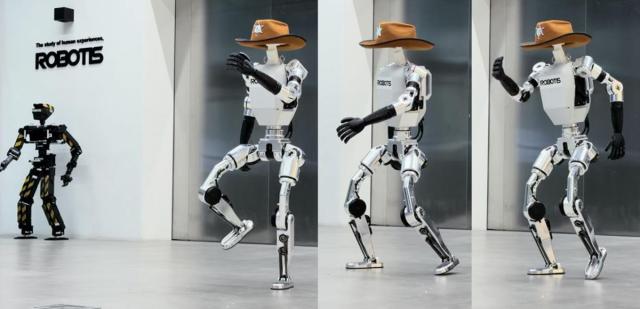
Robotis specializes in actuators and motor control technologies used in robotic joints. Its flagship product, DYNAMIXEL, combines motors, gear reducers and controllers into integrated modules that enable precise robotic movements.
Such components are essential for humanoid robots, which require coordinated control of multiple joints to walk, lift objects and perform tasks resembling human movements.
The bank said the humanoid industry is moving beyond technology demonstrations toward commercial deployment, particularly in manufacturing, logistics and warehouse operations.
It estimated that companies operating humanoid robots across multiple shifts could save approximately $100,000 annually as operating costs approach those of human labor.
However, significant challenges remain before mass production becomes commercially viable.
JPMorgan identified robotic hand dexterity, actuator supply, AI training data, computing resources and manufacturing capacity as major obstacles.
Outside Tesla, leading U.S. humanoid manufacturers generally target annual production of 10,000 to 30,000 units, reflecting the industry's current limitations.
U.S. trade policy could also influence the market, as the Trump administration examines imported robots and industrial machinery through a national security lens, potentially leading to tariffs or measures encouraging domestic manufacturing.
Major U.S. humanoid developers include Tesla, Agility Robotics, Boston Dynamics, Figure AI and Apptronik.
For South Korean suppliers such as Robotis, the expanding market presents opportunities to enter global supply chains, although converting that potential into actual contracts and revenue growth remains a key challenge.

Kim Hee-su
Kim Hee-su is a bilingual reporter at AJU Press, covering defense and foreign affairs. Before joining AJP in 2025, she worked at The Korea Times, where she wrote interview stories, including a profile of North Korean defector Kim Gum-hyok, and produced digital content. She also previously worked as a researcher for KBS News 9’s International News Department, supporting correspondents in 10 countries around the world. She graduated from the University of Toronto in Canada with a double major in Book and Media Studies and East Asian Studies.
Copyright ⓒ Aju Press All rights reserved.
