

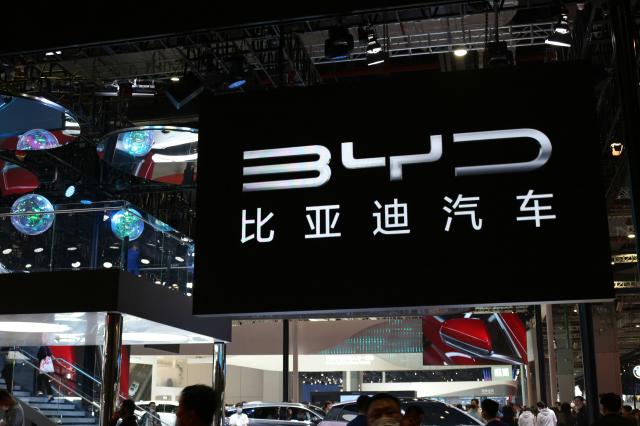
ZURICH, November 15 (AJP) -Spain is on the shortlist for a new BYD car factory in Europe, as the Chinese electric vehicle giant looks for a reliable base after setbacks elsewhere on the continent.
BYD, based in Shenzhen in southern China, is one of the world’s biggest makers of electric and plug-in hybrid cars. It wants to build more cars inside Europe to serve a growing customer base and avoid the extra import duties the European Union (EU) imposed on Chinese-made electric cars in 2024.
The company accounted for 2.7 percent of new passenger-car registrations across the EU, Britain and the European Free Trade Association in the first nine months of 2026, up from 1.2 percent a year earlier. Registrations reached 283,997 vehicles, according to figures from the European Automobile Manufacturers’ Association (ACEA).
BYD Executive Vice President Stella Li told Spanish news agency Europa Press on Nov. 11 that Spain was among the countries preselected for the plant. In separate remarks reported by business daily Expansión, she said competitively priced electricity was the company’s top priority in choosing a site.
BYD is considering taking over an existing factory as well as building a new one. Acquiring and refurbishing a plant could help it start production more quickly.
The search comes as its other manufacturing plans in the region face delays. Its first European passenger-car plant, in Szeged in southern Hungary, is expected to begin mass production by the end of 2026, about a year behind the original schedule. BYD also put a planned factory in Türkiye on hold in June, before construction had begun, Reuters reported.
BYD already operates an electric-bus factory in Komárom, Hungary, which opened in 2017. The proposed Spanish facility would be its second passenger-car plant in the EU.
Hungary courted Chinese investment for years under former Prime Minister Viktor Orbán. His successor, Péter Magyar, took office in May and has promised tougher enforcement of environmental and labor rules.
The Szeged project has also faced scrutiny over soil removed from the construction site. Hungarian authorities fined BYD for breaching environmental permit requirements, a penalty the company is challenging. Police are separately investigating suspected environmental damage, according to Hungarian news outlet Telex.
Spain offers an established automotive industry and abundant renewable power. It is Europe’s second-largest vehicle producer after Germany, with factories that built 2.27 million vehicles in 2025. Renewables supplied 55.5 percent of its electricity that year, according to grid operator Red Eléctrica.
Spain has also sought to attract Chinese carmakers. It abstained when EU countries voted in 2024 on additional duties of up to 35.3 percent on Chinese-made electric cars, and has used EU pandemic recovery funds to support electric-vehicle and battery investment.
Other Chinese groups have already committed to Spanish projects. Chery and Spanish brand Ebro have invested more than 150 million euros to revive a former Nissan factory in Barcelona, with plans to reach annual production of up to 50,000 vehicles by the end of 2026.
Chinese battery maker CATL and Stellantis, the group behind Peugeot, Fiat and Jeep, have announced a battery plant in Zaragoza involving investment of up to 4.1 billion euros. Geely Auto has also agreed to form a manufacturing joint venture with Ford at its Valencia plant, with production scheduled to begin in 2028.
China was Spain’s second-largest foreign supplier of cars in the first half of 2026, behind Germany. Sino Auto Insights founder Tu Le has called Spain “the new Detroit of the EU,” a nod to the U.S. auto capital.
Spanish buyers are already warming to BYD. The company has sold nearly 40,000 cars in the country so far this year, Europa Press reported.
A Spanish plant would still face hurdles. Li has acknowledged that suitable existing sites are hard to find. She also said BYD is “not very good at joint ventures,” suggesting it would prefer to operate its own factory.
No decision has been announced. For Spain, winning the plant would strengthen its role as a European manufacturing base for Chinese carmakers. For BYD, it would add production capacity inside the EU as its share of the region’s car market grows.
Tags: BYD, Stella Li, Spain, China, electric vehicles, Hungary, Szeged, Viktor Orbán, Péter Magyar, Türkiye, Chery, Ebro, CATL, Stellantis, Geely, European Union
Copyright ⓒ Aju Press All rights reserved.

