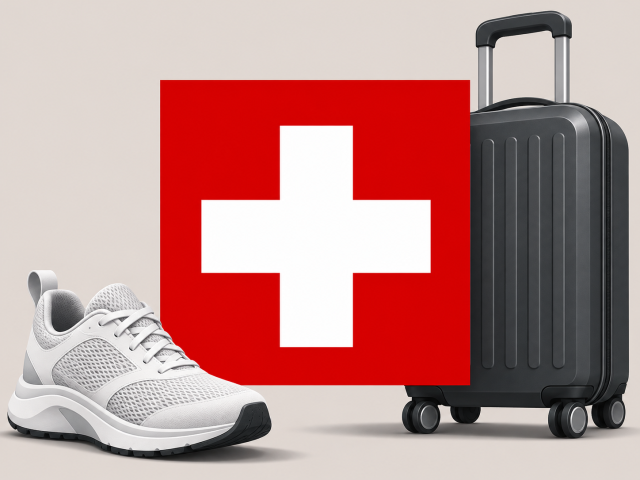
ZURICH, November 16 (AJP) -Swiss lawmakers moved closer on Friday to banning the Swiss cross on products made abroad, a step that could affect Swiss brands that manufacture their goods in Asia.
A committee of the National Council, the lower house of parliament, voted 22 to 2 to advance legislation restricting the emblem to goods made or processed in Switzerland. The decision clears the way for an upper-house committee to draw up a bill for consultation and submission to lawmakers in the first half of 2027.
The Council of States, the upper house, backed a similar motion by 32 votes to 5 in September. At issue is whether Swiss design and engineering alone should entitle a product manufactured overseas to carry the national symbol.
For many brands, the white cross on a red background is a powerful selling point. It associates products with Switzerland’s reputation for precision and quality, helping justify premium prices in markets from Europe to Asia.
In South Korea, consumers encounter Swiss-cross branding on products ranging from On running shoes to Victorinox pocket knives and luggage and Tissot and Swatch watches. Their manufacturing origins differ, however, making the distinction.
Switzerland’s “Swissness” rules, in force since 2017, already set conditions for claiming Swiss origin. Industrial products generally must derive at least 60 percent of their manufacturing costs from Switzerland, with an essential manufacturing step carried out in the country.
For food, at least 80 percent of raw materials by weight generally must be Swiss, subject to exceptions for ingredients unavailable or insufficiently available domestically. The processing that gives a food product its essential characteristics must also take place in Switzerland.
In March, however, the Swiss Federal Institute of Intellectual Property (IGE) relaxed its interpretation of how the cross could be used on goods manufactured abroad. It permitted the symbol alongside wording such as “Swiss Engineering,” subject to strict requirements on its size and placement. The change did not make those products eligible for a “Swiss-made” label.
The institute cited the strong Swiss franc and high U.S. tariffs as reasons to interpret the rules in companies’ favor where possible.
The change followed a lengthy dispute with On, the Zurich-based running shoe brand, which designs its footwear in Switzerland but manufactures it in Asia, predominantly Vietnam. The company had prominently displayed the cross on its shoes and threatened to challenge restrictions in court, Swiss media reported.
The dispute also reached Asian markets. Swiss authorities pursued On’s use of the cross overseas, including in China, Swiss daily Blick reported. On welcomed the March change as reflecting “a modern understanding of Swissness.”
Manufacturers producing in Switzerland saw it differently.
Fabio Regazzi, a member of the Council of States and president of the Swiss Trade Association (sgv), which represents small and medium-sized businesses, led the push for tighter restrictions. He argued that relaxing the rules diluted the symbol’s value and disadvantaged companies that kept production at home.
Fellow lawmaker Pirmin Schwander said the IGE had “exceeded its powers.” The Swiss government opposed the move. Justice Minister Beat Jans urged lawmakers to give the revised practice time to work “so we can see what the economy needs.”
Watchmakers Tissot and Swatch and biscuit maker Kambly manufacture in Switzerland and use the cross to signal that origin. Their position differs from that of companies seeking to emphasize Swiss design or engineering on products made elsewhere.
Victorinox uses its familiar cross-and-shield emblem on Swiss-made pocket knives. For travel gear that does not meet Swissness requirements, it uses the emblem outside Switzerland’s red-and-white national colors. Its Korean website says the luggage collection is developed in Switzerland and manufactured in China, Thailand, Vietnam and Indonesia under the supervision of its quality teams.
Bottle maker Sigg similarly reserves its red-and-white Swiss-cross logo for bottles made in Switzerland. The proposed legislation would tighten the distinction lawmakers want the emblem to convey: where a product is made, rather than where it is designed.
Tags: Switzerland, Swiss cross, Swissness, On, Victorinox, Sigg, Toblerone, Swatch, Federal Institute of Intellectual Property, IGE, National Council, Fabio Regazzi, Beat Jans, Viet Nam, China, Asia
Copyright ⓒ Aju Press All rights reserved.