

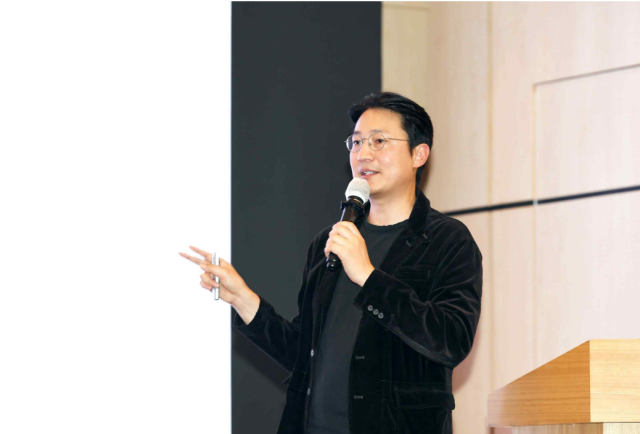
SEOUL, November 17 (AJP) - The way a space sounds shapes how people experience it as much as the way it looks, acoustic designer Kim Ji-kyung told students at Kookmin University in Seoul.
Kim, who heads the acoustic design firm Tuneworks, spoke on Nov. 12 as the 675th guest of the university's Thursday Special Lecture series. He has designed the sound environments of hotels, concert venues and religious facilities, and his lecture traced how acoustic design changes what visitors feel in a space, drawing on his own projects.
The same sound is heard differently depending on a room's structure and finishing materials, Kim explained. Sound bouncing off walls and ceilings creates reverberation, and controlling how long that reverberation lasts makes speech and music clearer while cutting unwanted noise.
Good sound cannot be achieved with equipment alone, he said. Beyond speakers, designers have to weigh the shape of a space and the materials that cover it, including porous absorbers that soak up sound energy.
Kim walked the audience through projects including Paradise City, a resort complex in Incheon, and Inspire Arena, a concert venue nearby. In hotels, the priority is blocking noise between guest rooms and keeping shared spaces comfortable. In concert halls, direct sound from the stage and sound reflected off surfaces must be balanced so that music reaches the audience clearly. At Inspire Arena, he said, seat design and the arrangement of absorbing and reflecting surfaces were part of that work. Acoustic design, he stressed, is not about turning sound up or down but about building an aural environment that fits what a space is for.
Sound also steers how people move through exhibitions, Kim said. Designers can make a work audible only from a particular spot, apply absorbers to floors and ceilings to soften footsteps and echo, and arrange sounds so they flow naturally along the visitor route.
Kim told students the field is open to people from varied academic backgrounds, and that solving problems in real spaces matters as much as theory.
The Thursday Special Lecture series is the first and longest-running regular course of weekly outside lectures at a South Korean university, according to Kookmin. Some 680 speakers from politics, society, science, culture and the arts have taken the podium over the past 30 years, including former President Roh Moo-hyun, Cardinal Kim Sou-hwan, author Rhyu Si-min, filmmaker Park Chan-wook, former National Assembly Speaker Chung Sye-kyun and former U.S. Ambassador to South Korea Mark Lippert.

Park Sae-jin
Experienced journalist and editor at AJU PRESS specializing in multilingual news. I cover international diplomacy, geolpolitics, and policy, consistently delivering highly accurate, compelling reporting for a worldwide audience.
Copyright ⓒ Aju Press All rights reserved.
