

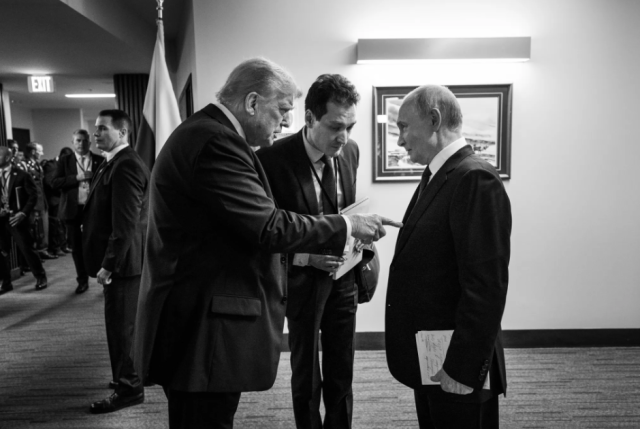
SEOUL, November 17 (AJP) - North Korea joins an already crowded historic summit agenda as U.S. President Donald Trump looks to Chinese host Xi Jinping to bring Kim Jong-un into the photo-op lineup and Russian President Vladimir Putin keeps a seat ready for his treaty ally.
Kim’s attendance remains uncertain. Trump, Xi and Putin are scheduled to meet Thursday in Shenzhen on the sidelines of the Asia-Pacific Economic Cooperation (APEC) summit. It will be the first summit ever held among the leaders of the three countries.
Beijing confirmed the meeting on Monday. It said the three would hold “in-depth exchanges on safeguarding world peace and promoting strategic stability in major-power relations” but gave few other details.
Foreign Ministry spokeswoman Mao Ning said the meeting would be of “ground-breaking significance.” The Kremlin said “the significance and symbolism of this meeting are hard to overestimate.”
As he left the White House for the Philippines and China, Trump said the leaders would take up the “tough subject” of denuclearization as well as the wars in Iran and Ukraine. “We’ll all be talking about economics and trade,” he added.
Trump said any meeting with Kim would take place in China. “(Xi) was here ... and we’re also going to meet with (Russian) President Putin, and we may meet with Kim Jong-un also,” he said. “He may come. I don’t know. That’s up to President Xi.”
In Moscow, Kremlin spokesman Dmitry Peskov told Interfax that Putin could meet Kim, saying: “Of course, if he is at the APEC summit.” Peskov spoke as Putin received a North Korean delegation in the Kremlin led by Jo Yong-won and asked it to pass his best wishes to Kim.
“I place great value on the fact that we have developed business and friendly relations, which undoubtedly help us resolve and develop ties between our countries,” Putin said. The two countries signed a strategic partnership treaty in 2024 that includes a mutual defense clause.
None of the parties most exposed to the agenda will be at the table: Ukraine, South Korea or Middle Eastern states if Iran comes up. That raises the prospect of a staged spectacle rather than settlements those countries can live with.
Pushed to the periphery, South Korea will have to deepen partnerships with other APEC members and uphold multilateral frameworks lest world affairs be dictated by a select few powers, experts said.
“APEC has never had a more critical role in defending the principles and policies on which the region’s economic prosperity has been built,” said Peter Drysdale, widely regarded as an intellectual architect of APEC.
The leaders’ meeting runs Nov. 18–19. It puts geopolitical bargaining alongside an agenda covering trade, artificial intelligence and connectivity. APEC decides by consensus, and its decisions are voluntary and non-binding. That flexibility is both a source of resilience and a limit on what leaders can achieve.
Keeping Washington in the room
Drysdale, an emeritus economics professor at the Australian National University and head of its East Asian Bureau of Economic Research, argued that the forum could keep major-power negotiations anchored in a wider regional setting.
“Keeping Washington engaged in that setting, rather than China’s trying to outshine it, will serve the region best,” he said. “Middle-sized economies like South Korea, Australia, Japan and the ASEAN members contribute to that stability, and to their own growth, through the cooperation they build with each other and with both big powers.”
For Jayant Menon, a visiting senior fellow at Singapore’s ISEAS–Yusof Ishak Institute, the real business lies off the agenda.
“Most of the action of the upcoming APEC summit will not be on the agenda — it will take place on the sidelines,” he said.
He expects an extension of the Trump–Xi trade truce rather than a sweeping bargain, with consequences for Korea and the wider region. Talks involving Putin will be watched for what they mean for oil prices and geopolitical tensions. For trade-dependent Southeast Asia, uncertainty is already driving a search for alternatives.
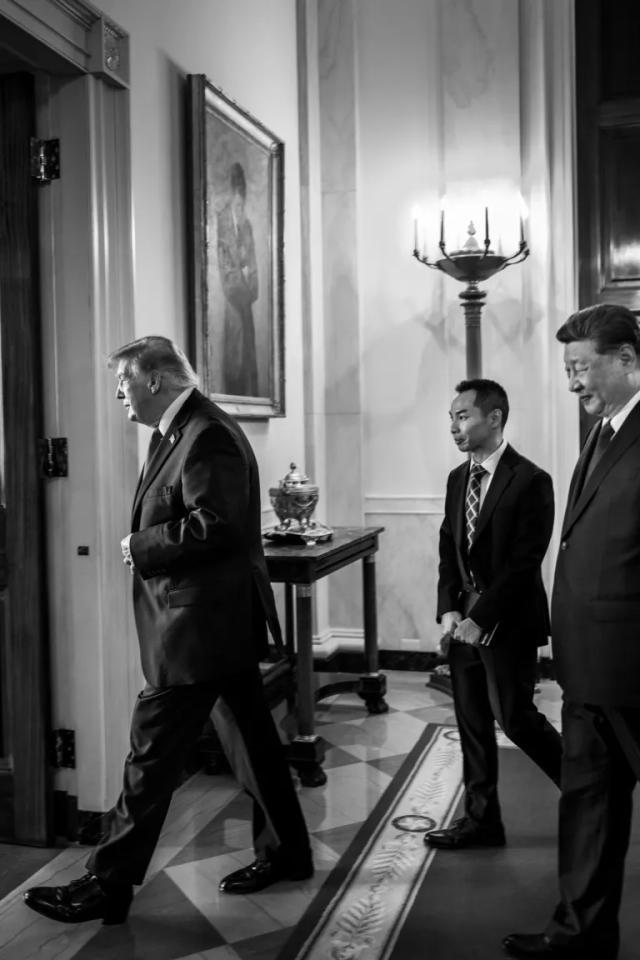
“They have no choice but to try and navigate the global uncertainties, but they are trying to diversify and reduce their dependence on unreliable trade partners,” Menon said.
Deborah Elms, head of trade policy at the Hinrich Foundation, said the summit’s value goes beyond its written outcomes. It is also the first chance to watch Trump abroad since the U.S. midterm elections.
“I still think APEC is important. It’s valuable to see and hear in person what is discussed and what is not addressed,” Elms said. “The concrete outcomes are always challenging to see.”
A U.S. pullback from Asia?
Shyam Saran, a former Indian foreign secretary, drew a line between political change in Washington and change in American strategy.
“One should not expect any significant change in U.S. external posture during the remainder of Trump’s tenure,” Saran said. In his view, the midterm results will weigh more on domestic policy than on foreign affairs, where the president keeps substantial authority.
“You could envisage a situation where the U.S. claims dominance in its western hemisphere while conceding primacy to China in Asia,” he said.
He presented that scenario as a reason for regional countries to build their own capabilities while still valuing American power.
“While the role of the U.S. power in Asia will continue to be of value to its allies and partners, each of the latter will have to rely increasingly on its own independent capabilities and seek greater security through closer partnerships among themselves,” he said.
He named India, South Korea, Japan and Australia as natural partners. Closer ties, he argued, would require Seoul and Tokyo to move past historical tensions and India to deepen its regional security role.
“What this points to is the need for the countries of the region to establish a much more diversified trade and commercial relationship among themselves,” he said.
He also sees Korea’s technology edge as leverage with Beijing. “South Korea has more leverage vis-à-vis China than India has because China values the high technology products, such as advanced semiconductors and memory chips that South Korea excels in,” he said.
Saran, who served as the Indian prime minister’s special envoy on nuclear affairs, said the geopolitical conditions that made the 2008 India–U.S. civil nuclear agreement possible would be hard for Seoul to recreate.
“It will be Seoul’s sovereign decision whether to seek an independent nuclear deterrent,” he said. “China would probably respond with a full panoply of punitive economic and commercial measures. The U.S. may react negatively but is unlikely to impose debilitating sanctions.”
South Korea is a non-nuclear-weapon state under the Nuclear Non-Proliferation Treaty and has committed not to acquire nuclear weapons.
What a non-binding forum can deliver
Others saw APEC’s lasting value in keeping cooperation going through political upheaval.
“APEC has outlasted many leaders,” said Saori N. Katada, the Louis G. Lancaster Chair of International Relations at the University of California, Santa Barbara. “In a way, the structure of APEC, which is relatively informal but routine, which includes many important governments from the U.S., China and Russia, makes this forum essential for Japan.”
Katada said Japan would keep backing institutions of different sizes while watching how Washington and Beijing manage their relationship. “Although APEC has not made any big splash for quite some time, I do not see it disappearing anytime soon,” she said.
Henry Gao, a law professor at Singapore Management University, was more cautious.
“As APEC is a non-binding discussion forum, I do not expect major results to emerge this time,” Gao said. “On the summit’s planned work on digital trade and AI, I do not think it will bridge the real differences over data governance; rather, it is more likely to identify and clarify them.” On state-owned enterprises and market access, he expects little beyond further talks.
Richard Pomfret, an emeritus economics professor at the University of Adelaide and senior associate fellow at Johns Hopkins University’s SAIS Europe, said progress should be judged by whether it prevents fragmentation and makes trade easier.
“For middle powers like South Korea, a key issue is to prevent fragmentation of trade if leading powers try to assert exclusive arrangements,” Pomfret said. “WTO rules based on nondiscrimination in international trade policies are good for middle powers.”
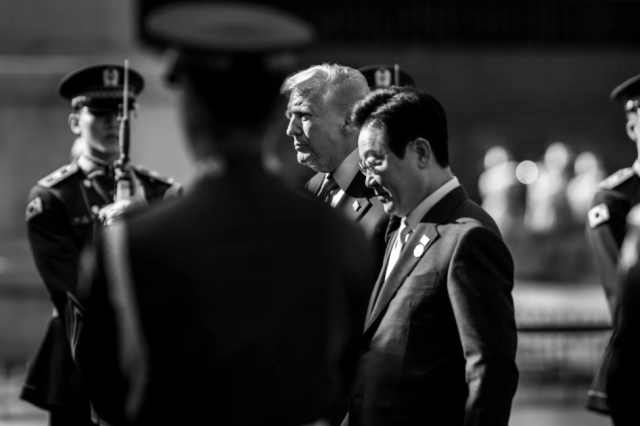
Implementation has long been difficult because some economies resist commitments that limit their policy choices, he said. Smoother border procedures could still pay off. “Generally, rules to standardize trade procedures and reduce administrative burdens for traders will be beneficial.”
Drysdale set a further test for the host. “The APEC Summit will, first, need a clear message from China on the direction of reform that Beijing needs to pursue to strengthen consumption and macroeconomic balance,” he said. “These structural reforms will take time but they matter greatly for global macroeconomic management.” He also urged talks on industrial subsidies and more predictable rules for green trade and investment.
Certainty over headlines
Uncertainty is already costing farmers, said Ted Yoho, a former four-term Republican congressman from Florida and a veterinarian.
“Trade policies should not be a fluctuating variable,” Yoho said. “For farmers to grow a crop, be successful and profitable requires certainty in the market. Changing trade policies after planting can destroy not just a crop but bankrupt a producer.”
He argued for gradual tariff changes and for policies that give producers certainty over five to 10 years. “An agreement on semiconductors may not have much impact on the rural community but an agreement on agriculture commodity trade policies would have a large impact for the rural communities,” he said. “In either scenario it is the rules in the agreement that matter.”
Yoho, a lead House sponsor of the 2018 BUILD Act that created the U.S. International Development Finance Corporation, proposed using development finance, technical assistance and risk insurance to turn economic priorities into viable projects. “The goal of the DFC was to move countries from ‘Aid to Trade,’” he said.
Menon saw similar openings in digital infrastructure. “Improved digital connectivity, both physical and policy infrastructure, will enable SMEs to access a global market, even from remote regions of poor countries,” he said.
For Drysdale, those practical gains and the larger diplomatic task are linked.
“A stable relationship between the two biggest economies is a public good for the whole region, and the rest of us have both a stake in it and a part to play,” he said.
Lee Jung-woo
I studied philosophy in college, and sociology and journalism in graduate school. I cover North Korea, South Korean politics, foreign affairs and films. I enjoy Nordic cinema, Indian cuisine and Japanese detective novels. I have a cat and like bright, acidic coffee.
Copyright ⓒ Aju Press All rights reserved.
