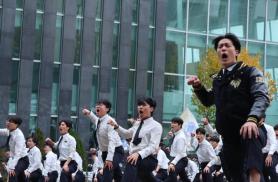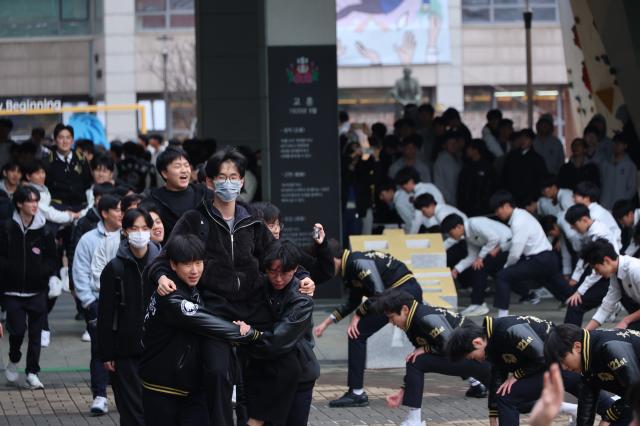
This year, every feed is dizzy. More than 550,000 candidates, and far more people once their families are counted, spent Wednesday working out which pens they can no longer carry, which shirt has too many buttons and whether their glasses will pass inspection.
The mood has turned intimidating after President Lee Jae Myung floated the idea of putting up bounty money for those who report cheats, stirring the police to immediate rummage the internet.
The reward would be at least 100 million won (about $75,000) per case for high-tech cheating, with lighter punishment for accomplices who come forward, and students on online forums warn that the money could invite excessive reports and indiscriminate suspicion.
A task force led by the National Police Agency’s investigation chief began a crackdown on Monday, and eight of the 14 reported cases of AI-assisted exam cheating are under investigation.
Officers are also checking the authenticity of 13 online items, from cheating confessions and threats to ads for equipment, and have deleted or blocked 40 posts they deemed baseless or conspiratorial.
One author had vowed to smuggle miniature gear into the exam to expose its weaknesses. Yet the nominee for police chief said Wednesday that no investigation into specific cheating on the suneung is under way. Nothing has been proven against this exam.
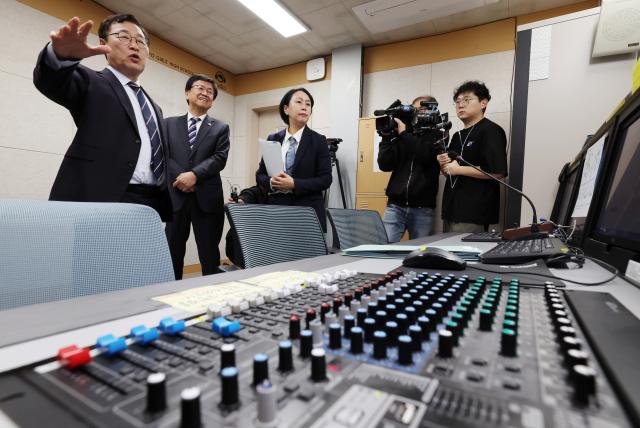
Suspicion now reaches everywhere. A high school senior has asked the Constitutional Court to suspend the exam date, arguing that candidates are being made to bear the risk of inadequate safeguards. The first person ever to earn a perfect score on the law school admission test, doubted online, has promised to solve Thursday’s Korean-language section live.
On Telegram, a group of about 22,700 members advertises button cameras and camera glasses, the latter for about 800,000 won ($600), though reporters found no proof that any kit was delivered, and it may be a scam.
The fuss has a clear origin. The top scorer in this year’s state tax accountant exam missed just one of 160 first-round questions, including a perfect mark in a tax law paper where the average was 30.18.
On Nov. 15, that candidate confessed on YouTube to cheating with electronic devices and generative AI, photographing questions with a tiny camera, sending them to AI and reading the answers on a smartphone. The candidate is now a police suspect.
The details are damning for the system. The candidate sat in the center of the second row for the first round and the front row for the second, with two invigilators in the room. Phones were not collected, there was no CCTV, and the specialist monitors hired to spot cheating devices were not deployed at the exam.
The exam agency failed to find signs of cheating even after suspicions surfaced. It took a confession to expose what a national testing system could not see.
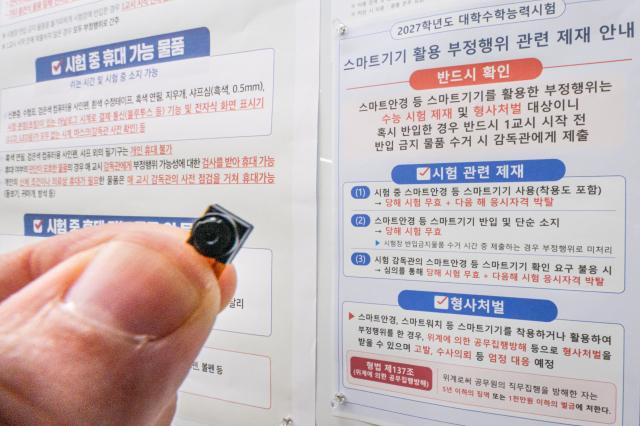
Last month, candidates wearing AI glasses were caught at essay exams for the University of Seoul and Yonsei University. Yet the government focused on glasses and left other methods unprepared, and the tax exam was beaten by a camera.
What followed was improvisation. Education Minister Choi Kyo-jin told lawmakers he did not think AI cheating could be caught perfectly, and officials stumbled over whether to block signals at test sites.
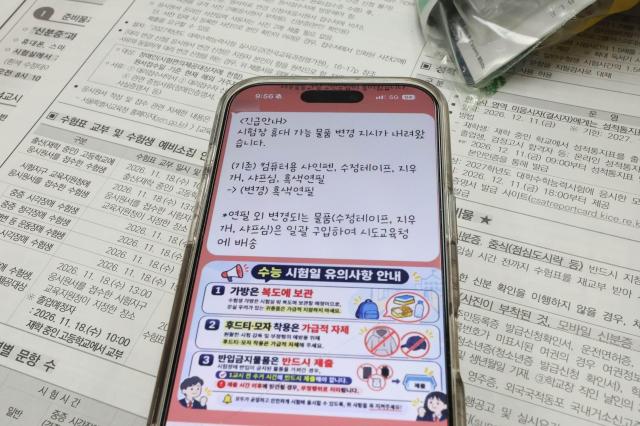
Then, within days, came the black-pencil rule, the button stickers, 8,400 extra personnel and an alert set to blare from every phone in the country. Oversight was lax until it became frantic.
Cheating with devices is hardly new. In 2004, police traced CSAT answers sent as numeric text messages and booked more than 100 people. The hardware has long existed. What has changed is the software. A hidden camera could once only carry a question out of the room, and someone outside still had to solve it.
Generative AI removes that someone. Cheating has become smarter, cheaper and closer to the perfect crime – unless the cheat confesses.
Here lies the bitter irony. South Korea is enjoying a chip bumper year on the back of AI. The country is expected to cross the $1 trillion export milestone this week, and it owes more than 40 percent to semiconductors.
Tax revenue is forecast at a record 478.6 trillion won ($358 billion), 63.2 trillion won above the government’s estimate in March, with surging profits at Samsung Electronics and SK hynix doing much of the work.
Seoul has been racing to become a top-three AI power, and yet it has neglected the side effects along the way.
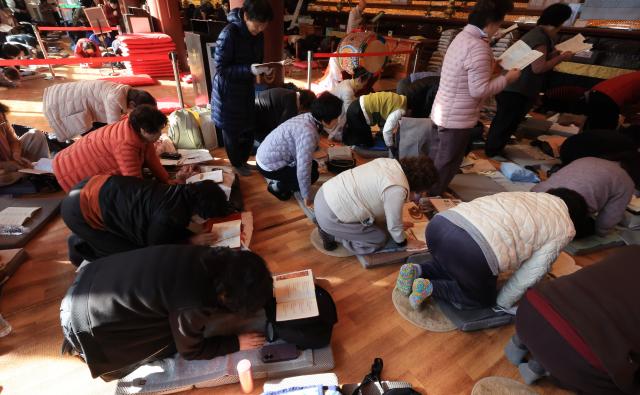
The government’s budget for next year set aside no dedicated money for detection gear or extra monitors at the state skills agency, and radio detectors for test sites will arrive next year at the earliest, leaving invigilators to rely on their eyes.
Only after the confession did the government and lawmakers move to add 18.2 billion won ($13.6 million) for national qualification exams. That is about 0.03 percent of this year’s revenue windfall. China, meanwhile, has already used signal blockers and had AI services suspend problem-solving functions during exams.
At home, convicted exam cheats have usually received fines or suspended sentences. The nation that supplies the memory for the AI age left its own exam halls guarded by the naked eye.
Thursday’s measures may well deter some. They cannot win the race. AI glasses now weigh about 50 grams and are nearly impossible to tell from ordinary frames by eye, and smart contact lenses are in development. A sticker covers yesterday’s camera.
Meanwhile, every candidate will sit a life-shaping test under the gaze reserved for a potential cheat.
Authorities can casually call all this a transition, an experiment, something to learn from as we go. That language suits a software release. It does not suit a day for which students have studied morning and night for years, with their careers, future jobs and dreams at stake.
Those who stumble on Thursday cannot simply patch the error. They wait a year. That is the deeper flaw.
Because so much rides on one sitting, a single stolen answer is worth a fortune, a single rumor can unnerve a nation and a single bad morning can redirect a life. The single-day suneung must be overhauled.
This will not be simple, and South Korea has been here before.
The first CSAT was held twice, in August and November 1993, but was cut to once a year after matching the difficulty of the two tests proved too hard. That was a real obstacle, but it belonged to another era.
The American SAT is offered several times a year. Three decades on, the question deserves a fresh answer.
Essays alone are no cure. The tax exam cheat says AI was also used in the second round, which is essay-based. They also bring their own worries over private tutoring and fair grading.
So the country needs what it has lacked this week: time to think. Past governments that pushed absolute grading were repeatedly defeated by public backlash, and a reform drafted in panic will meet the same fate. Once the last bell rings, South Korea should audit what worked, ask what the exam is really for and rebuild it with students at the table. A sliver of the chip windfall would pay for it.
At 8:40 a.m. Thursday, 551,864 registered candidates are due to begin with black pencils and years of work behind them. They have kept their side of the bargain. The adults who run this exam now have to keep theirs.
*The writer is the managing editor of AJP.
**The views expressed are those of the author and do not necessarily reflect the editorial position of AJP.
Copyright ⓒ Aju Press All rights reserved.