

The Korea Development Institute (KDI) recently raised its forecast for the country's economic growth next year to 3.9 percent, up from its previous estimate of 2.2 percent. It also expects the economy to grow by 3.8 percent this year.
The International Monetary Fund (IMF) has also forecast growth of 3.9 percent this year and 3.3 percent next year. The improved outlook is largely due to strong global demand for advanced chips, as tech companies continue to invest heavily in AI-related infrastructure. According to the state-run think tank, semiconductor production, related investment and factory construction are expected to account for about two-thirds of the country's economic growth next year.
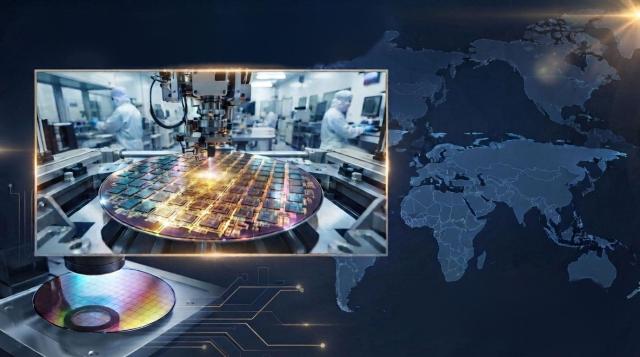
These are, in fact, reflected in the country's trade figures. South Korea's cumulative exports surpassed US$1 trillion for the first time as of earlier this week, largely thanks to semiconductor shipments, as exports of chips reached $396.8 billion in the first 10 months of this year, accounting for 42.7 percent of total exports.
The Ministry of Trade, Industry and Resources, which oversees exports, also voiced concern, saying that "the blessing brought by semiconductors could turn into a curse."
That highlights a major structural transformation in South Korea's economy from traditional manufacturing and resource-based exports to high-value technology. The country's mainstay exports have changed dramatically since 1977, when annual exports first exceeded $10 billion, led by ships, frozen fish and plywood.
Chips are now the country's largest export, and semiconductors and related industries account for roughly one-fifth of the economy. The share of computers, electronics and optical equipment in nominal GDP rose from an average of 7.5 percent between 2022 and 2025 to 20.7 percent in the first half of this year.
While the semiconductor boom has helped brighten South Korea's economic outlook, it has also heightened the economy's exposure to fluctuations in the global chip market. The KDI estimates that a 1-percentage-point change in the growth rate of semiconductor-related industries could shift overall economic growth by 0.2 to 0.3 percentage point.
The IMF has similarly warned that the benefits of the global AI boom remain concentrated in South Korea's technology sector, urging the country to diversify its sources of growth.
Another concern is that the benefits of the semiconductor boom have been unevenly distributed across industries. Major chipmakers and their suppliers have benefited from surging demand and rising profits, while businesses in other sectors have struggled to keep pace.
Furthermore, given the capital-intensive nature of semiconductor manufacturing, which requires substantial investment in factories and equipment, the export boom has yet to translate into equally strong improvements in household incomes, employment and consumer spending.
Amid recurring doubts over AI-related spending, which sent the Nasdaq down more than 5 percent on Friday amid a broader tech selloff, much will depend on whether global investment in AI infrastructure can maintain its current pace. Major technology companies have been investing heavily in data centers and advanced servers, driving strong demand for high-bandwidth memory (HBM), which is essential to many AI systems.
However, if AI services fail to generate sufficient revenue to justify such enormous spending, technology companies could scale back their investment. A slowdown in server orders and delays in data center construction could hurt South Korean chipmakers, potentially reducing exports and putting downward pressure on semiconductor prices.
For South Korea, many experts have pointed out that the challenge remains whether it can leverage the semiconductor boom to develop other industries and improve productivity among smaller businesses, as overreliance on the semiconductor sector leaves the economy more vulnerable to shifts in global AI investment.
Copyright ⓒ Aju Press All rights reserved.
