

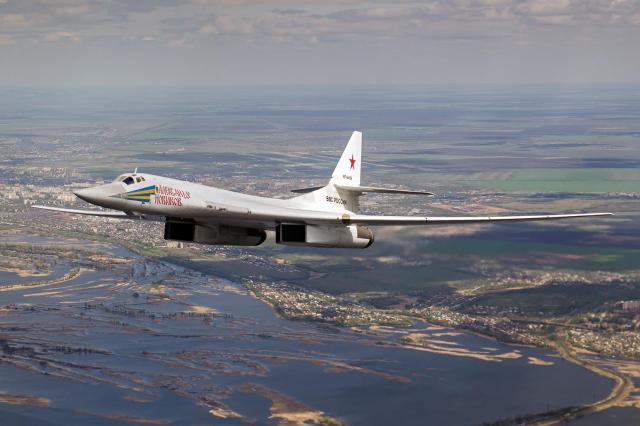
The Russian Defense Ministry said its Tu-160 strategic bombers flew for about 10 hours, escorted by Su-35S and Su-30SM fighter jets, according to state-run TASS news agency.
The ministry said foreign fighter jets had monitored the bombers during parts of the flight, insisting that the Russian aircraft had complied with international aviation rules.
The statement came after four Russian military aircraft, including two Tu-160 bombers and two fighter jets, entered the Korea Air Defense Identification Zone (KADIZ) without prior notice Tuesday morning.
The aircraft reportedly flew south toward Ulleung Island, approaching within about one kilometer of the boundary of South Korean territorial airspace before turning away.
South Korea's military responded to the approaching aircraft, although no violation of the country's sovereign airspace was reported.
Unlike territorial airspace, an air defense identification zone extends beyond a country's borders and is used to identify and monitor approaching aircraft. Entering such a zone does not itself constitute a violation of international law.
The involvement of Tu-160 bombers drew particular attention because of their nuclear strike capabilities.
The Tu-160 is a supersonic, long-range strategic bomber capable of carrying nuclear missiles and flying more than 12,000 kilometers. The aircraft, nicknamed the "White Swan" for its distinctive white exterior, is among Russia's most powerful strategic bombers.
The Russian military's footage of the flight also raised questions about whether its fifth-generation Su-57 stealth fighter had participated in the mission.
Foreign media outlets and military observers suggested that an aircraft resembling the Su-57 could be seen in the footage, although Russia's Defense Ministry did not specifically mention the fighter in its statement.
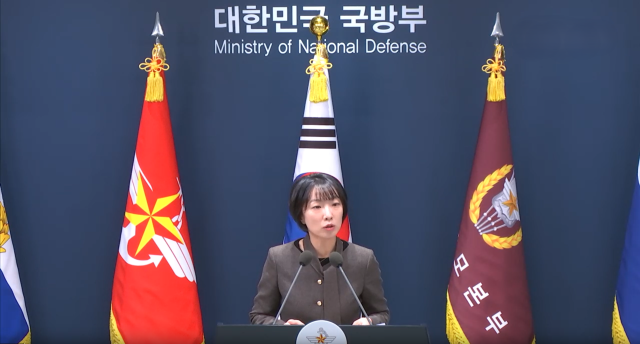
South Korea's Defense Ministry summoned Russian defense attaché Col. Nikolai Marchenko on Tuesday, expressing strong objections to the unauthorized KADIZ entry and the aircraft's close approach to Ulleung Island.
Kim Hak-jo, the ministry's director general for international policy, urged Moscow to prevent similar incidents, warning that repeated entries into KADIZ and flights near South Korean airspace could unnecessarily heighten tensions on the Korean Peninsula and across the region.
Russia maintained that its aircraft had not violated international law, an argument reportedly reiterated by its defense attaché during the meeting with South Korean officials.
Meanwhile, Russia's Foreign Ministry said Wednesday that South Korean Ambassador to Moscow Lee Seok-bae had requested a meeting with Russian Deputy Foreign Minister Andrey Rudenko to discuss current issues.
The ministry did not provide further details about the discussions.

Kim Hee-su
Kim Hee-su is a bilingual reporter at AJU Press, covering defense and foreign affairs. Before joining AJP in 2025, she worked at The Korea Times, where she wrote interview stories, including a profile of North Korean defector Kim Gum-hyok, and produced digital content. She also previously worked as a researcher for KBS News 9’s International News Department, supporting correspondents in 10 countries around the world. She graduated from the University of Toronto in Canada with a double major in Book and Media Studies and East Asian Studies.
Copyright ⓒ Aju Press All rights reserved.
