

The author, Bakhodir Ismailov, is head of a sector at the Institute of Legislation and Legal Policy under the President of Uzbekistan. He is a doctor of law and a professor.
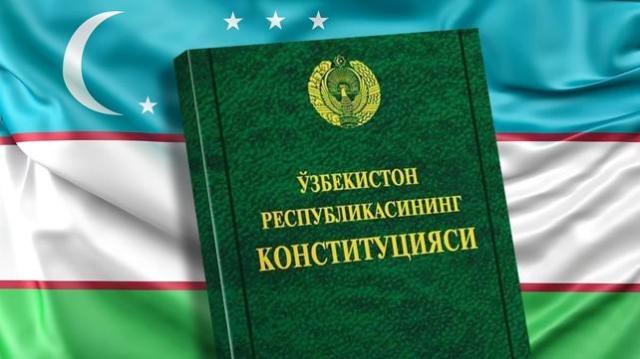
The modern world is undergoing a period of profound transformation. Centers of power are shifting, and geopolitical contradictions are intensifying. In these conditions, the fundamental guideline for Uzbekistan has become the new edition of its Constitution, adopted by referendum on April 30, 2023. The updated Basic Law has consolidated internal democratic transformations and elevated the country's foreign policy doctrine to a qualitatively new level, turning the course of openness and pragmatism into a constitutional norm.
As a result of a proactive foreign policy, Uzbekistan has established diplomatic relations with 168 countries. Tashkent hosts 47 embassies, three consulates general, 13 honorary consuls, and dozens of representative offices of international organizations. Uzbekistan operates 60 diplomatic and consular missions abroad. The country is a member of more than 100 international organizations, including the United Nations, the Organization for Security and Co-operation in Europe, the Shanghai Cooperation Organization, the Commonwealth of Independent States, and the Organization of Turkic States.
The Constitution has enshrined the foundations of a peace-loving foreign policy and good-neighborliness, confirming Uzbekistan's commitment to the universally recognized principles of international law. It does not replace strategy. It defines the solid foundation of strategy, setting out the goals that remain unchanged whatever shifts occur in the international environment.
Article 18 of the Constitution establishes that the Republic of Uzbekistan pursues a peace-loving foreign policy aimed at developing bilateral and multilateral relations. Article 17 enshrines the principles of sovereign equality of states, inviolability of borders, territorial integrity, non-use of force, and non-interference in internal affairs.
Today, Uzbekistan's strategic partnerships with foreign countries rest on treaties (Kazakhstan, Tajikistan, Turkmenistan, Russia, Azerbaijan), agreements (Mongolia, Qatar, Oman), joint declarations (the United States, Kyrgyzstan, Russia, Azerbaijan, Italy, Hungary, Slovakia, the United Arab Emirates, South Korea, India, Pakistan, Belarus, Serbia), or joint statements (Türkiye, China, South Korea). These documents provide for deeper political cooperation, cooperation in defense and security, stronger economic cooperation and trade, and the development of people-to-people exchanges, among other areas.
The main success of the past decade has been a regional policy based on dialogue instead of confrontation. Uzbekistan relies on equal partnership and the strengthening of the regional order in Central Asia, while maintaining a balance among the leading global players.
The basic principles of the 2012 Concept, namely non-participation in military blocs and peacekeeping operations abroad and refusal to host foreign bases, remain relevant. However, if sovereignty was once protected through a certain degree of distance, today it requires protection through engagement. Peacefulness does not mean passivity. It defines the way national interests are advanced, through negotiations, law, and multilateral interaction.
Modern foreign policy is impossible outside the technological dimension. Competition among states is shifting to artificial intelligence, big data, digital infrastructure, and cybersecurity. Uzbekistan gains opportunities to develop digital diplomacy, take part in shaping international norms for regulating AI, and promote fintech and govtech solutions, digital visas, and cross-border services.
Soft power requires special attention. The country's historical heritage, traditions of intercultural dialogue, religious tolerance, and interethnic harmony remain a competitive advantage. The development of the creative economy is becoming an important foundation.
The new edition of the Concept of Foreign Policy Activity is intended to consolidate the transition from an adaptive model to a proactive model of strategic positioning in the world. The aim is to establish Uzbekistan as a responsible regional leader, a production and logistics center for a wider region, and an active participant in multilateral diplomacy.
One of the main achievements of recent years has been the radical improvement of the atmosphere in Central Asia. The updated Constitution has enshrined this course as a long-term strategic priority. The aspiration to strengthen and develop friendly, good-neighborly relations with neighboring states on the basis of mutual respect and consideration of each other's interests has acquired the highest legal force.
This approach makes it possible to jointly address issues of water and energy balance, ecology, transport connectivity, trade, and security. Enshrining good-neighborliness in the Constitution guarantees partners that Tashkent's policy will remain predictable and consistent, free from opportunistic swings. In the long term, this contributes to closer cooperation among the countries of the region and strengthens their independent voice in international affairs.
The most important novelty of the updated Basic Law is the strengthening of human rights guarantees, including beyond the country's borders. The state guarantees protection and support to its citizens both in Uzbekistan and abroad. For the Ministry of Foreign Affairs and diplomatic missions, this means a transition to a service-oriented model of work, in which protecting the rights and legitimate interests of every compatriot is an unconditional priority.
Communities of entrepreneurs, engineers, scientists, and IT specialists have already formed among people of Uzbek origin abroad. They make up a natural global network of influence whose potential is still far from fully used. Systematic work with the diaspora is regarded as one of the key directions of the new generation of foreign policy, treating it not only as a labor resource but also as the intellectual, scientific, and business capital of the state.
Middle powers are states that do not claim the status of global centers of power but are capable of acting as sources of regional stability and platforms for dialogue. New approaches consolidate Uzbekistan's aspiration to the role of a responsible middle power in Central Asia, not through ambitions of leadership but by ensuring predictability, maintaining an atmosphere of trust, and promoting multilateral mechanisms of cooperation.
The C5+ platforms are of particular importance. Uzbekistan's upcoming chairmanship of the Non-Aligned Movement matters not only as a diplomatic status but also as an opportunity to consolidate the country's foreign policy model, one that is multi-vector, non-bloc, and oriented toward maintaining dialogue amid global fragmentation.
The Constitution defines principles, but changing conditions require renewing the instruments used to put them into practice. Today it is necessary to account not only for traditional political and military risks but also for cyber threats, logistics disruptions, sanctions, water scarcity, climate change, and technological dependence.
For Uzbekistan, the link between foreign policy and economic and technological development is especially important. That means expanding participation in international production chains, developing high-tech industries, and strengthening investment ties. Digital diplomacy and water, or environmental, diplomacy are taking on a new dimension.
The Constitution sets the principles of peace, cooperation, respect for law, and protection of the individual. Specific priorities, mechanisms, and instruments should be formed in strategic documents and adapted to international realities.
The updated Constitution connects stable principles with flexible diplomacy. It sets the framework within which Uzbekistan conducts multi-vector dialogue, strengthens regional ties, and expands international cooperation while preserving its independence.
The foreign policy of New Uzbekistan will succeed if constitutional norms produce practical results, including peaceful and predictable relations with neighbors, new economic opportunities, reliable protection of citizens, and the country's participation in solving common problems. This is the role of the updated Constitution, to serve not only as a legal foundation but also as a strategic guideline for the country's foreign policy.
Bakhodir Ismailov is Head of a sector at the Institute of Legislation and Legal Policy under the President of Uzbekistan. He is a doctor of law and a professor.
Copyright ⓒ Aju Press All rights reserved.
