

ZURICH, November 25 (AJP) - Spain votes on Sunday in an election that polls suggest will bring the right to power, possibly costing China its friendliest voice among the European Union’s big economies.
The conservative People’s Party (PP) of Alberto Núñez Feijóo leads every major private poll. A survey by pollster 40dB for Spanish daily El País put the PP at 31.8 percent and the Socialists of Prime Minister Pedro Sánchez at 30.9 percent. The far-right party Vox came third at 17.3 percent.
The 40dB survey projects the PP and Vox winning about 187 of the 350 seats in parliament, above the 176 needed for a majority. Only the state pollster, the Center for Sociological Research (CIS), still puts the Socialists ahead.
Spanish law bans the publication of new polls in the final days of the campaign, so those figures are the last voters will see.
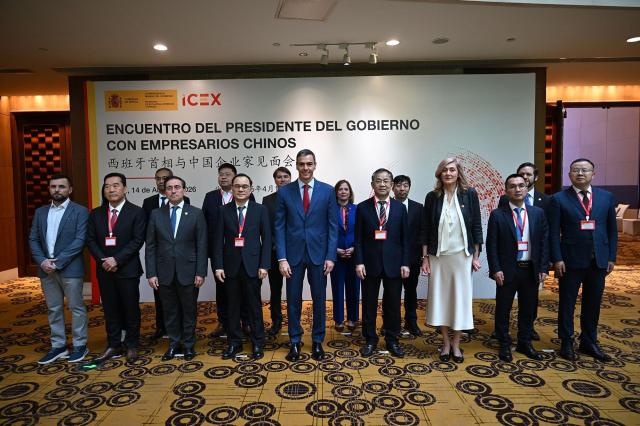
For Asia, the stakes are clearest in Spain’s ties with China. Sánchez has visited China several times since 2023 and welcomed a wave of Chinese factories, while Feijóo has signaled a harder line.
The PP would back a tougher stance on China if it wins, Feijóo said, Bloomberg reported on Tuesday. The party already calls China a “systemic rival,” a label the EU also uses. A PP government would limit Chinese involvement in defense, cybersecurity and infrastructure, Spanish daily El Español reported last week, citing sources close to the party.
The timing matters. In the past week alone, the European Commission opened its third safeguard investigation in less than a month into imports mainly from China, and Washington announced new tariffs on the EU, China and 13 other trading partners.
Spain’s vote carries weight in such decisions. Safeguard measures need the backing of at least 15 member states representing 65 percent of the EU’s population, and Spain has about 49 million people. Under Sánchez, Spain abstained in the 2024 vote on extra duties for Chinese electric cars.
Several Chinese projects now wait on the result. Chinese carmaker BYD has put Spain on its shortlist for a new European factory, and a planned plant by SAIC Motor near the naval city of Ferrol needs approval from the next government. Spanish defense officials have raised spying concerns about the Ferrol site.
Other projects are already underway. Chery builds cars at a former Nissan plant in Barcelona, and battery maker Contemporary Amperex Technology Co. Limited (CATL) plans a plant in Zaragoza with Stellantis.
The economic ties cut both ways. Spain bought about 50 billion euros ($55 billion) of goods from China last year, more than from any other country, while selling it only about 8 billion euros.
A PP government would not necessarily close the door. Spain’s farmers and carmakers depend on Chinese markets and investment, and trade policy is set in Brussels rather than Madrid.
Foreign policy would shift too. Feijóo is expected to seek closer ties with the United States, Greek daily ProtoThema reported, while Sánchez has openly opposed many of US President Donald Trump’s policies.
Beijing expects relations to stay stable whoever wins, a senior Chinese diplomat in Madrid told Reuters last week. On Sunday, Spanish voters will decide how stable that turns out to be.
Tags: Spain, general election, Alberto Núñez Feijóo, Pedro Sánchez, People’s Party, PSOE, Vox, China, BYD, SAIC Motor, CATL, Chery, European Union, trade policy
Copyright ⓒ Aju Press All rights reserved.
