

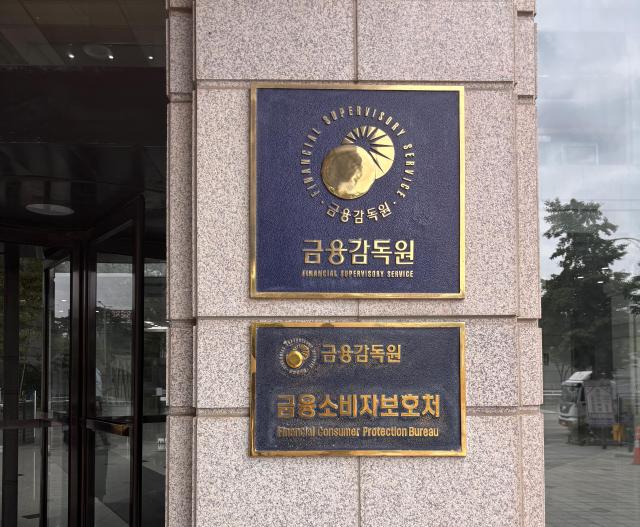
The Financial Services Commission (FSC) and the Financial Supervisory Service (FSS) jointly unveiled the measures to improve transparency and accountability across inspections, regulatory sanctions and licensing procedures, while easing the administrative burden on financial institutions.
The move follows criticism of regulators for focusing on detecting violations rather than preventing them and releasing preliminary findings before completing inspections. It also follows the government's decision in January to put on hold plans to designate the FSS as a public institution, on condition that it improve transparency and reform its supervisory practices.
Under the new measures, routine inspections will focus on assessing financial soundness and identifying key areas of risk rather than examining companies' entire operations. Regulators will notify firms in advance of the scope of inspections and inform major financial institutions of their inspection cycles.
Companies that voluntarily correct minor violations will also have more opportunities to qualify for reduced penalties or exemptions. For example, regulators are considering raising the maximum reduction in administrative fines from 50 percent to between 75 and 100 percent for firms that take sufficient corrective action.
Regulators will also introduce stricter rules governing inspections, generally prohibiting the release of interim findings, with limited exceptions for consumer protection or the correction of inaccurate media reports. If consumers are at risk, regulators will first issue alerts or notify financial companies before considering the release of preliminary findings.
Access to financial transaction records without a warrant will require higher-level approval, with officials required to explain why the information is needed. The FSS will also establish a review committee with a majority of external members to examine objections and requests for corrective action from firms undergoing inspections.
To ease the burden on financial companies, regulators will extend the advance notice period for unscheduled inspections from seven days to seven business days and generally limit inspections to activities within the past five years. Companies facing potential penalties will also be able to obtain copies of case documents instead of transcribing them in person.
Licensing procedures will also be revised to reduce delays in the approval process. Suspended reviews will generally resume, while regulators may close cases if applicants fail to provide the required documents for an extended period.
The FSC and FSS also plan to review penalty standards and digitize inspections, sanctions and licensing procedures. Inspector assignments, information sharing and updates on case progress will be handled electronically.
FSC Chairman Lee Eog-weon emphasized that the reforms would not weaken regulatory enforcement. FSS Governor Lee Chan-jin also said the watchdog would continue to take swift and firm action against violations that cause significant harm to consumers or undermine market order.
The reforms will be rolled out starting in the first quarter of 2027, with new guidelines restricting the disclosure of interim inspection findings expected by the second quarter and a digital system to be established by the third quarter.
Tags: Financial Services Commission (FSC), Financial Supervisory Service (FSS), South Korea financial supervision reform, Financial regulatory reform

Ryu Yuna
Yuna Ryu covers finance, capital markets and Southeast Asian affairs.
She is drawn to the questions that numbers raise and the stories that data alone cannot answer.
Prior to journalism, she worked at Hyundai Motor Company and the Singapore Chamber of Commerce, focusing on business strategy and international affairs. She has also hosted diplomatic receptions and international conferences as an MC.
Ryu holds a master's degree in Media and Communication from Korea University, where her research focused on neuroscience-based studies of media effects.
Copyright ⓒ Aju Press All rights reserved.
