

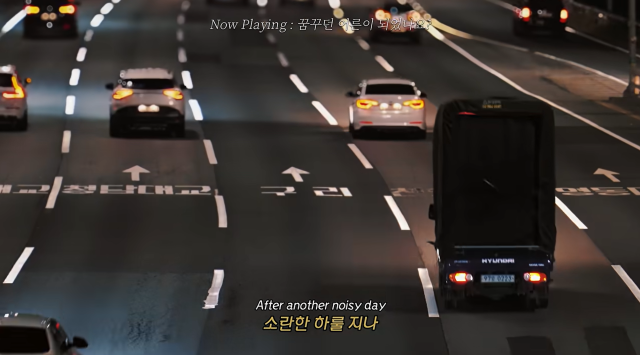
SEOUL, November 29 (AJP) - A song sung by an artificial intelligence voice beat two of K-pop's most powerful fandom acts, Tomorrow X Together and ILLIT, to win SBS's weekly music show Inkigayo on Sunday. It won without selling a single album or earning a single social media point.
"Did You Become the Adult You Dreamed Of?" by the music project MEOMURU scored 4,997 points. ILLIT's "You're Under Arrest" came second with 4,834, and Tomorrow X Together's "Angel Bite" placed third with 4,720.
The two runners-up sit near the top of K-pop's current lineup. Tomorrow X Together, a five-member boy band known as TXT, debuted in 2019 under HYBE, the agency behind BTS. ILLIT, a girl group, debuted in 2024 under Belift Lab, a HYBE label.
Their scores show how a fan base usually wins these shows. TXT took the maximum in album sales, social media and live voting, with 1,000, 2,000 and 500 points respectively. ILLIT collected points in every category.
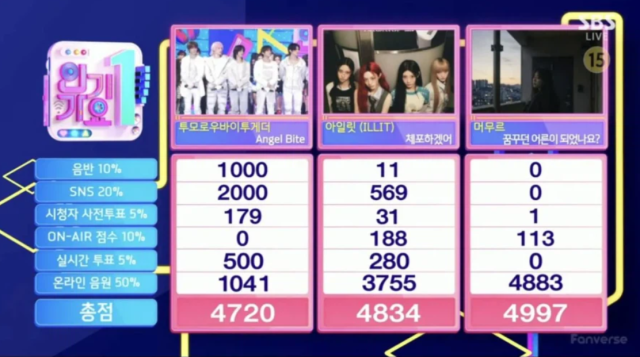
MEOMURU got zero points for album sales, social media and live voting, and one point in viewer pre-voting. Of its total, 97.7 percent came from digital music scores, which count for half of the show's formula. Another 113 points came from the show's on-air category.
The broadcast also ended differently. Winners usually give a thank-you speech and perform an encore, but this time the hosts offered a short "congratulations" and the show went off the air with no one on stage.
SBS launched Inkigayo on Dec. 15, 1991. After a break in the 1990s, it returned in 1998 and has since become one of the Sunday stages where K-pop acts promote new releases. For idol groups, a first-place trophy there is a career milestone, and fan clubs run streaming, buying and voting campaigns to win one.
MEOMURU has no members, no fan club and no stage presence. It is a project of Glorywave, a production team made up of composers Lee Yong-seok and Choi Seong-hyeok. The two have worked together since 2013 and have written ballads for singers including Hwang Chi-yeul.
According to the song's credits, Glorywave planned the song, wrote the lyrics and directed the production. The melody and vocals were generated with Suno, a U.S. service that creates full songs from text instructions.
A composing instructor who met the pair described their process on his YouTube channel in October. According to his account, the two each draft titles and lyrics, merge the best lines, run the results through Suno, and rework the sound in editing software before release. He said the song's lyric video drew only around 10 views at first, and that the team spent months posting short clips on TikTok, Instagram and YouTube Shorts before one caught on.
In the lyric video's description, the team wrote that it believes "the tools change, but the story does not."
That video, posted on MEOMURU's YouTube channel on June 23, had drawn more than 28.9 million views as of Sunday night. Users of Instagram Reels and YouTube Shorts set the song behind clips about raising children, office life and lost youth. The lyrics compare the adult the singer hoped to become as a child with the tired grown-up the singer turned out to be, and listeners in their 30s and 40s answered most strongly.
On Sept. 2, the song reached No. 1 on YouTube's daily chart of popular music videos in South Korea. On Nov. 13, it topped the Top 100 chart on Melon, the country's largest streaming platform. Circle Chart, South Korea's national music chart, ranked it first in seven categories, including digital, streaming and karaoke, for the 47th week of the year.
The path had obstacles that human artists rarely face. In September, MEOMURU told fans that a third party had uploaded the song to YouTube Music without permission, and the official version went up on Sept. 17. The team also said that month that karaoke companies were slow to list the song because no standard existed for AI-assisted music. Karaoke system maker TJ Media added it around the Chuseok holiday in late September.
The song has taken on a life of its own online. Human singers have posted cover versions, and AI-generated covers that imitate famous Korean voices, including the late folk singer Kim Kwang-seok, have drawn millions of views.
Kim Ji-hoon, 43, plays in an amateur band of office workers. He said the win came down to the listeners. "I think pop music ultimately aims to move people's hearts," Kim said. "Whether AI composed and sang it or a person sang it, I think it took first place because it moved its audience. The music scene will keep changing a lot from here."
Online reaction split along the same line. Some viewers argued that a song with no performer should not compete for a trophy under the same rules as human singers, and that broadcasters should screen such entries out. Others said the song won under the existing formula without any organized fan support, which showed how widely ordinary listeners had embraced it.
Similar cases have appeared abroad, mostly on narrower charts. The Velvet Sundown, a band that drew more than one million Spotify streams in July 2025, later described itself as a synthetic music project guided by human creative direction. In November 2025, Xania Monet, an AI singer created by Mississippi poet Telisha Jones, debuted at No. 30 on Billboard's Adult R&B Airplay chart. Jones writes the lyrics herself and generates the music with Suno, and Hallwood Media signed the project to a multimillion-dollar deal.
The same month, Breaking Rust's "Walk My Walk" topped Billboard's Country Digital Song Sales chart on roughly 3,000 downloads. In April 2026, IngaRose's "Celebrate Me" reached No. 1 on the U.S. and global iTunes charts. Those wins came on sales or genre charts, while MEOMURU's came head to head with major K-pop acts on network television.
The win also puts more pressure on South Korea's royalty system. The song is not registered with the Korea Music Copyright Association, so its creators collect no songwriting royalties through the group. Distribution revenue from streaming still goes to the producers.
On Aug. 3, the Korea Music Copyright Association (KOMCA) began accepting registrations for the human-made portions of AI-assisted songs. It withdrew the rule on Aug. 25 after the culture ministry and lawmakers called for more public discussion.
KOMCA will hold a public hearing for its members at 2 p.m. Monday in Yeouido, Seoul, to set standards for registering AI-assisted music and for collecting and distributing its royalties.
Park Sae-jin
Experienced journalist and editor at AJU PRESS specializing in multilingual news. I cover international diplomacy, geolpolitics, and policy, consistently delivering highly accurate, compelling reporting for a worldwide audience.
Copyright ⓒ Aju Press All rights reserved.
