SEOUL, December 23 (AJP) - South Korean retail investors have been taking profits when local share prices rise while continuing to buy overseas stocks, a shift the central bank linked to differences in long-term return expectations.
In its Financial Stability Report released on Tuesday, the Bank of Korea (BOK) said that from July to October — when both South Korean and U.S. equity markets were rising — individual investors were net sellers of 23 trillion won in domestic stocks and net buyers of $10.3 billion, or about 15.28 trillion won, in overseas shares.
The central bank said retail investment in domestic and overseas stocks previously tended to move in tandem, but since 2020 the relationship has increasingly become one of substitution, with buying in one market accompanied by selling in the other.
During 2020–2021, when overseas stock investment surged, individual investors also made large net purchases of South Korean shares, seeking diversification benefits. More recently, however, the bank said the tendency has strengthened, with overseas stock purchases increasingly accompanied by sales of domestic shares.
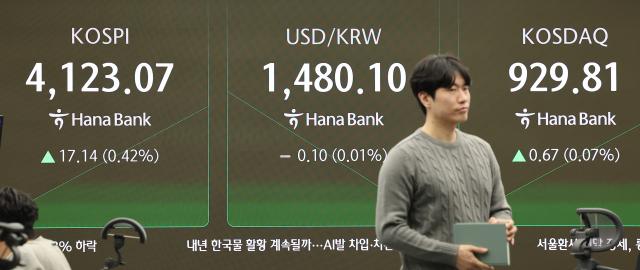
The report said that when short-term returns rise both at home and abroad, retail investors often lock in gains in South Korean stocks while chasing overseas investments. This pattern became more pronounced in September and October, when the KOSPI outperformed the U.S. S&P 500, rising 28.9 percent compared with 5.9 percent.
The BOK said the growing substitution reflects low expectations for long-term returns in South Korea’s stock market.
“Because the long-term return gap between the South Korean and U.S. markets has fixed investors’ expectations at low for South Korea and high for the United States, a pattern has emerged of selling domestic stocks and buying overseas stocks when short-term returns rise,” the bank said in the report.
It added expectations of foreign-exchange gains amid a recent rise in the won-dollar rate appeared to reinforce the preference for overseas stocks. The bank said that because the return-expectation gap has formed over a long period, temporary improvements in returns are unlikely to alter investor behavior.
The bank called for policy efforts such as improving corporate governance and expanding shareholder returns to strengthen the long-term performance and stability of South Korea’s capital markets.
Jang Yong-seong, a member of the bank’s Monetary Policy Board who led the report, said easier financial conditions have boosted risk-taking and pushed asset prices up rapidly, warning that vulnerabilities could increase if a shock triggers a sharp market adjustment.
Copyright ⓒ Aju Press All rights reserved.