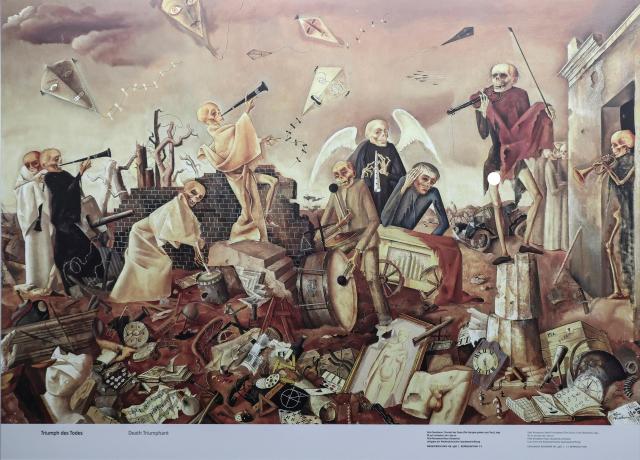
SEOUL, January 27 (AJP) - Skeletons dance across the ruins of civilization, fiddling among the wreckage of Western art, science and technology. Human life has vanished into ash and rubble. Only kites drifting overhead retain faint traces of emotion, their faces suspended between innocence and despair.
Painted in hiding in Brussels and dated April 18, 1944, Death Triumphant is believed to be the final work of German-Jewish painter Felix Nussbaum. Often described as a modern danse macabre, the painting confronts the collapse of human values at a moment when the artist himself was living under constant threat.
“If I perish, do not let my paintings die,” Nussbaum wrote. “Show them to the people.”
“For the dead and the living, we must bear witness,” Holocaust survivor and Nobel laureate Elie Wiesel would later say.
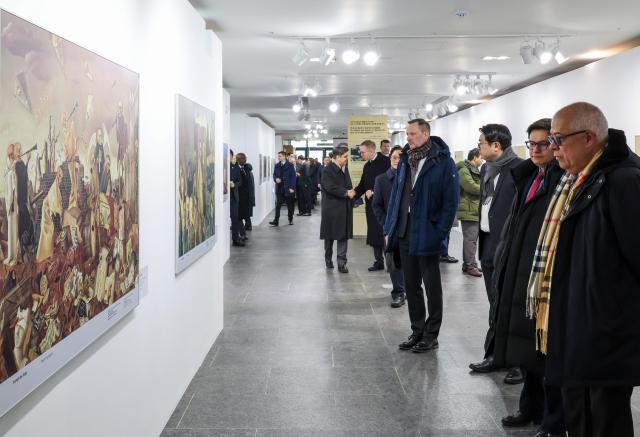
More than eight decades on, Nussbaum’s works have traveled to an unlikely place to fulfill that charge: a museum dedicated to democracy in downtown Seoul. The exhibition, jointly organized by the Israeli and German embassies, presents his art not merely as historical record but as testimony — an insistence that memory endures beyond annihilation.
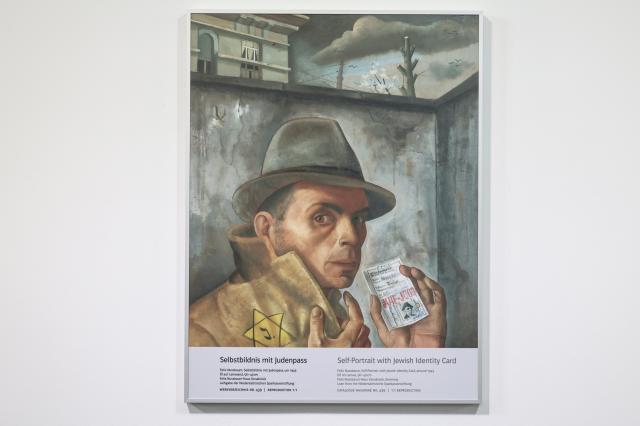
In Self-Portrait with Jewish Identity Card (1943), Nussbaum depicts himself branded by the Star of David and an identification document imposed by Nazi authorities. While red lettering on the card defines him as Jewish under racial law, his birthplace, Osnabrück, is deliberately blurred, signaling the erasure of home and legal identity. Facing the viewer directly and wearing a bourgeois hat, Nussbaum clings to his identity as an artist even as persecution tightens.
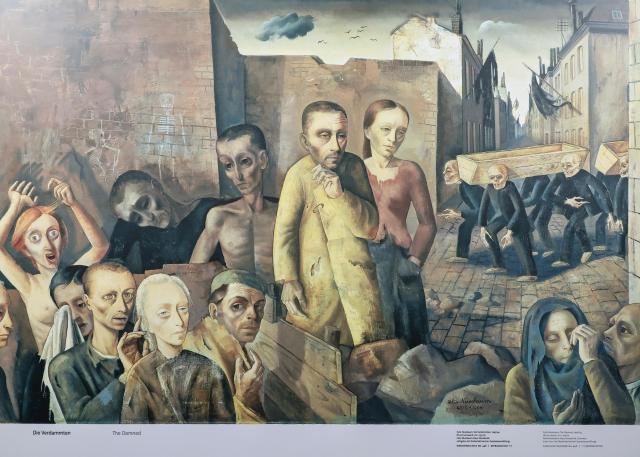
That intimate defiance expands in The Damned, completed on Jan. 5, 1944. The painting shows persecuted figures waiting in hiding, their gestures and expressions suspended between fear, resignation and quiet endurance. Nussbaum places himself among them, echoing earlier self-portraits while replacing symbols of autonomy with imagery that suggests the inevitability of death.
Speaking at the opening ceremony, German Ambassador Georg Schmidt warned against reducing the Holocaust to abstraction.
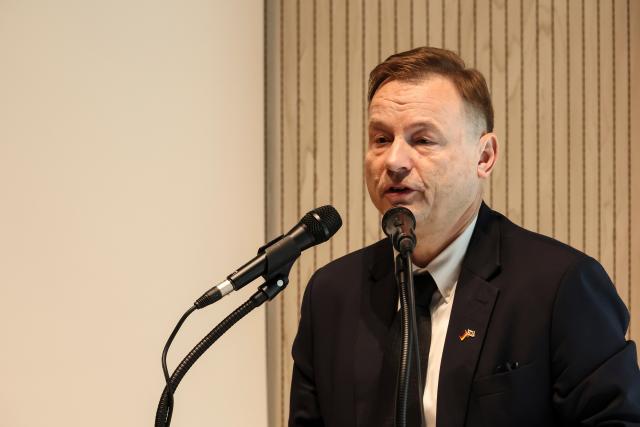
“The Holocaust is often reduced to numbers that defy comprehension,” Schmidt said. “Six million is a figure that goes beyond human imagination. It is much easier to connect with individuals. That is why we are telling the story of the German-Jewish painter Felix Nussbaum.”
Schmidt pointed to Germany’s postwar constitutional commitment — that “human dignity shall be inviolable” — as a direct response to the crimes of the Nazi era, rooted in the recognition that unchecked nationalism and racial fanaticism lead to catastrophe.
Israeli Ambassador Raphael Harpaz cautioned against treating the Holocaust as a closed chapter of history.
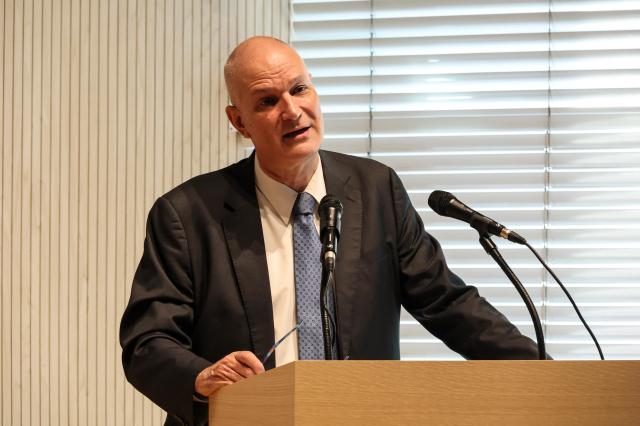
“The Holocaust is not a tragedy of the past. It is painfully relevant today,” Harpaz said, pointing to the persistence of antisemitism and its amplification through social media and digital platforms. “Remembrance is not only a responsibility. It is an obligation.”
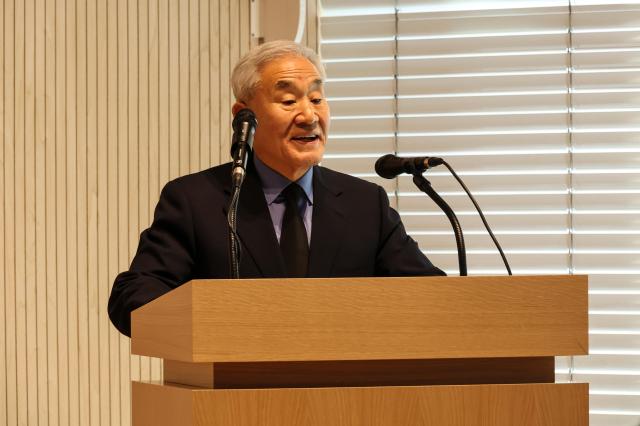
Lee Jae-oh, chairman of the Korea Democracy Foundation, said the transformation of the site itself mirrors the purpose of remembrance.
“This place was once deeply marked by the scars of state violence,” Lee said. “Today, it stands as a space where we record and reflect on that painful history in order to learn the value of human rights and democracy.”
Lee stressed that the Holocaust offers a universal warning about the consequences of abandoning human dignity and failing to restrain state power.
“When past suffering is ignored or erased, history regresses,” he said. “By examining Felix Nussbaum’s desperate artistic records and bearing witness to the tragedy of Auschwitz, we awaken our society’s awareness of human rights and strive to build a democratic community where discrimination and exclusion have no place.”
Asked what message he hopes visitors will take from the exhibition, Harpaz emphasized the danger of silence.
“The message is about refusing silence in the face of hatred directed at people for who they are,” he said. “Recent years have shown how easily antisemitism resurfaces when individuals are targeted not for their actions, but for their identity. There must be zero tolerance for such hatred.”
Harpaz noted that the exhibition has drawn strong public interest in South Korea.
Since 2017, the German and Israeli embassies have jointly marked International Holocaust Memorial Day in Seoul, pairing official ceremonies with exhibitions and educational programs aimed at younger generations.
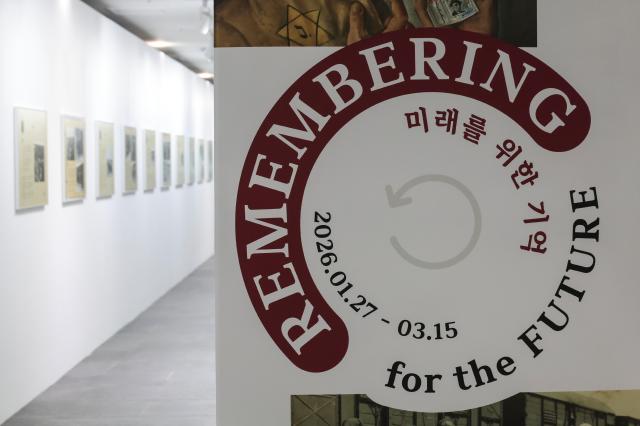
The exhibition, titled Remembering for the Future, runs from Jan. 27 to March 15, 2026.

Copyright ⓒ Aju Press All rights reserved.