SEOUL, March 04 (AJP) - South Korean home appliance makers are bracing for potential disruption from the widening conflict in the Middle East and the choking-off of the critical shipping corridor, the Strait of Hormuz — just as the region had begun to emerge as a fresh growth market for Korean brands.
The escalation has raised concerns among producers that renewed interest in Korean consumer brands across the region — fueled partly by the broader K-wave — could falter, adding another layer of uncertainty as sales momentum in other Asian markets slows.
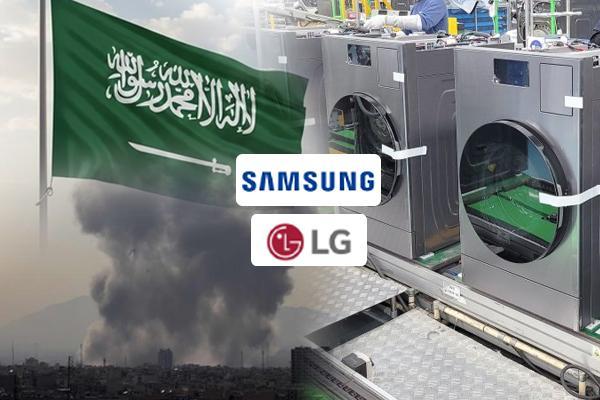
Samsung Electronics, LG Electronics and Coway say they are navigating the short-term shock through existing contingency plans, though they acknowledge that prolonged hostilities could trigger broader regional fallout.
Samsung Electronics, which relies heavily on maritime shipping for bulky consumer appliances, said the immediate supply-chain impact appears less severe than initially feared.
“We maintain local inventory in each region, which provides a buffer for several weeks to about a month, so we do not see immediate risks,” a Samsung Electronics official said.
“Furthermore, the Strait of Hormuz is primarily an oil route. Commercial appliances often travel via the Suez Canal or the Cape of Good Hope, so the direct impact on appliance shipping does not appear massive.”
The official added that while a prolonged crisis would pose global economic risks, no specific internal directives have yet been issued in response to the situation.
LG Electronics, which recently established a regional headquarters in Riyadh, Saudi Arabia, to secure major B2B infrastructure contracts, said short-term project disruptions are likely to remain limited.
“Currently, there appears to be no direct impact on our operations, and we do not conduct direct business in Iran,” an LG Electronics official said.
“Our top priority is the safety of our employees. Personnel in the affected regions have already been evacuated to nearby areas or returned home, and no damage has been reported.”
The company acknowledged that a prolonged maritime blockade could fuel broader macroeconomic pressures, particularly through surging oil prices.
“However, this is a general risk affecting all companies rather than an isolated issue for our specific business,” the official added.
Rental appliance maker Coway — which had recently identified the Middle East as a new growth engine — said its exposure remains limited due to its indirect market presence.
“We only recently started exporting to the UAE and Saudi Arabia through local partner firms,” a Coway official said.
“We do not have a direct operational footprint or our own service personnel stationed there, and our market share is currently minimal. We do not expect any significant damage from the current situation.”
Still, the cautious optimism could fade if the conflict drags on beyond several weeks.
Sung Il-kwang, a Middle East expert at the Euro-MENA Institute, said the escalation could mark a turning point in the region’s business climate.
“In the Middle East, even conflicts occurring outside a country’s immediate vicinity can prompt businesses to delay projects because of perceived security risks,” Sung said.
“But now that the conflict has reached their doorstep, many business activities have effectively come to a halt.”
He warned that a prolonged war could significantly alter the operating environment for companies active in the region.
“While it is unlikely that the war will persist throughout the year, the situation must be monitored closely,” Sung said.
“Depending on whether the crisis becomes prolonged, the ultimate impact on business operations could be severe.”

Copyright ⓒ Aju Press All rights reserved.